Events

22 January 2026, King’s Strand campus, River Room (KIN227), 19:00-20.15: Lecture by Dr Tomasz Borowski:

Title: ‘Marea’/Philoxenite: A New Byzantine Town and a Pilgrimage Station in the Hinterland of Alexandria.

Register here: https://www.eventbrite.co.uk/e/lecture-by-dr-tomasz-borowski-mareaphiloxenite-a-new-byzantine-town-tickets-1977021656996?aff=oddtdtcreator

___________________________________________________________________________________________

Until 29 March 2026: Exhibition opening at Sissinghurst Castle Garden (National Trust):

CHS is a co-sponsor of the special exhibition that opens at Sissinghurst Castle Garden on 18 October, called ‘Passion and Politics: Sissinghurst and Greece’ (until 29 March 2026). The exhibition highlights the Greek connections of diplomat Harold Nicolson and his wife Vita Sackville-West: ‘For the first time, diplomat Harold Nicolson’s role in the fortunes of post-war Greece takes centre stage in this brand-new exhibition at Sissinghurst. Untold stories, unseen photographs and personal mementoes shine a light on his life, work, and the inspirations behind the design of his iconic home at Sissinghurst’. See https://www.nationaltrust.org.uk/visit/kent/sissinghurst-castle-garden/events/e4ff459b-3116-4d67-9767-ea0a2b57276c.
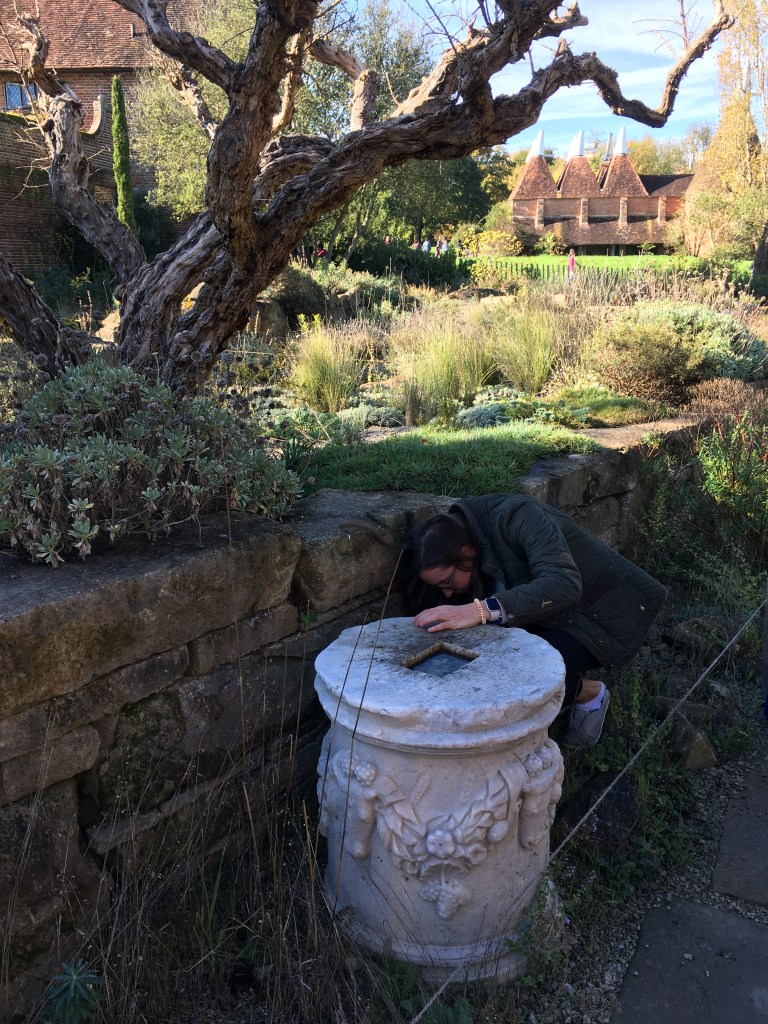
Our colleague Dr Rebecca Levitan inspecting one of the Greek antiquities in the gardens of Sissinghurst Castle (with permission to jump over the rope).

_______________________________________________________________________________________

26 January and 9 February 2026, 17:00 (UK), 19:00 (Greece): Two online panels co-hosted by the CHS-BSA on: ‘Translation and the Magnitude of Historical Figures’

26 January panel chaired by Koraes Professor Gonda Van Steen, with in-person presence sponsorship by the Cyprus High Commission in London. Speakers:

Dimitra Kotoula, Andry Christofidou-Antoniadou, Jennifer Kellogg, and Afroditi Athanasopoulou, on topics of Homer, Lorca and Seferis

More information and registration:

https://www.bsa.ac.uk/events/translation-and-the-magnitude-of-historical-figures-homer-lorca-and-seferis

9 February panel chaired by Prof. Emeritus David Ricks. Speakers:

John Stathatos, Vassilis Letsios, and Joshua Barley, on Michalis Ganas and translation.

More information and registration:

https://www.bsa.ac.uk/events/translation-and-the-magnitude-of-historical-figures-michalis-ganas-and-translation

_______________________________________________________________________________________

5 February 2026: Great Hall, King’s Strand Campus, 18:00: 35th Runciman lecture by Professor Claudia Rapp

Preceded by Orthodox Vespers in the Chapel at 17:15

Lecture title: Small Things, Big Stories: Approaching Byzantine Society through Prayer Book Manuscripts

Abstract: Approximately 80 percent of the population of the Eastern Roman Empire in the Christian middle ages lived from agricultural activity in the countryside, but these people are underrepresented in the contemporary written accounts that focus on the imperial court, the privileged, and the educated. A largely untapped source to better understand the rural communities are the prayer books that were made for the use of priests. These euchologia contain short prayers that address various local concerns and events in the lifecycle of families, as they are being studied in the Vienna Euchologia Project. This lecture will present insights from the study of the manuscripts and the short prayers (including a recently published prayer for silk worms), which shed light on social and economic developments in Byzantine and post-Byzantine society.

Lecturer’s bio: Claudia Rapp FBA is Professor of Byzantine Studies at the University of Vienna, Director of the Institute for Medieval Research at the Austrian Academy of Sciences, and Co-Director of the Cluster of Excellence “EurAsian Transformations. Resources of the Past and Challenges of Diversity”. After obtaining her Doctorate at Oxford, she held appointments at Cornell University and the University of California, Los Angeles, before taking up her current position in Vienna in 2011. She has researched and published widely on the social and cultural history of Late Antiquity and Byzantium. Her work has been recognized, among others, with the Wittgenstein Award of the Austrian Research Fund and the Karl Christ Prize for Ancient History.

Prof. Claudia Rapp. Photo credit: Nina Tschavoll

Register here: https://www.eventbrite.co.uk/e/35th-runciman-lecture-by-professor-claudia-rapp-vienna-tickets-1977022097313?aff=oddtdtcreator

__________________________________________________________________________________

18 February 2026: Great Hall, King’s Strand Campus, 19:00: Messolongi and the Exodus Revisited

__________________________________________________________________________________________

12 March 2026, Great Hall, King’s Strand Campus, 18:00: 11th Rumble Fund Lecture in Classical Art (in-person only; not streamed)

Speaker: Sir Grayson Perry on ‘Why I Hate Classical Civilisation

Abstract: I was stopped by a random man in the street who asked me if I wanted to give the Rumble lecture. He said it had to be on a subject related to Graeco-Roman culture. I said I had an antipathy to classical civilisation. He said, ‘Great, make it about that’. Of course he only asked me because I am a minor celebrity and that it might bring a little publicity and glamour to this obscure corner of the further education industrial complex.

I thought it might be interesting to unpick why exactly I have such an allergy to Kraters and Petrarch. I start from a place of complete ignorance and have no ambition to go anywhere else. I tried to get AI to write this abstract but it was useless which made me think maybe I was on to something! My dislike of ancient Greece and Rome is not necessarily aligned to any fashionable ideological causes. The classics are often used to bolster or lend credibility to a right wing, authoritarian, patriarchal, Eurocentric, white supremacist view of the world, but that is not principally why I dislike them. For me it is more personal, more irrational, more enjoyable. I love a good grievance.

Bio: Sir Grayson Perry is a Turner Prize winning contemporary artist, Bafta winning broadcaster, member of the Royal Academy, former trustee of the British Museum, and winner of the Erasmus Prize. He also performs live touring one-man stage shows.

________________________________________________________________________________________

16, 17, and 18 March 2026, Council Room KIN214, King’s Strand Campus, 19:00-20:15:

Professor Emerita Judith Herrin: A trilogy of lectures on three consecutive evenings on the topic of ‘Before “East” and “West”‘. Professor Herrin will speak on the topic of the centrality of Byzantium in the Mediterranean world of Early Christendom, through its metropolis, Constantinople, the vital role played by women in its continuity, and the lasting significance of its name. 

Abstract: Prof. Herrin argues that Rome did not ‘fall’, it moved. In doing so it became something unique in Byzantium. Byzantium was central to the creation of the medieval world in Western Europe as well as Islamic Africa and what we now call the ‘Middle East’. The first lecture focuses on Constantinople (now Istanbul) and its imperial court: a permanent, unmoving capital for over a millennium and a magnet for merchants, pilgrims and diplomats. In the second lecture, she shows why the structural importance of women in the way Byzantium was ruled–which she calls ‘the imperial feminine’–was a crucial contribution to its lengthy survival and capacity to change. In the final lecture, ‘I’m more polemical’, she says, ‘about those who want to drop the name Byzantium’, again stressing its unique combination of Greek, Roman and Christian cultures.

Photo credit: Scarlett Freund

About the speaker: Judith Herrin is the author of The Formation of Christendom (recently republished as a Princeton Classic); Ravenna: Capital of Empire, Crucible of Europe; Byzantium, the Surprising Life of a Medieval Empire; and Women in Purple; as well as two collections of historical essays: Unrivalled Influence and Margins and Metropolis. After a long career teaching Byzantine and medieval history, notably at Princeton University and King’s College London, Herrin retired to pursue research, which is currently centred on the city of Ravenna and its anonymous Cosmographer. She is attached to the Wittgenstein Project Moving Byzantium, based at the Austrian Academy of Sciences, Vienna, and maintains continuing membership of various editorial and advisory boards. She was elected President of the Association Internationale des Etudes Byzantines, 2011-12, and is the Founding Editor of Translated Texts for Byzantinists series published by Liverpool University Press.

About the lectures: Professor Herrin’s lectures will be a revised version of the Lawrence Stone lectures, which she gave at Princeton University in the spring of 2025. The Lawrence Stone lectures are an annual event arranged by the Shelby Cullom Davis Center and the History Department of Princeton University in honour of the historian who did so much to establish the Center, which continues to encourage and foster some of the most exciting and innovative developments in historical research. Princeton University Press publishes the lectures in a dedicated series: https://press.princeton.edu/series/the-lawrence-stone-lectures?srsltid=AfmBOopaN1NKOhkBeeOahUaEa_Ix7N0Ia2WFu260XtXecky1nM0aCC8P

Seating is limited to 60 people, and priority will be given to people who can attend all three lectures. Please contact gonda.van_steen@kcl.ac.uk to reserve your seat.

______________________________________________________________________________________

26 March 2026, Bush House Lecture Theatre 1 (BH S1.01): 19:00-20:30: Book launch of Sir Roderick Beaton‘s latest book: Europe

Abstract: What do we think we mean by ‘Europe’? If it cannot be defined by geography alone, is it bound by history, by its politics, by a shared culture? In this perception-changing book, historian Roderick Beaton reconfigures the entire history of Europe, from its distant beginnings to today, as the story of an idea.

Since its birth in ancient Greece, Europe has been defined, and redefined, by its people. Through this powerful lens, Beaton deftly surveys Europe’s major historical developments over 2,500 years, ending with the war in Ukraine. His focus is not on regions or nation states, but always on the continent as a whole, so that it appears in the sharpest outline. Throughout, Europe: A New History draws on original sources to allow the voices of the past, from Tacitus to Thatcher, to speak for themselves.

The story of Europe’s people is, Beaton shows us, as much about shared, and changing, identities as about great or wicked deeds, pitched battles, invasions or revolutions. Exploring the multilayered identities that have always come with being European, this wise, vital work places the Europe of today in the long arc of history, and lets us see it anew.

For more about the book, click here: https://www.penguin.co.uk/authors/132124/roderick-beaton

To register, click here: https://www.eventbrite.co.uk/e/1977022348063?aff=oddtdtcreator

_______________________________________________________________________________________

18 May 2026, Council Room (KIN214), 18:00-20:00: New Scholarship on Cavafy: Speakers: Professors Peter Jeffreys, Maria Boletsi, and Dr Foteini Dimirouli, in conversation with Dr John Kittmer.

______________________________________________________________________________________

9 June 2026, Great Hall, King’s Strand Campus, 19:00-21:00: Runciman Award Ceremony: An evening dedicated to good books, Anglo-Hellenic friendship relations, and an incisive lecture.

Co-hosted with the Anglo-Hellenic League. The Runciman Award and Ceremony are generously sponsored by the A.G. Leventis Foundation and the Athanasios C. Laskaridis Charitable Foundation.

Speaker: Kallia Papadaki (https://euprizeliterature.eu/en/prize-author/kallia-papadaki/)

Register here:

For online attendance via Zoom, pursue the links via the AHL website: anglohellenicleague.org/events

Abstract:

About the speaker:

__________________________________________________________________________________

10 June 2026, Council Room (KIN214), King’s Strand Campus, 18:00-20:00: Award Ceremonies:

Katie Lentakis Memorial Fund Award and Fourth Mary Margaret McCabe Dissertation Prize in Ancient Philosophy, in partnership with King’s CHS and Classics Department, the Anglo-Hellenic League, and the Foundation for Platonic Studies.
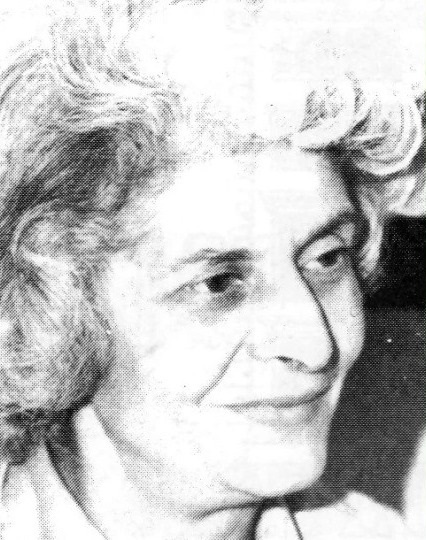
Speaker: Professor Melissa Lane (Princeton University), whose presentation titled ‘Plato’s Republic on Motivating (Ecological) Guardianship’, draws on Plato’s Republic to explore how people can be educated so as to truly care about what is right to do, bringing this perspective to bear on the challenges of ecology. 

Register here:

Abstract: In Eco-Republic (published in the UK in 2011 and in the US in 2012), I drew on Plato’s Republic as a template for the kind of virtue ethics and politics that an environmentally sustainable society would require. On Plato’s view, people who truly know what it is right to do – in this case, what sustainability demands – would thereby be motivated to pursue it. But as environmental crises deepen, the gap between knowledge and motivation seems only to widen. In this talk, I return to the Republic to explore how Plato envisions that people can be educated so as to truly care about what it is right to do, bringing this perspective to bear on the challenges of ecology. 

About the speaker: Melissa Lane is the Class of 1943 Professor of Politics at Princeton University, where she is also Associated Faculty in Classics and in Philosophy, and has received the Phi Beta Kappa Teaching Prize, the Stanley J. Kelley Teaching Award of the Department of Politics, and the Faculty Community Engagement Award of the Pace Center for Civic Engagement. She currently also holds a three-year appointment dedicated to delivering periodic public lectures in London as the fiftieth Professor of Rhetoric at Gresham College.  She has held a Guggenheim Fellowship in the field of Classics, as well as fellowships and visiting professorships at a number of institutions including the ANU, Auckland, Harvard, Oxford, Stanford, the American Academy in Rome, and the École Normale Supérieure. Professor Lane was educated in Californian public schools, then at Harvard University (graduating summa cum laude and being named a Truman Scholar and Marshall Scholar), and then at the University of Cambridge, where she received an MPhil and PhD in Philosophy and then taught for fifteen years before moving to Princeton in 2009. Her most recent monograph, titled Of Rule and Office: Plato’s Ideas of the Political and published in 2023 by Princeton University Press, was awarded the 2024 Book Prize of the Journal of the History of Philosophy; her 2012 PUP monograph, Eco-Republic, continues to be widely discussed. The only person ever to have delivered both the Carlyle Lectures and the Isaiah Berlin Lectures at the University of Oxford, Professor Lane has appeared multiple times on ‘In Our Time’ on BBC Radio Four, and has been published in periodicals in the US, UK, Italy and Germany.  

Photo credit: Sameer A. Khan/Fotobuddy

______________________________________________________________________________________

2026-2027 Academic Year

5 October 2026, King’s Strand campus, River Room (KIN227), 18:00-29.15: Lecture by Dr Spyros Tsoutsoumpis: