
______________________________________________________________________________________
20 October 2026: Unveiling Byzantium: An Evening Remembering Averil Cameron (1940-2026)
Vespers in the King’s Chapel, 17:15-18:15: with the King’s choir and music by Rachmaninoff. (Contact: Fiona Haarer)
Talks and Remembrances: Council Room KIN 214, 18:30-21:00 (+ adjacent KIN 213)
A collaboration of SPBS, King’s Classics, History, CLAMS, and CHS
Welcome: Dr James Corke-Webster, HoD Classics
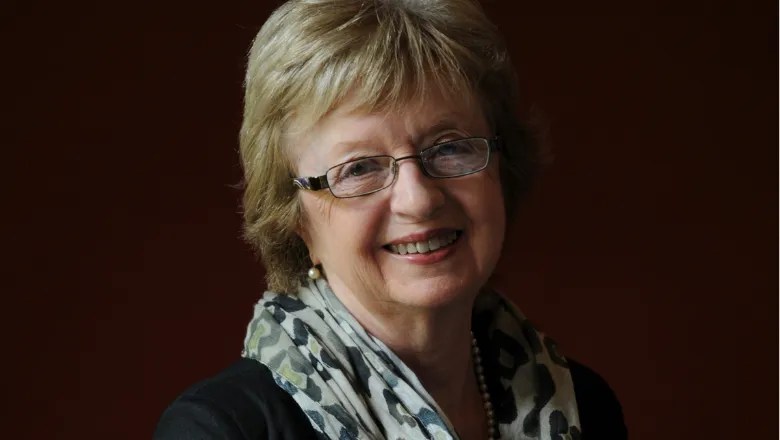
Photo credit: Kevin Edwards for the University of Oxford.
To see the registration page please click the link here:
Speakers:
Dr Alexandra Vukovich, History, King’s: ‘Critical Byzantine Matters’
Prof. Emeritus Michael Maas, Rice University, USA: ‘Remembering a Long-time, Long-distance Friend’
Prof. Emerita Margaret Mullett, Queen’s University Belfast. Honorary Professor, U. of Edinburgh: ‘Dialoguing with Averil’
Short Remembrances (moderator Dr Tassos Papacostas).
_____________________________________________________________________________________
27 October 2026: First of four seminars in the new series ‘Greece and the Modern World: Modern Greek History in European, Mediterranean and Global Perspectives’, co-organized by Georgios Giannakopoulos, Department of International Politics, City St George’s, University of London, and Gonda Van Steen, King’s College London. Time and location: 17:30-19:00, in D427 Rhind Building, City St George’s, University of London, St John Street, London EC1R 0JD.
Register here:
First seminar: Migration and Diasporas: Nicholas Doumanis, University of Illinois Chicago, and Marilena Anastasopoulou, University College Dublin, with discussant Othon Anastasakis, St Antony’s College, Oxford.
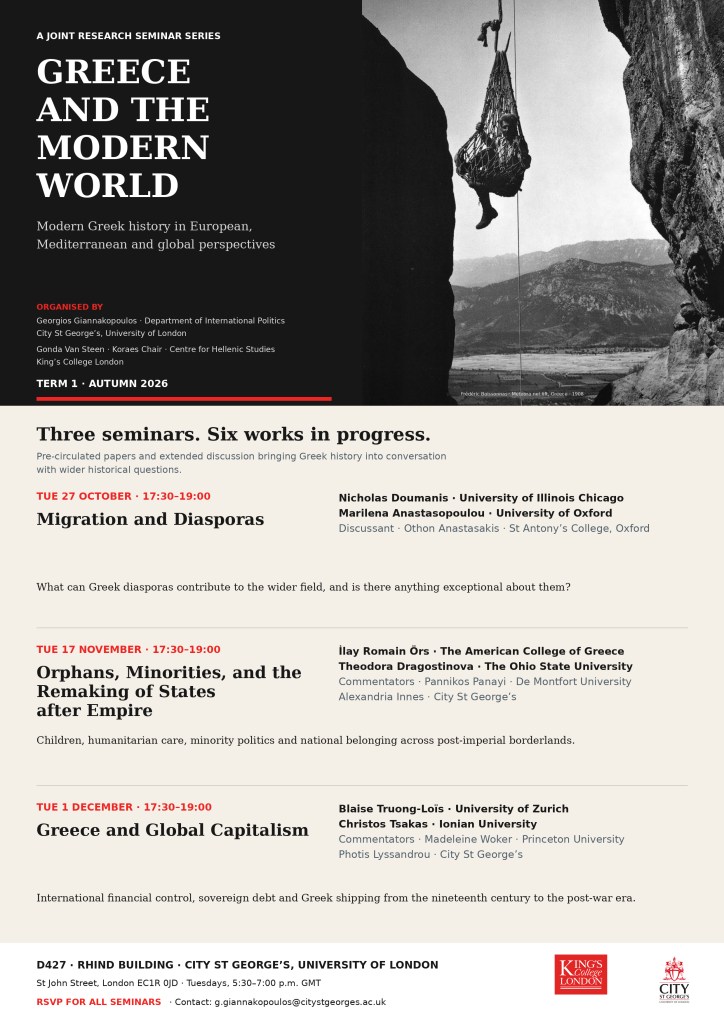
Second seminar: Tu 17 November, same time and location: Orphans, Minorities, and the Remaking of States after Empire: İlay Romain Örs, The American College of Greece, and Theodora Dragostinova, The Ohio State University, with discussant Gonda Van Steen.
A third seminar on Greece and global capitalism is scheduled for Tu 1 December. A fourth seminar will held in the spring of 2027. Details TBC.
A fourth seminar is scheduled for Tu 20 April 2027, with speakers Panagiotis Karagkounis, on ‘Hellenising Refugeedom. Forced Displacement, Humanitarianism and the Making of Modern Greece, 1910s–1950s’, and Carl Mauzy, on ‘Uneasy witnesses – Second World War Greece through German eyes’.
__________________________________________________________________________________________
6-8 and 13-14 November 2026: Theatre play ‘For Three Refrigerators and a Washing Machine’, directed by Kyriaki Mitsou, in conjunction with CHS and with sponsorship from the Schilizzi Foundation. Athens, Ολύμπια Δημοτικό Μουσικό Θέατρο «Μαρία Κάλλας»
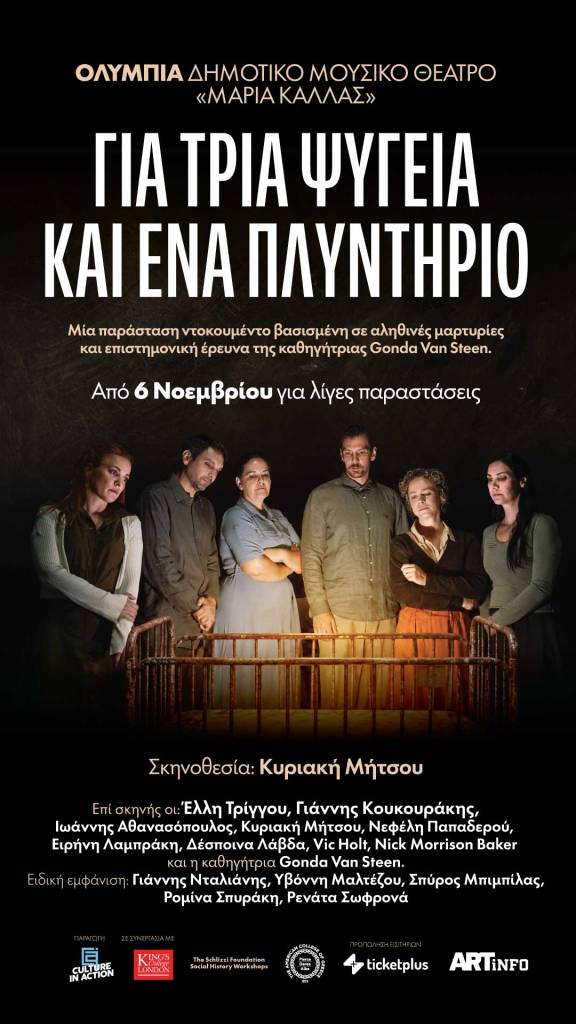
After its celebrated London debut in 2024, this moving testimony theatre play, featuring Greece’s adoption history, returns to confront the enduring quest for identity and belonging. Reimagining the question ‘Who am I?’, it transforms uncertainty into a story of courage, pride, and resilience. For ticket sales:
___________________________________________________________________________________________
21 November 2026, Online book launch: Greece at the Turning Point:
Harrison Blackman’s invitation reads: Gonda Van Steen and I present a virtual launch event for our new book, Greece at the Turning Point: Remembrances of US Foreign Service Families Living and Working in Postwar Greece, on Saturday, 21 November 2026 — at a time that should accommodate time zones from California to Greece. Award-winning author and international journalist Bruce Clark will moderate. RSVP and learn more at the link below.
https://docs.google.com/…/1FAIpQLSd…/viewform
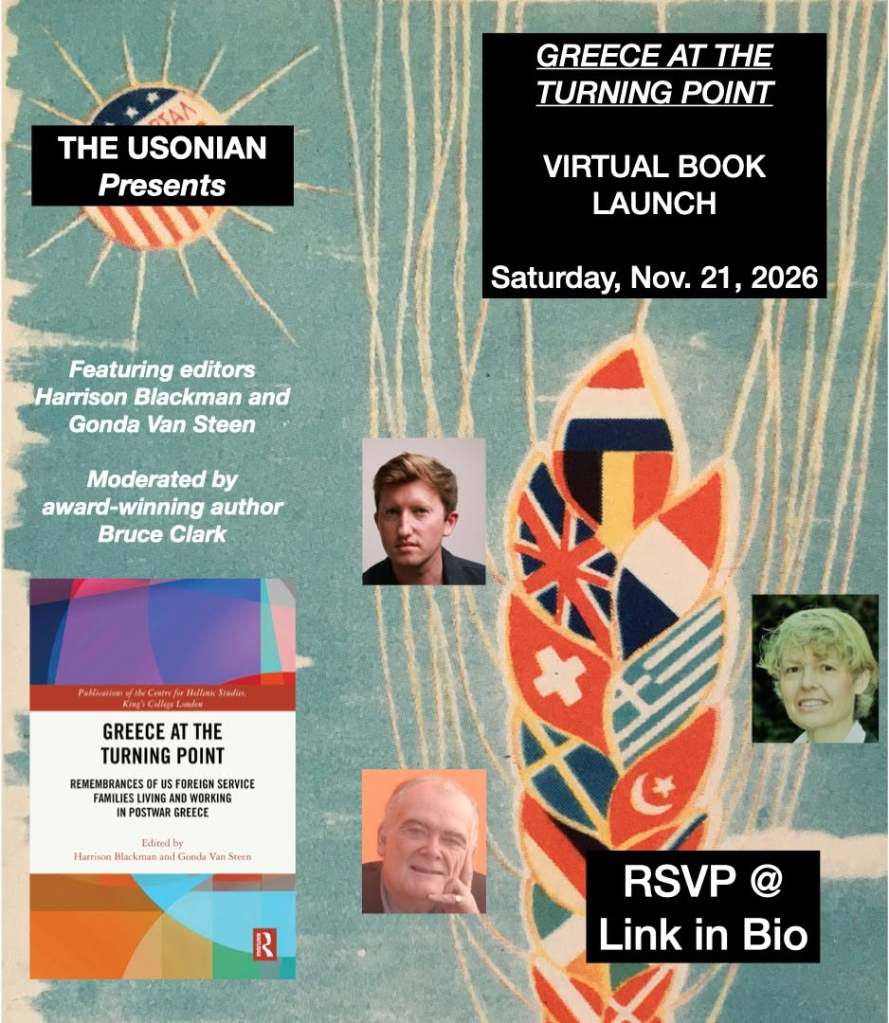
For more information about the book and the Routledge CHS series, see here:
___________________________________________________________________________________________
25 November 2026, River Room KIN227, 18:00-19.30: Lecture by Prof. Aristidis Hatzis (University of Athens)
___________________________________________________________________________________________
25 January and 1 February 2027, 17:00 (UK), 19:00 (Greece): Two online panels co-hosted by the CHS-BSA on ‘Writing the Townscape’, with support from the Cyprus High Commission in London and Aiora Press in Athens.
___________________________________________________________________________________________
4 February 2027, King’s Great Hall, 18:00-20:00: Annual Runciman Lecture: The 36th lecture in the series will be given by Professor Emeritus Michael Trapp, on the topic of ‘Making Verse with Socrates: Poetic Exploitations of a Philosopher’s Final Hours’. The lecture will be preceded by Orthodox Vespers at the King’s Chapel (17:15).
Abstract: Plato’s Phaedo, as the most detailed and the only contemporary account of the final hours and death of Socrates, has cast a long shadow over philosophy, literature, drama and the visual arts ever since its publication in the first half of the fourth century BC. This lecture focuses on a lesser-known but engaging corner of this larger landscape – the use of elements of the Phaedo by four nineteenth- and twentieth-century poets either to construct a counter-narrative to Plato’s, or to appropriate some of its depth and magic to articulate deeply felt emotions of their own.
Speaker’s bio: Michael Trapp is Emeritus Professor of Greek Literature and Thought, having been successively Lecturer (1989-98), Reader (1998-2004) and Professor (2004-2023) in the Department of Classics at King’s. Besides the long-running preoccupation with the reception of Socrates and Socratic writing that is responsible for the topic of this year’s Runciman Lecture, his research and publications have ranged over Greek oratory and philosophy of the Roman Imperial period, ancient epistolography, the history of Classical studies at King’s, and the true and imagined histories of the Strand Lane cold bath.
__________________________________________________________________________________________
11 February 2027, Council Room (KIN 214), 18:30: Book presentation: Dr Georgios Samaras, The Long Shadow of Golden Dawn. Panel moderator: Helena Smith (The Guardian). The panel members will be:
Professor Sofia Vasilopoulou – King’s College London
Dr Aaron Winter – Lancaster University
Dr Marianna Griffini – Northeastern University London
The book is being published by Palgrave Macmillan. The event is co-hosted with the Policy Institute at King’s and the Hellenic Observatory, London School of Economics: https://link.springer.com/book/9783032369758
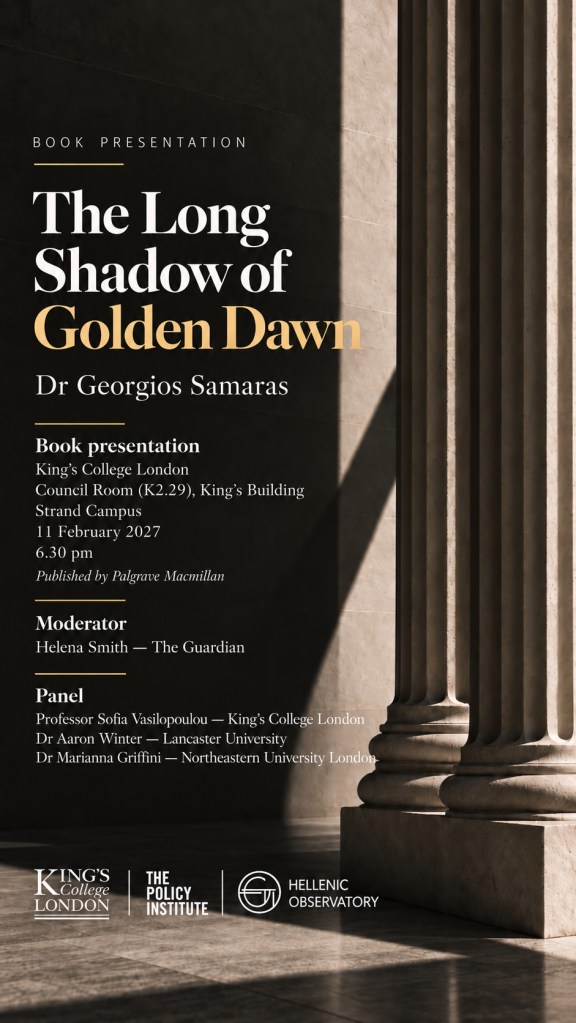
Register here: https://www.kcl.ac.uk/events/the-long-shadow-of-golden-dawn
___________________________________________________________________________________________
24 February 2027, Leventis Gallery, Nicosia: Dr Catherine Boura will be delivering the Ninth Niki Marangou Memorial Lecture. Her abstract reads:
In the summer of 1908, the Young Turk Revolution introduced the Ottoman Empire to parliamentary life, elections and party politics, and marked the beginning of a period of controversy and radical transformation of the Empire. In response to the Young Turk Revolution, two Greek citizens, the diplomat and intellectual Ion Dragoumis and the army officer Athanasios Souliotis, who moved to Constantinople under the assumed name Nicolaides, set off to promote the ideal of cooperation among the peoples of the Ottoman Empire. Their attempt to create a strategy to enhance the role of the Ottoman Greeks in the political affairs of the Empire found some fertile ground in the years 1908-1912, but was buried under the sweeping force of nationalism that prevailed during the war.
___________________________________________________________________________________________
9-11 March 2027, King’s Greenwood Theatre (Guy’s campus near London Bridge Station):
The annual King’s Greek Play: Euripides’ Medea, details TBC
___________________________________________________________________________________________
4 June 2027, Council Room KIN 214: The annual Katie Lentakis Memorial Fund Award Ceremony and Lecture will be held in conjunction with The Anglo-Hellenic League and King’s Classics Department. It will be co-hosted by the Foundation for Platonic Studies, which will be handing out the fifth Mary Margaret McCabe Dissertation Prize in Ancient Philosophy.
___________________________________________________________________________________________
7 June 2027, King’s Great Hall: The annual Runciman Award ceremony held by The Anglo-Hellenic League and co-hosted with CHS. For updates, consult

