
25 March 2026, Seminar 15:00-17:00, Bush House (SE) 2.10: Professor Emeritus Michael Silk will speak on the topic of ‘Poetic Language in Theory and Practice: Greek Archetypes and Modern Dilemmas’. By way of introduction, David Ricks will say a few words about the volume Poetry and Poetics, Greek and Beyond: Essays in Honour of M.S. Silk (2026), co-edited with Fiona Macintosh: https://www.routledge.com/Poetry-and-Poetics-Greek-and-Beyond-Essays-in-Honour-of-MS-Silk/Macintosh-Ricks/p/book/978103258508__________________________________________________________________________________________
23 March 2026, Bush House Lecture Theatre 1 (BH S1.01): 19:00-20:30: Book launch of Sir Roderick Beaton‘s latest book: Europe. Interlocutor: Prof. Georgios Varouxakis (Queen Mary, University of London, author of The West: The History of an Idea (2025))
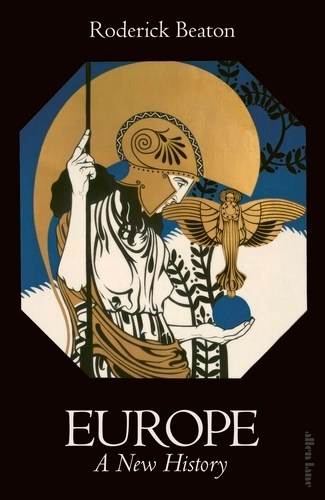
Abstract: What do we think we mean by ‘Europe’? If it cannot be defined by geography alone, is it bound by history, by its politics, by a shared culture? In this perception-changing book, historian Roderick Beaton reconfigures the entire history of Europe, from its distant beginnings to today, as the story of an idea.
Since its birth in ancient Greece, Europe has been defined, and redefined, by its people. Through this powerful lens, Beaton deftly surveys Europe’s major historical developments over 2,500 years, ending with the war in Ukraine. His focus is not on regions or nation states, but always on the continent as a whole, so that it appears in the sharpest outline. Throughout, Europe: A New History draws on original sources to allow the voices of the past, from Tacitus to Thatcher, to speak for themselves.
The story of Europe’s people is, Beaton shows us, as much about shared, and changing, identities as about great or wicked deeds, pitched battles, invasions or revolutions. Exploring the multilayered identities that have always come with being European, this wise, vital work places the Europe of today in the long arc of history, and lets us see it anew.
________________________________________________________________________________________
19 March 2026, Bush House (NE) -1.01: 18:30-20:00: A book presentation by Prof. Gail Holst Warhaft, My Father and the Silver King (Colenso Books), introduced by Dr Anthony Hirst and Timothy Ashplant (KCL). For Bush House NE, please enter from 30 Aldwych, London, WC2B 4BG.
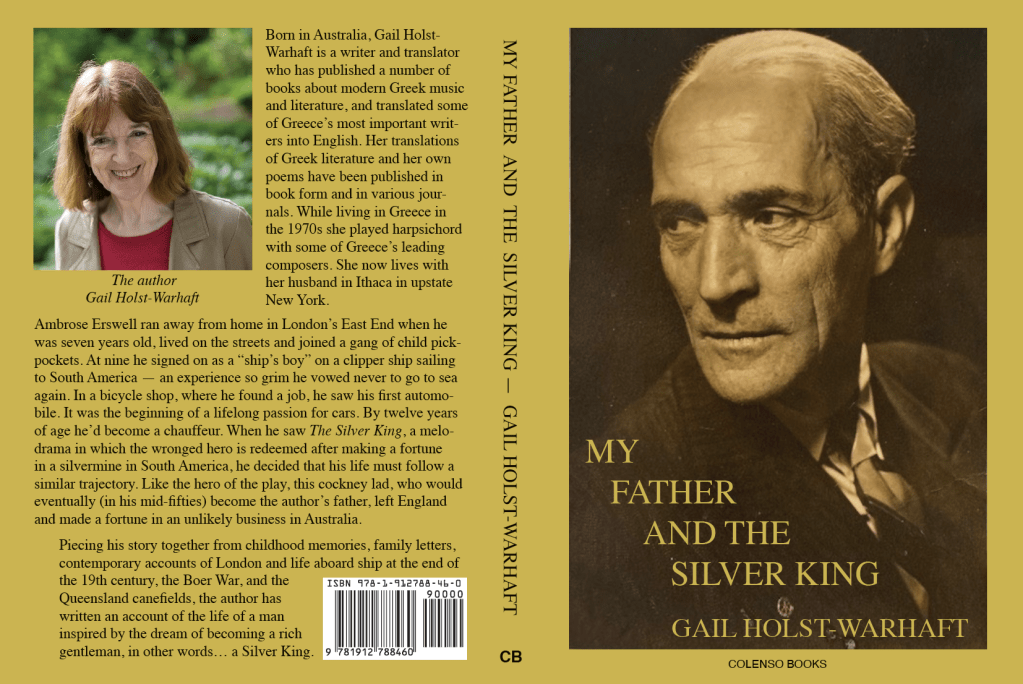
Picture: Gail Holst Warhaft’s new book, cover.
Register here: https://www.eventbrite.co.uk/e/gail-holst-warhaft-and-anthony-hirst-book-presentation-tickets-1981963048832?aff=oddtdtcreator
Teaser: ‘I was living in Greece when my father died. He had visited me there and impressed the Greeks by dancing in a taverna. I often wonder how much of my interest in the Greek music of the 1920s and 30s I owed to my father and to the Music Hall songs he sang to me as a child. His life was, of course, a rags-to-riches story not so uncommon in his day, but writing his story I came to see what an unusual and daring man he had been. One of the most intelligent things he did, perhaps, was to marry my studious, bookish mother, a marriage that turned out to be as successful as any of his other ventures.’
Bio: Gail Holst-Warhaft was born in Australia but lived in Greece before settling in Ithaca, NY. While researching her books on Greek music she played in the orchestras of Mikis Theodorakis, Dionysis Savvopoulos, and Mariza Koch. A poet, translator, musician, and professor of Comparative Literature at Cornell University, Holst-Warhaft’s books include The Fall of Athens (poems and prose memoir); Penelope’s Confession (poems); The Collected Poems of Nikos Kavadias (translations); The House with the Scorpions: Selected Poems and Song Lyrics of Mikis Theodorakis (translations); The Cue for Passion: Grief and its Political Uses; Dangerous Voices: Women’s Laments and Greek Literature; Theodorakis: Myth and Politics in Modern Greek Music; Road to Rembetika: Music of a Greek Sub-culture. Her poems and translations from Greek, French, and Anglo-Saxon have been published in many journals and anthologies including Literary Imagination, Per Contra, Translation, Southerly, Antipodes and Stand. She was poet laureate of Tompkins County for 2011 and 2012. Holst-Warhaft’s second collection of poems, Lucky Country, was published by Fomite in 2018. Nisiotika: Music, Dances, and Bitter-sweet Songs of the Aegean Islands was published in 2021 by Denise Harvey, and Ταξίδι στο ρεμπέτικο για μικρούς και μεγάλους (a children’s book about rembetika, was published in 2022 (in Greek). Her most recent books are Theodorakis, His Music and Politics (Cambridge Scholars’ Press, 2023) and My Father and the Silver King, (Colenso Books, 2026).
_______________________________________________________________________________________
16, 17, and 18 March 2026, Council Room KIN214, King’s Strand Campus, 19:00-20:15:
Professor Emerita Judith Herrin: A trilogy of lectures on three consecutive evenings on the topic of ‘Before “East” and “West”‘. Professor Herrin will speak on the topic of the centrality of Byzantium in the Mediterranean world of Early Christendom, through its metropolis, Constantinople, the vital role played by women in its continuity, and the lasting significance of its name.
Abstract: Prof. Herrin argues that Rome did not ‘fall’, it moved. In doing so it became something unique in Byzantium. Byzantium was central to the creation of the medieval world in Western Europe as well as Islamic Africa and what we now call the ‘Middle East’. The first lecture focuses on Constantinople (now Istanbul) and its imperial court: a permanent, unmoving capital for over a millennium and a magnet for merchants, pilgrims and diplomats. In the second lecture, she shows why the structural importance of women in the way Byzantium was ruled–which she calls ‘the imperial feminine’–was a crucial contribution to its lengthy survival and capacity to change. In the final lecture, ‘I’m more polemical’, she says, ‘about those who want to drop the name Byzantium’, again stressing its unique combination of Greek, Roman and Christian cultures.

Photo credit: Scarlett Freund
About the speaker: Judith Herrin is the author of The Formation of Christendom (recently republished as a Princeton Classic); Ravenna: Capital of Empire, Crucible of Europe; Byzantium, the Surprising Life of a Medieval Empire; and Women in Purple; as well as two collections of historical essays: Unrivalled Influence and Margins and Metropolis. After a long career teaching Byzantine and medieval history, notably at Princeton University and King’s College London, Herrin retired to pursue research, which is currently centred on the city of Ravenna and its anonymous Cosmographer. She is attached to the Wittgenstein Project Moving Byzantium, based at the Austrian Academy of Sciences, Vienna, and maintains continuing membership of various editorial and advisory boards. She was elected President of the Association Internationale des Etudes Byzantines, 2011-12, and is the Founding Editor of Translated Texts for Byzantinists series published by Liverpool University Press.
About the lectures: Professor Herrin’s lectures will be a revised version of the Lawrence Stone lectures, which she gave at Princeton University in the spring of 2025. The Lawrence Stone lectures are an annual event arranged by the Shelby Cullom Davis Center and the History Department of Princeton University in honour of the historian who did so much to establish the Center, which continues to encourage and foster some of the most exciting and innovative developments in historical research. Princeton University Press publishes the lectures in a dedicated series: https://press.princeton.edu/series/the-lawrence-stone-lectures?srsltid=AfmBOopaN1NKOhkBeeOahUaEa_Ix7N0Ia2WFu260XtXecky1nM0aCC8P.
Dr James Corke-Webster, Head of the Department of Classics, will introduce the speaker.
Seating is limited to 60 people, and priority will be given to people who can attend all three lectures. Please contact gonda.van_steen@kcl.ac.uk to reserve your seat.
______________________________________________________________________________________
18 March 2026: KIN 628, 17:30-19:00: Launch of The War for Anatolia and the Remaking of International Order: Greece, Turkey and the End of the First World War, co-edited by Georgios Giannakopoulos, Joseph A. Maiolo, and Gonda Van Steen (Bloomsbury) https://www.bloomsbury.com/uk/war-for-anatolia-and-the-remaking-of-international-order-9781350420953/
Please see below for the relevant links and do help us spread the news to interested colleagues/students.
King’s event page:
https://www.kcl.ac.uk/events/book-launch-the-war-for-anatolia-and-the-remaking-of-international-order-greece-turkey-and-the-end-of-the-first-world-war
___________________________________________________________________________________________
12 March 2026, Great Hall, King’s Strand Campus, 18:00: 11th Rumble Fund Lecture in Classical Art (in-person only; not streamed)
Speaker: Sir Grayson Perry on ‘Why I Hate Classical Civilisation‘
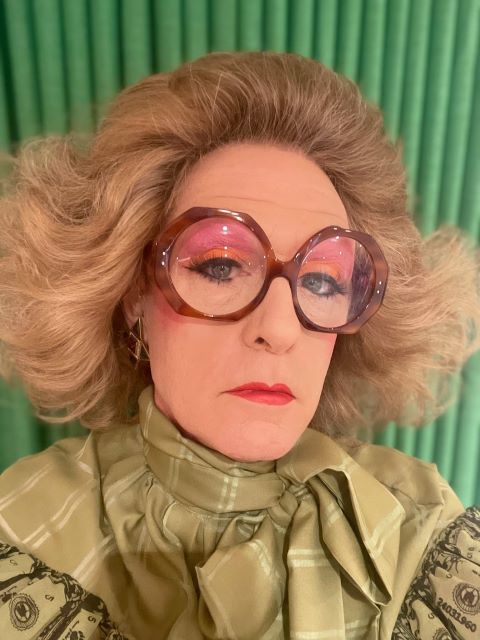
Abstract: I was stopped by a random man in the street who asked me if I wanted to give the Rumble lecture. He said it had to be on a subject related to Graeco-Roman culture. I said I had an antipathy to classical civilisation. He said, ‘Great, make it about that’. Of course he only asked me because I am a minor celebrity and that it might bring a little publicity and glamour to this obscure corner of the further education industrial complex.
I thought it might be interesting to unpick why exactly I have such an allergy to Kraters and Petrarch. I start from a place of complete ignorance and have no ambition to go anywhere else. I tried to get AI to write this abstract but it was useless which made me think maybe I was on to something! My dislike of ancient Greece and Rome is not necessarily aligned to any fashionable ideological causes. The classics are often used to bolster or lend credibility to a right wing, authoritarian, patriarchal, Eurocentric, white supremacist view of the world, but that is not principally why I dislike them. For me it is more personal, more irrational, more enjoyable. I love a good grievance.
Bio: Sir Grayson Perry is a Turner Prize winning contemporary artist, Bafta winning broadcaster, member of the Royal Academy, former trustee of the British Museum, and winner of the Erasmus Prize. He also performs live touring one-man stage shows.
________________________________________________________________________________________
11 March 2026: Strand S3.30, Seminars, 15:00-17:00: 2 seminar presentations, 20 minutes each, followed by Q & A:
Dr Maria Kouvari: ‘Values Beyond Preservation: Reassessing the Built Heritage of Swiss Humanitarian Aid in Greece’
Abstract: A post-war barrack hut, now in an advanced state of disrepair, stands on the banks of Lake Ziros near Preveza, Greece. Dating to 1946, it was transferred from Switzerland as part of a Swiss humanitarian aid project to establish a children’s village at Ziros, which was later developed into a children’s town under the auspices of the Royal Greek charitable funds. This post-war relic bears witness to the transnational history of Swiss humanitarian aid in the immediate postwar years and serves as a place of memory for former child residents. The presentation reconstructs the hut’s history within the broader context of Swiss relief initiatives across postwar Europe and reassesses its heritage value today. It discusses how values and meanings have been produced, contested, and re-ascribed in built heritage over time. It highlights overlooked dimensions of this heritage: first, by centring the memories of former residents and conceptualising the site as a geography of childhood; and secondly, by framing the hut as shared built heritage across heritage communities and national contexts. The discussion engages contemporary debates in heritage studies that revolve around transnational perspectives, underrepresented geographies, and notions of identity, memory, and minority.
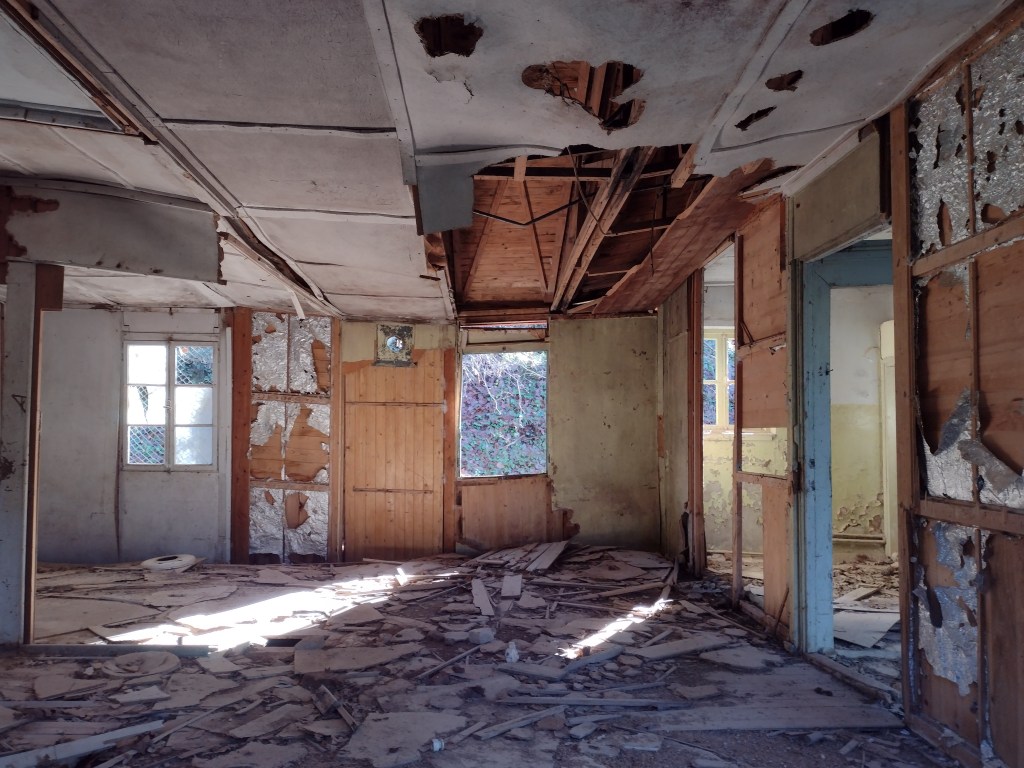
Barrack hut at Ziros, Preveza, Greece. Photograph by Maria Kouvari, 2023
Bio: Maria Kouvari is an architect and architectural historian with a PhD from ETH Zurich. Her current research concerns transnational histories and underrepresented geographies. Her doctoral dissertation, titled ‘Minor/s’ Heritage’, has been awarded grants from the Sophie Afenduli Fondation and the Foundation for Education and European Culture. Kouvari is the founder and coordinator of ‘Children Matter,’ a working group within the European Architectural History Network (EAHN).
2) Dr Fiona Antonelaki: ‘Fifteen-minute Tales: Mythology Retellings on the BBC Greek-language Programmes’
Abstract: ‘You cannot imagine how much you can fit into a fifteen-minute broadcast slot’, wrote the poet Nanos Valaoritis in 1947, when he became a regular contributor to the BBC Greek-language radio programmes. This paper revisits the original radio works written by a vibrant group of Greek intellectuals who worked for the BBC in the aftermath of World War II. It focuses on radio adaptations of ancient Greek myths (e.g., Perseus and Andromeda, Theseus, Helen of Troy), aired between 1946 and 1951. What distinguished the Greek-language adaptations of these myths from the contemporaneous Greek-themed radio plays aired on the BBC’s domestic services? In what ways was the radio version of these stories influenced by their treatment, sometimes even by the same authors, in other media and art forms (e.g., poetry, theatre, cinema)? As the original audio files of the radio programmes in question have not been preserved, this paper is based on the study of unpublished broadcast scripts stored at the BBC Written Archives Centre.
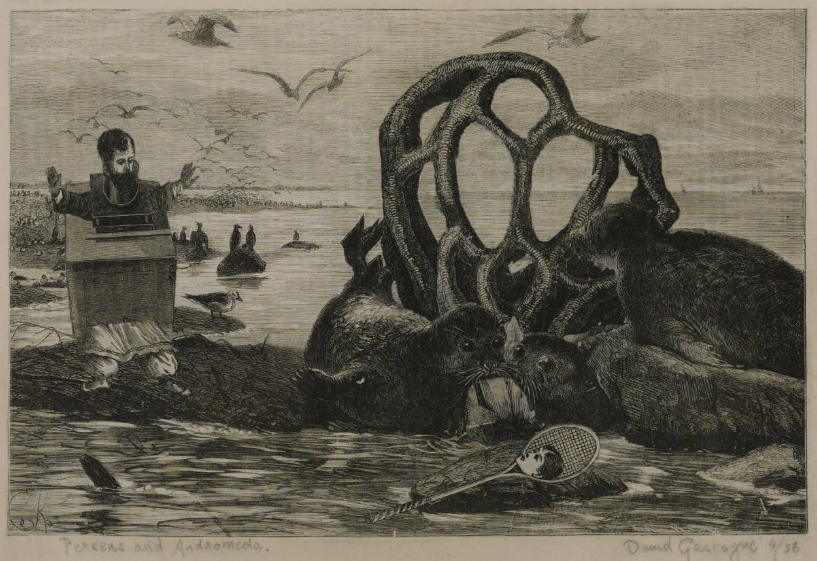
Perseus and Andromeda, 1936, David Gascoyne. © The estate of David Gascoyne. Photo: Tate.
Bio: Fiona Antonelaki is a postdoctoral researcher at the National and Kapodistrian University of Athens. She is the principal investigator of the research project ‘Reading Poetry Aloud: Education, Culture and the Media in Greece, 1930-1960’, funded by the Hellenic Foundation for Research and Innovation. She studied history and archaeology at the University of Athens and Modern Greek literature at King’s College London (Ph.D. 2018). Her research focuses on modern Greek literature and/in performance, with a special interest in radio and audio cultures, and the relationship between literary modernism and popular culture. She has held research and teaching positions at Princeton University, the University of Thessaly, the University of Padua, and the University of Cambridge. She is reviews co-editor for the Journal of Greek Media & Culture.
_________________________________________________________________________________________
5 March 2026, 18:15pm (London time), Senate House (Malet Street, London, WC1E 7HU), Room 104: Dr. Amanda Kubic: ‘Orbits of Movement, Choreographies of Memory: Unfolding a Female Network of Modern “Greek” Dance’.
The Centre for Greek Diaspora Studies and Hellenic Institute (Royal Holloway, University of London) and Centre for Hellenic Studies (King’s College London) are delighted to welcome Dr. Amanda Kubic (University of Amsterdam) to speak on ‘Orbits of Movement, Choreographies of Memory: Unfolding a Female Network of Modern “Greek” Dance’.
Amanda’s lecture will unfold various connections between four female figures in the history of modern “Greek” dance, both in Greece and abroad in the US and Europe over the last century. She will focus on Koula Pratsika, Rallou Manou, Martha Graham, and Valasia Simeon as a network of choreographers and dance educators who together can shed light on the personal, political, and aesthetic ideologies that have informed the development of “Greek” dance since the 1920s, from the deployment of mythic narratives to the incorporation of disabled epistemologies.
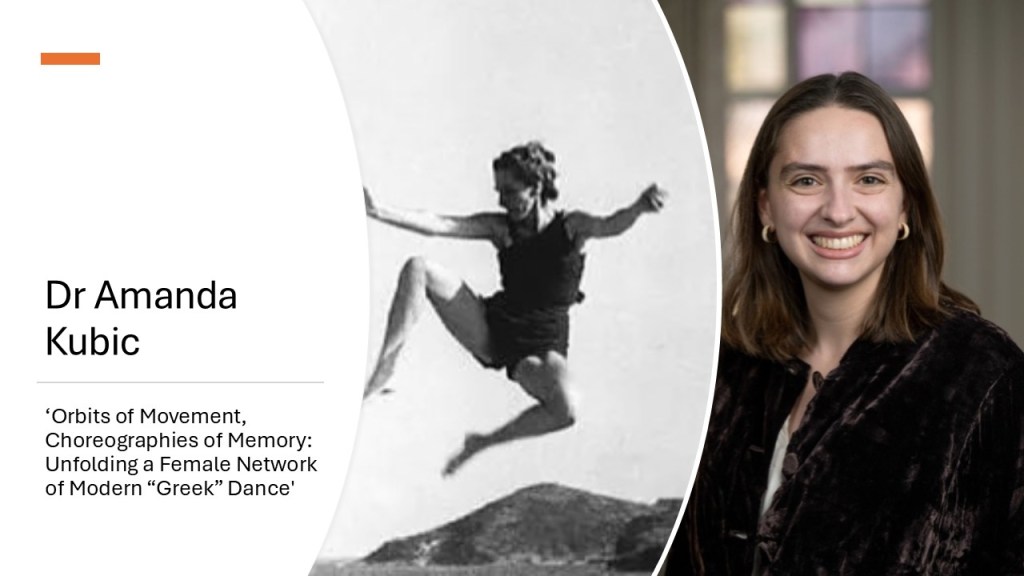
Dr. Amanda Kubic holds a PhD in Comparative Literature from the University of Michigan, Ann Arbor, and is currently Marilena Laskaridis Visiting Fellow in Modern Greek Studies at the University of Amsterdam. She has published in journals such as Modernism/modernity and in various edited volumes, and is currently working on her first monograph project. We are truly excited to welcome her to London and Royal Holloway for her first talk in the UK!
This event is free and open to the public. A Teams link will be provided in due course for those who wish to attend remotely. Please address any questions to christopher.jotischky@rhul.ac.uk.
_______________________________________________________
5 February 2026: Great Hall, King’s Strand Campus, 18:00: 35th Runciman lecture by Professor Claudia Rapp
Preceded by Orthodox Vespers in the Chapel at 17:15
Lecture title: Small Things, Big Stories: Approaching Byzantine Society through Prayer Book Manuscripts
Abstract: Approximately 80 percent of the population of the Eastern Roman Empire in the Christian middle ages lived from agricultural activity in the countryside, but these people are underrepresented in the contemporary written accounts that focus on the imperial court, the privileged, and the educated. A largely untapped source to better understand the rural communities are the prayer books that were made for the use of priests. These euchologia contain short prayers that address various local concerns and events in the lifecycle of families, as they are being studied in the Vienna Euchologia Project. This lecture will present insights from the study of the manuscripts and the short prayers (including a recently published prayer for silk worms), which shed light on social and economic developments in Byzantine and post-Byzantine society.
Lecturer’s bio: Claudia Rapp FBA is Professor of Byzantine Studies at the University of Vienna, Director of the Institute for Medieval Research at the Austrian Academy of Sciences, and Co-Director of the Cluster of Excellence “EurAsian Transformations. Resources of the Past and Challenges of Diversity”. After obtaining her Doctorate at Oxford, she held appointments at Cornell University and the University of California, Los Angeles, before taking up her current position in Vienna in 2011. She has researched and published widely on the social and cultural history of Late Antiquity and Byzantium. Her work has been recognized, among others, with the Wittgenstein Award of the Austrian Research Fund and the Karl Christ Prize for Ancient History.

Prof. Claudia Rapp. Photo credit: Nina Tschavoll
Prof. Rapp was introduced by Dr James Corke-Webster, Head of the Department of Classics. The vote of thanks was given by Prof. Emerita Judith Herrin.
___________________________________________________________________________________________
26 January and 9 February 2026, 17:00 (UK), 19:00 (Greece): Two online panels co-hosted by the CHS-BSA on: ‘Translation and the Magnitude of Historical Figures’
26 January panel chaired by Koraes Professor Gonda Van Steen, with in-person presence sponsorship by the Cyprus High Commission in London. Speakers:
Dimitra Kotoula, Andry Christofidou-Antoniadou, and Jennifer Kellogg, on topics of Homer, Lorca and Seferis
More information and registration:
9 February panel chaired by Prof. Emeritus David Ricks. Speakers:
John Stathatos, Vassilis Letsios, and Joshua Barley, on Michalis Ganas and translation.
More information and registration:
______________________________________________________________________________
22 January 2026, King’s Strand campus, River Room (KIN227), 19:00-20.15: Lecture by Professor Tomasz Derda and Dr Tomasz Borowski.
Title: ‘Marea’/Philoxenite: A New Byzantine Town and a Pilgrimage Station in the Hinterland of Alexandria.
Abstract: In the last centuries of the Byzantine rule in Egypt, the region of Mareotis in the hinterland of Alexandria saw a major urban investment. Philoxenite, one of the last new cities of the Late-Antique world was being built on the southern shores of lake Mareotis. Embellished with marble clad, painted churches and bathhouses, it was a site to behold. It carried with it cross-regional importance as its foundation aimed to offer safe lodging and rest to the multitude of pilgrims sailing across the Mediterranean to the renowned, nearby shrine of St Menas (Abu Mena). Yet, until recently the identity of Philoxenite’s founder as well as its urban layout and art were poorly known. Papers in this panel, presented by members of the Polish ‘Marea Archaeological Project’ team address some of these issues. The aim is to shed light on how the new city was formed and what its art, particularly murals, can tell us about artistic workshops active in the hinterland of Alexandria in the last centuries of Byzantine rule in Egypt.
Speaker bios: Tomasz Derda is a professor in the Department of Archaeology in the University of Warsaw. He is the head of the Chair of Epigraphy and Papyrology and the editor of the ‘The Journal of Juristic Papyrology’. He received numerous scholarships and grants, currently serving as the director of the Polish ‘Marea Archaeological Project.’ He is the author and editor of numerous academic articles and books, working on a wide range of sites in Egypt, Libya and Sudan. His most works include the volume ‘Marea’/Philoxenite: a Town and Pilgrimage Station on the Road to the Sanctuary of Saint Menas (Abu Mena), edited with M. Gwiazda and published by Peeters Publishers (2025), and the article ‘Church N1 at ‘Marea’/Philoxenite: an outstanding example of Late Antique sacral architecture,’ co-authored with P. Zakrzewski and published in the Antiquity Journal (2025).
Tomasz Borowski received a BA and MA in archaeology in Durham University (UK) and a PhD in the University of Reading (UK). His research focuses on the material culture, interfaith relations and links between religion and identity in the medieval and late Antique periods. He is an author of a monograph about cities, castles and monasteries of crusader Livonia and several academic articles. He received several scholarships, including doctoral fellowship from Arts and Humanities Research Council (2011-2016) and a post-doc in the University of Haifa (2019-2020). He currently works at the University of Warsaw as a member of the team excavating Byzantine Philoxenite in Egypt. Since 2016 he also collaborates with the Polish History Museum, where he is one of the curators responsible for the scenario of the medieval section of the permanent exhibition. In 2024 he was also one of the curators of The Power of the Story’ exhibition and in 2025 he was one of the curators of the ‘1025: The Birth of a Kingdom’ exhibition.
More information about this project is available at its webpage, and on the ‘Byzantine Legacy’ website.

Houses at Philoxenite. Photo by Marea Archaeological Project.
__________________________________________________________________________
28 November 2025: Council Room KIN214, King’s Strand Campus, 18:30: Dr Anastasia (Natasha) Lemos
Title: ‘Greek and Turkish Literary Encounters in the Late Nineteenth and Early Twentieth Centuries’. This talk represents a part of Dr Lemos’s broader collaboration with Dr Aikaterini Boura on a book project studying Greek and Turkish literary encounters, which will be published by the Gennadius Library of the American School of Classical Studies at Athens.
Register here: https://www.eventbrite.com/e/1846303015019?aff=oddtdtcreator
Bio: Dr Lemos earned a PhD degree from SOAS, studying the literatures of Greece and Turkey inspired by the war of 1919-1922 and its aftermath. She has published widely on this subject and has also co-edited, with Eleni Yannakakis, a collection of essays titled Critical Times Critical Thoughts: Contemporary Greek Writers Discuss Facts and Fiction, in which leading Greek writers reflect on the crisis and its background. Dr Lemos is currently revising her dissertation for publication and exploring new sources, some unpublished, that are relevant to her subject. She has also contributed to major exhibitions in Greece (at the Benaki Museum and the Gennadius Library of the ASCSA) and to an activist campaign to prevent the installation of an illegal hydroelectric plant in a protected area of the Pindus National Park.
______________________________________________________________________________________
19 November 2025: Bush House Exchange, King’s Strand Campus, 14:00-15:30: Panel discussion: ‘Adoption, Memory, and Reform: How Is Greece Shaping Policy for Its Diaspora?’
Speakers:
Dr Athanasios Balermpas, Secretary General of Interior, Ministry of Interior of Greece
Dr Georgios Samaras, Assistant Professor of Public Policy, School for Government, KCL
Prof. Gonda Van Steen, Koraes Chair, Centre for Hellenic Studies, KCL
Dr Mary Cardaras, Greek-born adoptee and Director, The Demos Center, American College of Greece.
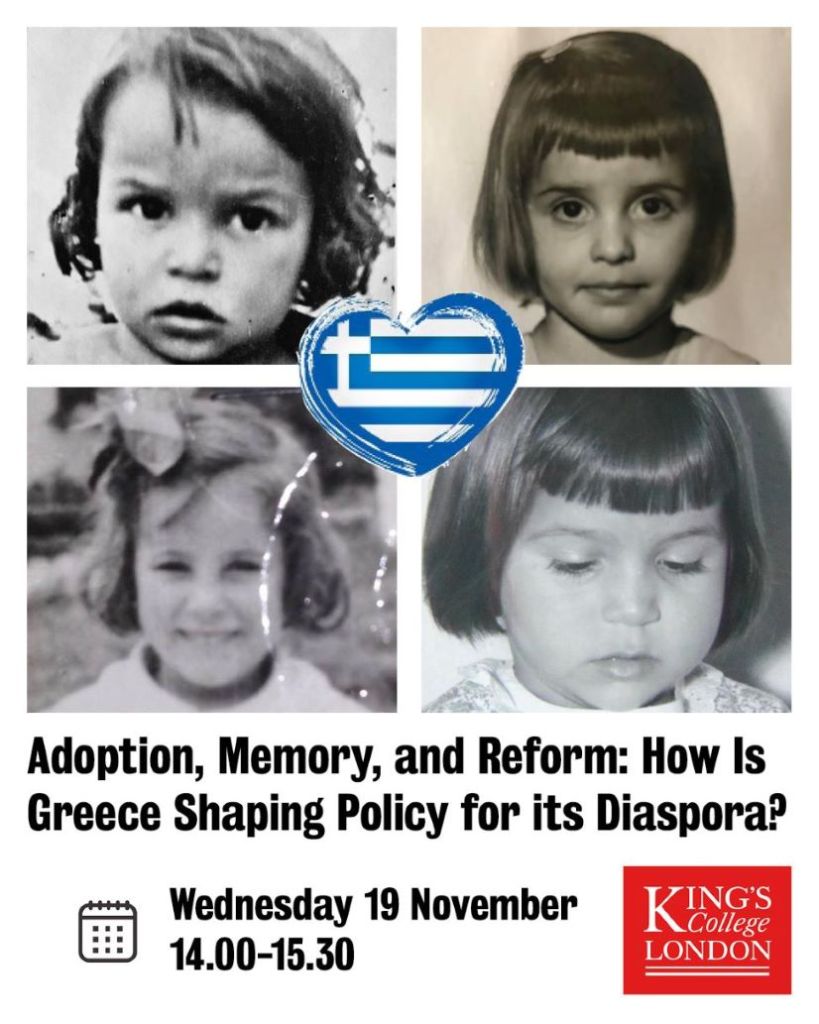
This panel is co-hosted with King’s SSPP and the Embassy of Greece in London. Please contact Hermione Dadone for more information, at hermione.dadone@kcl.ac.uk .
Location: Bush House North East Wing, Aldwych. Attendees are advised to enter from the Aldwych entrance of BH NE and to pre-register. The Exchange is visible on the street level.
Abstract: Exploring Greece’s past of forced adoption and new paths to citizenship, identity and belonging. This event is a collaboration between the Faculty of Social Science & Public Policy and the Faculty of Arts & Humanities at King’s College London
Between the 1950s and 1970s, thousands of Greek children were sent abroad for adoption, often under pressure or without their families’ full consent. Many grew up far from their birth culture, unsure or even unaware of their origins. In 2025, the Greek government introduced a new pathway for these adoptees to reclaim Greek citizenship, acknowledging both their nationality of origin and their wish to reconnect with their roots. This reform reflects the power of research and advocacy, and represents a significant change for the Greek diaspora worldwide. What can these stories teach us about belonging, recognition, and dual identity at a time when division in the UK is so rife?
Joining Professor Gonda Van Steen is guest Dr Athanasios Balermpas, Secretary General of the Greek Ministry of Interior, who helped drive this important policy change.
___________________________________________________________________________________________
19 November 2025: Council Room KIN214, King’s Strand Campus, 18:30: book presentation co-hosted with the Anglo-Hellenic League:
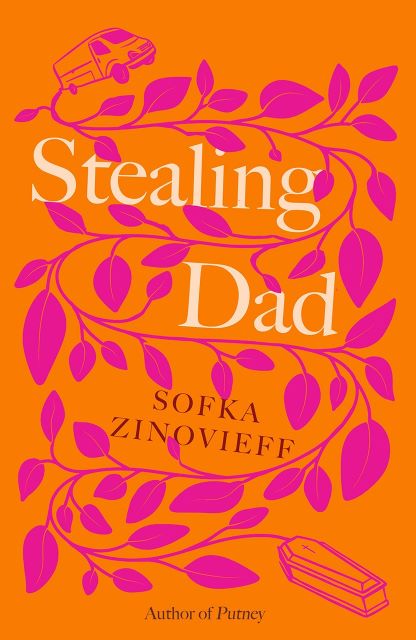
Sofka Zinovieff: Stealing Dad
The renowned novelist will discuss her latest book in conversation with Dr John Kittmer, CHS Visiting Professor. Though fictional, the book was inspired by what happened after Sofka’s father died in 2021, when his widow did not allow Sofka or her siblings to attend his funeral. There are many Greeks and half-Greeks in the story, which takes place mainly in London.
Register here: https://www.eventbrite.co.uk/e/stealing-dad-in-conversation-with-sofka-zinovieff-tickets-1473532708999?aff=oddtdtcreator
Sofka Zinovieff was born in London, has Russian ancestry and lives in Athens. She has written about Greece as an anthropologist (with a PhD from Cambridge), a journalist and an author. Her latest novel is Stealing Dad and her other books include Eurydice Street: A Place in Athens, and the novels Putney and The House on Paradise Street. Podcast documentary series: Athens Unpacked.
www.sofkazinovieff.com @SofkaZinovieff
________________________________________________________________________________________
17 November 2025, Bush House S 2.03, 19:00: Dr Konstantina Karakosta (University of Patras), on: ‘The Conquered Greeks under Ottoman Rule and Transnational Hellenism’

Register here: https://www.eventbrite.co.uk/e/lecture-by-dr-konstantina-karakosta-tickets-1774333913499?aff=oddtdtcreator
Abstract: The Ottoman period of Greek history formally begins in 1453, with the fall of Constantinople, and extends until 1821, with the outbreak of the Greek Revolution. For more than four centuries, the conquered Greeks lived under Ottoman domination. Beyond those who remained within the borders of the Empire, there was a Hellenism of the Diaspora: of those Greeks who lived outside the Ottoman realm, primarily across Europe. This lecture focuses on one such case, examining the example of the Moschopolitans—the inhabitants of Moschopolis—and the development of their extensive commercial and entrepreneurial networks in Central Europe. Moschopolis, located in what is today southern Albania, near the Greek border, emerged as a major centre of the Modern Greek Enlightenment. Its inhabitants first migrated to Venice and subsequently to territories of the Habsburg monarchy, where they engaged in significant commercial activity. They established their own churches and schools, contributing notably to the economic and social advancement of the regions in which they settled. Although subjugated by the Ottomans, they ‘conquered’ the overland routes that connected the Ottoman Empire with the promising lands of Europe, thereby opening a new chapter in the history of transnational Hellenism.
Bio: Konstantina Karakosta is an Assistant Professor of Modern Greek History at the University of Patras. She holds a PhD in Modern and Contemporary Greek and European History from the Aristotle University of Thessaloniki, as well as two Master’s degrees in Modern Greek History and Digital History. As a Postdoctoral Fellow at New York University (Remarque Institute), she conducted research in Public History and Politics. She has also completed the HarvardX Online Certificate Course in ‘Rhetoric: The Art of Persuasive Writing and Public Speaking’. Her research interests include Modern Greek History, the Greek Revolution, Diaspora and National Identities, Public and Digital History, and the cultural politics of memory and trauma. She is the author of the monograph From Moschopolis to Miskolc, Hungary: The Historical Dimension of a Mythical Narrative (Athens: Papazisis, 2021). She has also translated in Greek and edited the volume Carlo M. Cipolla (ed.), The Industrial Revolution, The Fontana Economic History of Europe (Athens: Papazisis, 2025).
____________________________________________________________________________________
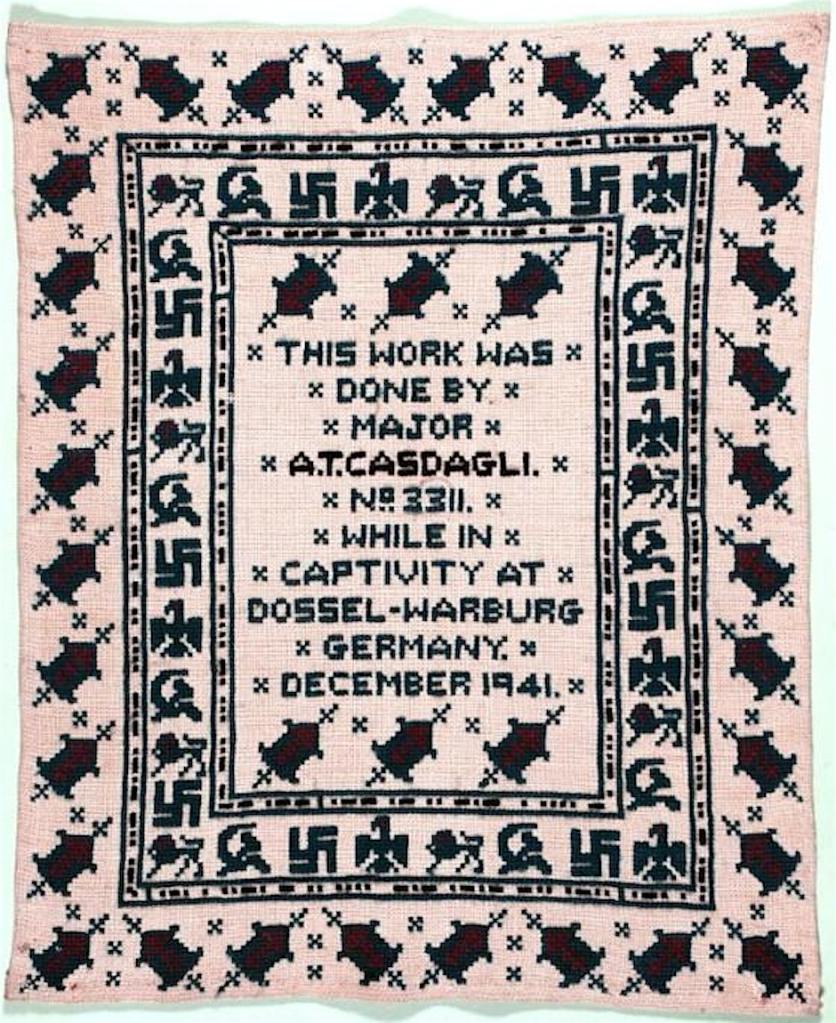
28 October 2025, KIN 628 (War Studies seminar room in the King’s building), 15:00-17:00: an afternoon dedicated to wartime spying and embroidery, co-organized with King’s School of Security Studies, titled ‘Cas’ Codery, Embroidery and Security’. The panel of ‘Cas’ Codery’ will tell the extraordinary story of Major A.T. Casdagli, a Greek born in Salford, Greater Manchester, who was an M19 agent, a prisoner of war, and an exceptionally skilled embroiderer of subversive messages. He also left a secret war diary, Prouder Than Ever (Cylix Press), which he wrote during the period of 1940-1945, when he was detained in Nazi Germany.
Presenters are Alexis Penny Casdagli, daughter of Major A.T. Casdagli, and Dr Isabella Rosner, Curator of Textiles and Contextual Studies Lecturer at the Royal School of Needlework and author of Stitching Freedom: Embroidery and Incarceration (Common Threads Press).
Register via the School of Security Studies or by contacting Alexis Casdagli alexiscasdagli@cylixpress.co.uk .
______________________________________________________________________________________
17 October 2025, River Room (KIN 227), King’s Strand Campus, 18:30: Prof. Andromachi Karanika, UC Irvine: ‘From Heroines to Saints: Women’s Catalogues from Early Greek Epic Poetry and Beyond’
Abstract: This paper discusses the listing of female names from early Greek epic literature and beyond. While female names in a catalogue may be part of a systematic register attached to political identity for entire families, the list as a whole also acquires an emotional register in becoming part of a larger structure in epic poetry. When reading such lists from a trauma theory perspective, we recognize that they appear in moments of crisis and become a mechanism for the poet to present narratives that navigate crisis management (e.g., Il. 18.39–49; Hom. Hym. Dem. 406–33). Lists have their visual counterparts when figures are placed next to each other iconographically, as in a parade (from ancient depictions of the “Nekyia” to later Byzantine hagiography as any Greek church today can showcase). Furthermore, this paper explores (from a comparative and anthropological perspective) how and why such enumerations turn into a powerful performance, arguing for the creation of sacred mental spaces.
Register via this link: https://www.eventbrite.co.uk/e/lecture-by-prof-andromache-karanika-from-heroines-to-saints-tickets-1660333635599?aff=oddtdtcreator

_____________________________________________________________________________________________
7 October 2025, King’s Strand Campus, 18:00, co-hosted by CHS and CLAMS: Prof. Michael Grünbart, Institut für Byzantinistik und Neogräzistik, für Interdisziplinäre Zypern-Studien und Arbeitsstelle Griechenland, University of Münster.
Note: This event will exceptionally take place in the Glass Suites 1-3 of the Franklin Wilkins Building, on the Waterloo campus. Please register in advance on Eventbrite: https://www.eventbrite.co.uk/e/7-oct-6pm-lecture-by-prof-michael-grunbart-imperial-legacy-tickets-1583010249269?utm-campaign=social&utm-content=attendeeshare&utm-medium=discovery&utm-term=listing&utm-source=cp&aff=ebdsshcopyurl
Title: ‘Imperial Legacy and Sacred Memory: Reassessing the Council of Nicaea (325) in Byzantine Context’
Introduction by Dr Tassos Papacostas (King’s)
Abstract: This lecture explores the enduring influence of the Council of Nicaea on Byzantine conceptions of imperial authority and Christian orthodoxy. By examining Nicaea’s role as a place of memory, the council’s evolving reception, and Constantine the Great’s portrayal as a model for later emperors, the talk reveals how the event shaped both religious and political narratives in Byzantium. It underscores Constantine’s agency in establishing patterns of leadership and legitimacy within the Byzantine Empire.
______________________________________________________________________________
13 June 2025, Great Hall, King’s Strand Campus, 19:00 Runciman Award Ceremony: An evening dedicated to good books, Anglo-Hellenic friendship relations, and an incisive lecture.
Co-hosted with the Anglo-Hellenic League. The Runciman Award and Ceremony are generously sponsored by the A.G. Leventis Foundation and the Athanasios C. Laskaridis Charitable Foundation.
Speaker: Prof. Elias Papaioannou, on ‘Uprootedness, Human Capital, and Anatolia Imprints’
Register here: https://www.eventbrite.com/e/runciman-award-ceremony-tickets-1261113417179?aff=oddtdtcreator
For online attendance via Zoom, pursue the links via the AHL website: anglohellenicleague.org/events
Abstract: The abrupt exodus of nearly a million Christian Orthodox from Anatolia over a century ago reshaped Greece’s social and demographic fabric. Today, four in ten Greeks trace their lineage to these refugees—yet the long-term effects of their displacement on Greece’s human capital remain largely underexplored. How did forced migration influence educational trajectories across generations? Did refugees adapt by investing in portable skills, or did they struggle to catch up with the autochthonous population?
Using large data on refugee origins, settlements, and education over three generations, strong evidence emerges for an ‘uprootedness hypothesis’: while initially lagging behind, refugees in rural areas surpassed locals in educational attainment, favouring degrees with global mobility—engineering and medicine—while locals leaned toward law and other home-biased fields. Beyond history, the case offers timely lessons for today’s migration crises and demographic deficits. Displacement, if properly supported, can drive long-term resilience and economic growth.

About the speaker: Elias Papaioannou is a professor of economics at the London Business School, where he co-directs the Wheeler Institute for Business and Development. Papaioannou, a fellow of the British Academy, also serves as a managing co-editor of the Review of Economic Studies, one of the top scholarly general-interest journals in economics. He has worked at the European Central Bank and Dartmouth College and held visiting professorships at the Massachusetts Institute of Technology (MIT) and Harvard. His research covers international finance, political economy, economic history, and growth.
___________________________________________________________________________________
12 June 2025, Council Room, King’s Strand Campus, 18:00: Award Ceremonies:
Katie Lentakis Memorial Fund Award and Third Mary Margaret McCabe Dissertation Prize in Ancient Philosophy, in partnership with King’s CHS and Classics Department, the Anglo-Hellenic League, and the Foundation for Platonic Studies.
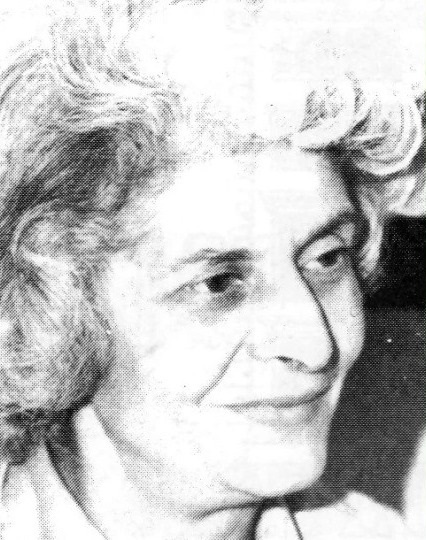
Speaker: Professor Emeritus Michael Trapp (King’s) on ‘A Life of Socrates in Six Scenes’
Register here: https://www.eventbrite.com/e/katie-lentakis-memorial-lecture-tickets-1261093096399?aff=oddtdtcreator
Abstract: This talk will use a set of trade cards from the 1940s as a point of entry into questions about how the biography of Socrates has been constructed and reconstructed over the ages. What episodes have been highlighted as specially significant, how have they been organised and supplemented, what has been de-emphasised or suppressed, and what perceptions, aims and constraints have operated to shape his biographers’ choices?
About the speaker: Michael Trapp is Emeritus Professor of Greek Literature and Thought at King’s College London, where he taught from 1989 to 2023. His research and publications range over Greek literature and philosophy in the Roman Imperial period, ancient epistolography, the reception of Socrates in and since antiquity, the history of classical studies at King’s, and the local history (classical and non-classical) of the King’s Strand campus. He is currently working on an edition and translation of the complete works of Aelius Aristides for the Loeb Classical Library.
_____________________________________________________________________________________________
5 May 2025: 18:00: Webinar by Prof. Catherine Morgan:
Caves, shrines, and navigation in the Ionian Islands: new research and legacy data
As a student at the British School at Athens, Sylvia Benton conducted an extensive survey through the Ionian islands in 1931-1932, setting the scene for a highly fruitful decade of research on Ithaca. For large parts of the archipelago, Benton’s discoveries remain fundamental. More recently, the Ephorate of Palaeoanthropology and Speleology initiated a research programme, Cavescapes, to map and publish its large collection of legacy data from caves across northwest Greece. This paper draws on my ongoing work on British School and Ephorate data, focusing on the role of caves and beach-side shrines in the facilitating the long distance and local mobility fundamental to island life in Archaic-Hellenistic times.
Catherine Morgan is Professor of Classics and Archaeology in the University of Oxford and a Senior Research Fellow of All Souls College. Previously Director of the British School at Athens (2007-2015) and concurrently Professor of Classical Archaeology at King’s College London, she has conducted and collaborated in fieldwork on Ithaca, Kephallonia, Leukas, Meganisi and the Akarnanian coast. She has also conducted extensive archival research on the history of British research in this area, focused on the careers of Sylvia Benton and Walter Heurtley. She is the author of a study on Northwestern Greece and the Central Ionian Archipelago in the Oxford History of the Archaic Greek World, to be published later this year, and is currently working on a book entitled Histories in the Central Ionian Islands.
Picture by Prof. Morgan of Vathy, Ithaca

________________________________________________________________________________________
13 March 2025, 18.30
Niki Marangou Memorial Lecture
Council Room, KCL Strand Campus
Seventh Niki Marangou Memorial Lecture
Euphrosyne Doxiadis:
‘The Eye of the Beholder: From the Fayum Portraits to a Painting in Trafalgar Square‘

Abstract: Euphrosyne Doxiadis will speak about the two areas of research to which she has dedicated her life: firstly, about the Fayum Portraits, the postclassical Greco-Roman painted portraits found in the Egyptian deserts and their importance as works of art; secondly, about the artist Peter Paul Rubens and his masterful works. She will present the findings of her decades-long attempts to show why the painting called Samson and Delilah is an unacceptable misattribution to Rubens. She has demonstrated that the painting is a 20th-century copy of a now lost 17th-century master painting. Since 1992, she and others have tried to open the discussion about the painting’s nature with the painting’s guardians at the National Gallery, including the NG Trustees, who have not responded to the requests she has made through correspondence and through an open letter on the site www.InRubensName.org, a petition that has now been signed by more than 500 people. See here for a recent feature in The Guardian: https://www.theguardian.com/artanddesign/2025/feb/26/fresh-doubt-cast-on-authenticity-of-rubens-painting-in-national-gallery-samson-and-delilah
About the speaker: Euphrosyne Doxiadis was born in Athens in 1946. She studied at the Oscar Kokoschka School of Seeing in Salzburg, the Slade School of Fine Art in London, the Cranbrook Academy of Art in the USA, and at the Wimbledon School of Art, London, as a ‘mature’ student. In 1995, she published The Mysterious Fayum Portraits: Faces from Ancient Egypt (new edn. 2024), which was awarded the Bordin Prize by the Institut de France, Académie des Beaux Arts (1996) and an Academy of Athens prize. Since 1987, Euphrosyne has been researching the problems of the painting called Samson and Delilah in London’s National Gallery (inventory number NG6461), which, she argues, was wrongly attributed to the great Flemish artist Peter Paul Rubens. Her book NG 6461: The Fake National Gallery Rubens is hot off the press (2025, Eris Press, London and New York; current site about NG646: http://www.inRubensName.org), and the speaker will tell us more about her discoveries in the lecture. Euphrosyne’s paintings have seen numerous international solo exhibitions. She has been artist-in-residence and lecturer at the Aegean Centre for the Fine Arts on the Aegean Island of Paros from 1990 until today.
__________________________________________________________________________________________
12 February 2025, King’s Great Hall, Strand campus, 18:00-20:00 (in-person only):
A lecture by Dr Philip Mansel, co-hosted with the Anglo-Hellenic League and the Levantine Heritage Foundation:
‘The “Second Phanar”: Constantinople Greeks and Ottoman Sultans, 1821 to 1914’

Image: Alexander Mavrogeni, Ottoman minister to the United States 1887-1896, Prince of Samos 1902-1904
Abstract: After the revolution of 1821, some Greeks continued to serve Ottoman Sultans in such positions as doctors, bankers or photographers to the Sultan, or as diplomats. The Oecumenical Patriarch, who had anathematised the Greek revolution of 1821, continued to be part of the Ottoman hierarchy. Members of the Aristarchi, Mavrogeni, Mousouros and Zarifi families, among many others, preferred to live in Constantinople and serve the Sultan, rather than to reside in the kingdom of Greece. Abdulhamid II (1876-1909) had a Greek doctor named Spyridon Mavrogeni, a Greek banker Giorgios Zarifi whose nephew’s memoirs will be quoted, while the Hamidiye mosque beside his palace at Yildiz was designed by his Greek architect, Nikolo Vasilaki. The title of Prince of Samos could be awarded by the Sultan to Ottoman Greeks as a reward for their services, as the titles of Prince of Wallachia or Moldavia had been awarded to Phanariots before 1821. The nineteenth century was an age of multinational empires as well as nation-states. Many people preferred the former to the latter.
______________________________________________________________________________
6 February 2025, 18.00
34th Runciman Lecture
Great Hall, KCL Strand Campus
34th Runciman Lecture
Prof Josephine Crawley Quinn: ‘Anarchy, Democracy, and the City-State’
Preceded by Greek Orthodox Vespers at 5.15pm (Chapel)
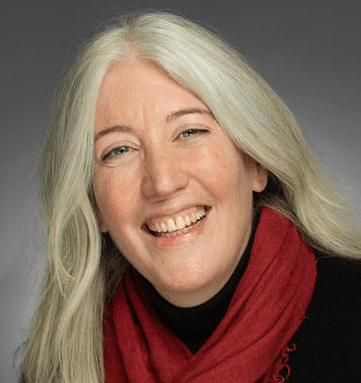
This lecture emerges from a larger project on anarchism and antiquity where I’m looking at the ancient Mediterranean as a site of resistance to power, authority and state-formation. I suggest that taking what James C. Scott has called an “anarchist squint” at ancient history can offer us useful new ways to think about the operation of power, domination, inequality, disobedience, mobility, and the state. While cities, for instance, are often considered a marker or symptom of states, they can also resist hierarchical, embedded power at all levels. I’m interested here in the way that Mediterranean poleis could operate as heteropoleis or ‘unruly cities’, and I’m interested in particular in the ways in which the core institutions of Athenian ‘democracy’ could work to prevent the emergence of majority rule, and how that benefited a small and peripheral maritime polity on the margins of Persian state power.
Josephine Quinn took up the chair in Ancient History at Cambridge University in January 2025. Previously, she was Professor of Ancient History at Oxford University, and Martin Frederiksen Fellow and Tutor in Ancient History at Worcester College, Oxford. She has degrees from Oxford and UC Berkeley, has taught in America, Italy and the UK, and co-directed the Tunisian-British archaeological excavations at Utica. She is a regular contributor to the London Review of Books, as well as to radio and television programmes.
Prof. Stuart Dunn, Head of Humanities, introduced the speaker. The vote of thanks was given by Prof. Catherine Morgan.
The Runciman Lectures have been generously sponsored by the late Nicholas and Matti Egon and the Egon family.Josephine Quinn
27 January 2025, Great Hall, KCL Strand campus: A discussion on the gender divide: 13:00-15:00 
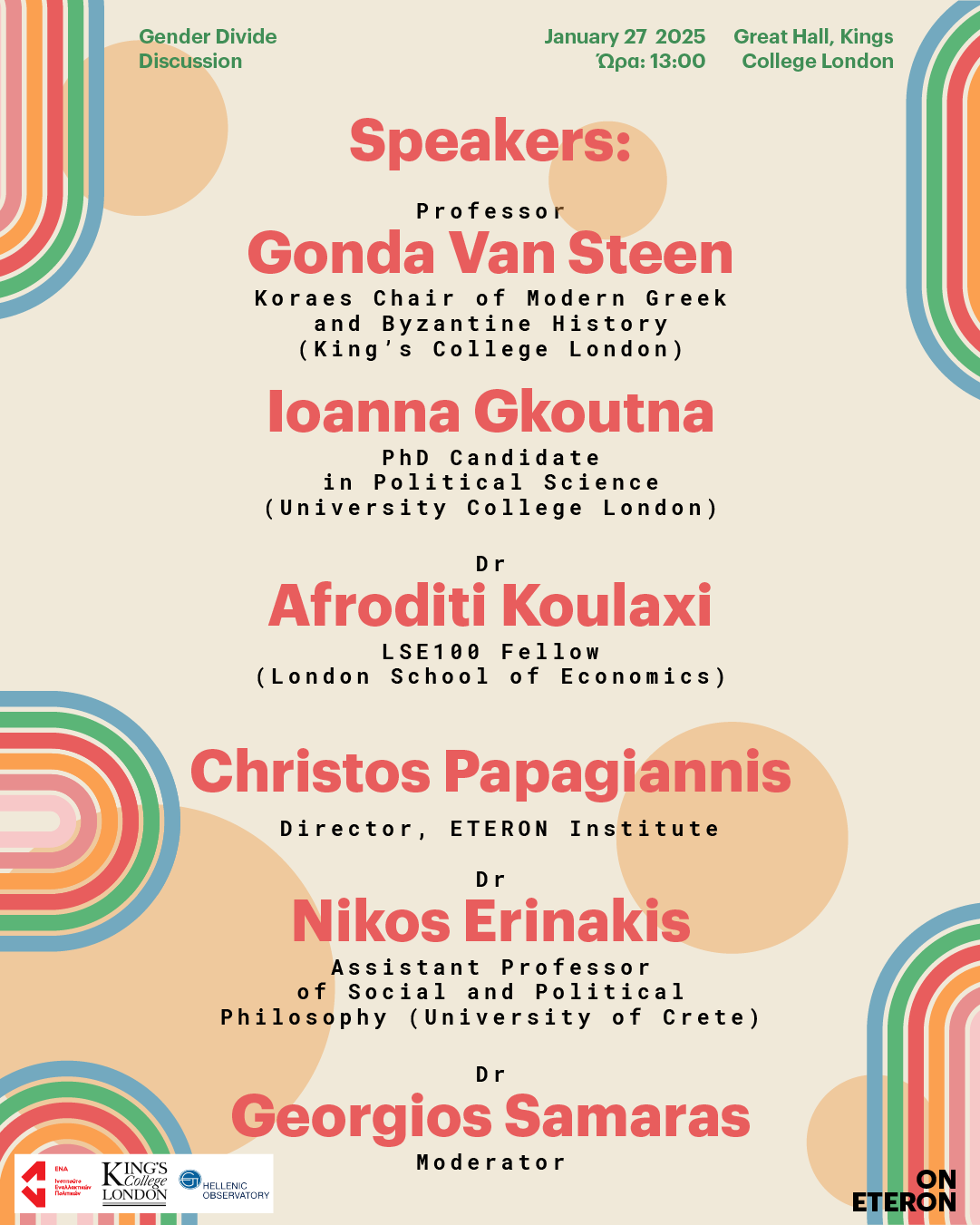
Join us on 27 January 2025 in the Great Hall, King’s College London, for a thought-provoking panel discussion on the gender divide and its intersection with societal challenges, including gendered violence in the UK. This 75-minute event will spotlight recent findings published by the Greek think tank ETERON Institute, serving as a springboard for a broader conversation on the cultural, political, and systemic dimensions of gender inequality.
Featuring a distinguished panel including Professor Gonda Van Steen (King’s College London), Ioanna Gkoutna (University College London), Dr Afroditi Koulaxi (London School of Economics), Christos Papagiannis (Director, ETERON Institute), and Dr Nikos Erinakis (University of Crete), and moderated by Dr Georgios Samaras (King’s College London), the discussion aims to unpack these pressing issues through diverse academic and practical lenses. Open to students, researchers, and the wider public, this event invites critical reflection and dialogue on one of society’s most urgent challenges.
Register here: https://www.simpletix.com/e/a-discussion-on-the-gender-divide-tickets-197288
Event link: https://www.kcl.ac.uk/events/a-discussion-on-the-gender-divide
________________________________________________________________________________
20 January 2025, 15.00 (UK: online option) 17.00 (GR: in-person or online)
British School at Athens and online: Annual Joint BSA-CHS Panel
‘Poetry between Languages: Writing and Translating Poetry in English and Greek’
This hybrid panel session, held on 20 January 2025 at the British School at Athens, took as its starting point With Signs Following (Reading: Two Rivers Press 2024) the newly published poetry collection of David Ricks (Professor Emeritus, King’s College London). The two-hour-long session was chaired by Professor Sir Roderick Beaton. The speakers were:
Dr Dionysis Kapsalis (former Director of the Cultural Foundation of the National Bank of Greece), whose title was ‘Not Life but speech’. Dr Kapsalis shared reflections on translating one of Ricks’s poems—and the ‘sorrows and joys’ thereof. He paid special attention to the conjugal tension between living speech and formal verse in the translation of poetry.
Professor Nasos Vayenas (University of Athens) spoke in Greek on the topic ‘Διαβάζοντας τα ποιήματα του David Ricks’. He described his talk as ‘μια ανάλυση της ποιητικής του Ricks με βαση τη θεματική και την προσωδία των ποιημάτων του.’
Professor Athina Vogiatzoglou (University of Ioannina) spoke on the subject ‘Writing in English and Translating from Greek’. She explored David Ricks’s poetic vision and craftsmanship through a selected reading of his poems and his creative translations.
The renowned poet and translator A.E. Stallings (University of Oxford), who wrote the Afterword to With Signs Following, shared some thoughts via a recording.
The event was co-hosted by the Centre for Hellenic Studies at King’s College London (https://www.kcl.ac.uk/research/centre-for-hellenic-studies). The session was recorded for future use. For more information, see the BSA website: https://www.bsa.ac.uk/events/david-ricks-poetry-between-languages-writing-and-translating-poetry-in-english-and-greek/
David Ricks is Professor Emeritus of Modern Greek and Comparative Literature, King’s College London. While teaching there for three decades, he produced the anthology Modern Greek Writing (2003) and versions of a range of Greek poets, from Dionysios Solomos to Michalis Ganas, published in magazines and anthologies. He has also published poems in Poetry, the New England Review, and other American magazines. Some of these poems have now been collected in the pamphlet Shreds and Patches (Rack Press 2022) and the book With Signs Following (Two Rivers Press 2024).
____________________________________________________________________________________
27 November 2024, Bush House SE 1.01, 15.00-17.00: Prof. Efi Karakantza (University of Patras):
Lecture: ‘Antigones in Dispossessed or Occupied Lands: Elias Venezis’ Antigone and the Nazi Occupation of Greece’. Part of the Department of Classics Seminar Series, co-hosted by CHS.
Abstract: Antigone is plural, for with every retelling of the original, Sophoclean version of the myth, a new version of Antigone is created. The new version is sometimes closely and sometimes loosely connected to the source text. This talk focuses on two Antigones in dispossessed or occupied lands: a) Antigone in Ιlias Venezis’s novel Exodus (1950), set in Nazi-occupied Greece (WWII), and b) Antigone in Adel Hakim’s acclaimed 2011 production of the Sophoclean Antigone for the National Theatre of Palestine (based in West Jerusalem), which toured Arabic and European countries and won the 2012 Critics Award for best foreign production in France.
In these two ‘texts’, various issues arise from Antigone’s special position/status as she lives in a country where she experiences the dissolution of her civil status inaugurating the ‘state of exception’ (in the Agambenian sense), according to which an individual is placed outside the protection of the law and thus can be killed with impunity. I refer to the necropolitical practices deployed by the occupying forces / sovereign power either in times of war (the Greek Antigone) or in situations of neo-colonial politics (the Palestinian Antigone). And finally, I deal with the position of a young woman within these conditions and the politics of her resistance – also considering gender inequalities.
Bio: Efimia Karakantza is Professor of Ancient Greek Literature at the University of Patras. She was trained at the University of Thessaloniki, University of Reading, UK, and the Centre Louis Gernet, Paris, and she conducted postdoctoral research at the University of Texas at Austin. She has widely published on Homeric, lyric and dramatic poetry, as well as on approaches to ancient Greek myths. Her recent focus is on feminist and political readings of ancient Greek literature, mainly Greek tragedy (Sophocles in particular). Her book on Oedipus titled: ‘Who Am I? (Mis)Identity and the Polis in Oedipus Tyrannus (HSS 86, HUP 2020), explores issues of identity and citizenship in the ancient polis. Her book on Antigone (published in 2023 by Routledge in the series: Gods and Heroes of the Ancient World) explores the ancient legend in the classical texts, as well as its reception in contemporary critical thinking and the performing arts. She has recently submitted a co-edited volume titled Ancient Necropolitics: Maltreating the Living, Abusing the Dead in Ancient Greece, which is due to appear in early 2025 as a Mnemosyne Supplement issued by Brill.
________________________________________________________________________________________________________
25 November 2024, 18.30
Kazantzakis event
Strand campus of King’s College London, Great Hall
Nikos Kazantzakis, The Last Voyage
On 25 November 2024, CHS will host an evening dedicated to Nikos Kazantzakis, co-sponsored by the International Society of Friends of Nikos Kazantzakis for the UK. The event will take place at King’s Great Hall, starting at 18:30.
Professor Van Steen and Katerina Monastirli, the society’s representative, will welcome the audience. The evening will feature a screening of the documentary film The Last Voyage, produced by Aris Chatzistefanou, followed by a Q&A session with the filmmaker. Dr. Lewis Owens will then speak about the prominent theme of the journey in Kazantzakis’s life and work, while Professor Gonda Van Steen will provide a brief introduction to Kazantzakis for students and newcomers to Greek literature. Emeritus Professor David Holton will chair the session and moderate the final Q&A.
Trailer of The Last Voyage: https://www.youtube.com/watch?v=84A6mmwtQyo
Kyriaki Mitsou, the UK representative of the Hellenic Foundation for Book and Culture, is graciously assisting with publicizing this event, which also enjoys the support of the Greek Embassy in the UK.
Register now:
https://www.simpletix.com/e/nikos-kazantzakis-the-last-voyage-by-aris-tickets-184565
Aris Chatzistefanou
Aris Chatzistefanou is a New York-based journalist and filmmaker. He has worked for more than three decades in international media such as the BBC World Service, The Guardian, Al Jazeera, in London, Istanbul, Tokyo, and Geneva. He has published three books on current affairs. He has directed six award-winning documentaries featuring interviews with Tariq Ali, Naomi Klein, Slavoj Zizek, Ken Loach, Samir Amin, Costas Lapavitsas, et al.
——————————————————————
Lewis Owens
Lewis Owens was awarded a PhD from the University of Cambridge (Queens’ College) in 2000 for his thesis on Kazantzakis. He has published extensively on Kazantzakis’s philosophical and religious thought in peer-reviewed journals and is the author of Creative Destruction: Nikos Kazantzakis and the Literature of Responsibility (Mercer University Press, 2002). He is currently editing the proceedings of the international conference held last year at Queens’ College Cambridge, marking the 100-year anniversary of the completion of Kazantzakis’s Askitiki. A former lecturer at Canterbury Christ Church University, he is now an independent researcher and writer.

Emeritus Professor David Holton: A leading authority on medieval and modern Greek language and literature, co-author of the Cambridge Grammar of Medieval and Early Modern Greek, and former professor at the University of Cambridge.
International Society of Friends of Nikos Kazantzakis (ISFNK): Founded in 1988 in Geneva, Switzerland, ISFNK aims to promote Kazantzakis’s work globally. With sections in numerous countries and thousands of members, the society is led by Dr. George Stassinakis, a Knight of the National Order of Merit of France and Ambassador of Hellenism.
________________________________________________________________________________________________
19 November 2024, 5:30 PM – 7:00 PM, Bush House S 2.03, WC2R 2LS:
CLAMS Lecture – Dr. Giorgos Deligiannakis (University of Cyprus): ‘Laughter and Jest in Late Antiquity’. Co-hosted with the Centre for Hellenic Studies
Abstract: There have been several studies of laughter in antiquity, especially for classical Athens, the late Roman Republic, and the Empire, but laughter in late antiquity seems to have been underestimated in its diversity and still shows great potential. Relevant research has focused on the antigelastic and antitheatrical attitudes of Christian writers, leaving other categories of sources relatively unexplored. My project examines the cultural, ethical, and psychological attitudes toward laughter in late antiquity (i.e., the third, fourth, fifth, and sixth centuries) in the light of contemporary sources, primarily textual but also epigraphic and visual. My paper will focus on a few pieces of evidence that underscore the diversity of the available material and offer useful insights into the subject.
Register via this link: https://www.tickettailor.com/events/centreforlateantiqueandmedievalstudies/1404002
___________________________________________________________________________________________
24, 25, 25 October 2024, 19.00
Three performances at the Greenwood Theatre of King’s College London, 55 Weston St., London SE1 3RA
‘For Three Refrigerators and a Washing Machine‘
Postproduction trailer: https://www.youtube.com/watch?v=CycOKYG2noI
Join us for a new and bold play called For Three Refrigerators and a Washing Machine, which will make you think differently about the complex history of child adoption and family formation. ‘Historic’ adoptions have been called the discussion topic of the current decade, but there is nothing ‘historic’ about these adoptions for those who still live them. Our innovative play sifts through clues and then pieces together the personal story of child adoption that becomes the recognizable social history of twentieth-century Greece. For Greece of the 1950s, especially, this is the complex story of the families that were given every chance and those who were given no chance at all.
Our stage production of For Three Refrigerators and a Washing Machine brings a verbatim theatre play, presented in three different languages and including filmic components. It has been prepared for the stage by director Kyriaki Mitsou and features a diverse cast of actors of various ages and ethnicities. Adoptees themselves also contribute, vested as they are in amplifying their voices. The underpinning research was done by Prof. Gonda Van Steen (King’s).
Note our performance dates of 24, 25, and 26 October 2024, at the Greenwood Theatre. We count on seeing you there! For more information, a preliminary playbill, and tickets, click here:
https://www.simpletix.com/e/for-three-refrigerators-and-a-washing-mach-tickets-184139
We seek sponsorship for this unique endeavour, and we appreciate any level of financial or in-kind support. You support us by ordering tickets and attending with friends and family. If you wish to support us in additional ways or wish to obtain press releases or pictures, please contact us at chs@kcl.ac.uk or Dr Claire Millington at claire.millington@kcl.ac.uk
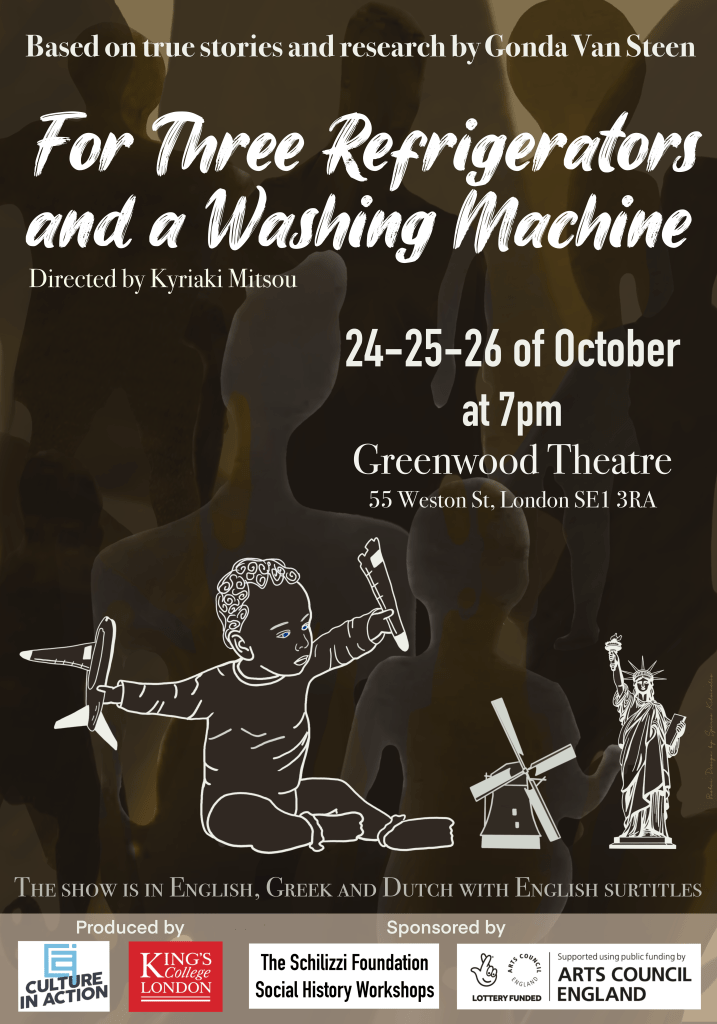

Supported by the Schilizzi Foundation Social History Workshops and the Arts Council England.
____________________________________________________________________________________________________
Annual Katie Lentakis Memorial Fund Award
Co-hosted by the AHL, CHS, Classics, and the Foundation for Platonic Studies, which will be handing out the second Mary Margaret McCabe Dissertation Prize in Ancient Philosophy.
The evening will feature a lecture by Professor Emerita Mary Margaret McCabe, on the topic of ‘Socrates in Prison’.
Mary Margaret McCabe
Mary Margaret McCabe (‘MM’) works on ancient philosophy, on ethics and on epistemology: her most recent book is Platonic Conversations (OUP 2015). She is Professor of Philosophy Emerita and Fellow of King’s College London, a Fellow of the British Academy, and Honorary Fellow of Jesus College, Cambridge. In 2022-3 she was the President of the Aristotelian Society and the Honorary President of the Classical Association; she was previously President of the Mind Association (2016) and the British Philosophical Society (2009-12). She has been a visiting professor at Princeton University and Yale University; in 2017 she gave the Sather Lectures at the University of California at Berkeley, and in 2024 she will give the Hägerström Lectures at the University of Uppsala. MM is a co-founder and the Chair of Trustees of the charity Philosophy in Prison, which provides and supports philosophical discussion for prisoners in the UK.

From London to Messolonghi and Back: Echoes of Eternal Journeys
Join us for a captivating event at the Great Hall of King’s College London (Strand campus), where we will embark on a journey exploring Lord Byron’s life and part of his work through a variety of approaches. The event will open with Byron’s poem, ‘The isles of Greece’, set to music by composer Stamatis Chatziefstathiou – sung by Andriana Mpampali in the album ‘Έλληνες Φιλέλληνες’. The three parts of the event will be:
- A talk by Roderick Beaton, Emeritus Koraes Professor, titled ‘From London to Missolonghi – and back in a barrel of rum: Byron’s life in Greece’;
- A documentary called ‘From Messolonghi to London: 200 years later’; and
- A performative work-in-progress on Byron’s Manfred called ‘Manfred Echoes’, presented by the actors Konstantinos Delidimoudis and Vassileia Kenanoglou and the cellist Thodoris Papadimitriou.
A wine reception will follow. The event will be in English and in Greek.
We are looking forward to welcoming you to the first event of the year of the Hellenic Foundation for Culture – U.K., co-hosted with CHS, and held under the auspices of the Greek Embassy in the UK.

Prof Roderick Beaton
Roderick Beaton grew up in Edinburgh and studied English Literature at Peterhouse, Cambridge, before turning to Modern Greek as the subject of his doctorate, also at Cambridge – and at the British School at Athens. After a three-year postdoctoral fellowship at the University of Birmingham he embarked on a long career at King’s College London, first as Lecturer in Modern Greek Language and Literature (1981–1988), later as Koraes Professor of Modern Greek and Byzantine History, Language and Literature (1988–2018), and since then as Emeritus Koraes Professor. From 2012 to 2018 he also served as Director of the Centre for Hellenic Studies at King’s, and from September to December 2021 as A.G. Leventis Visiting Professor of Greek at the University of Edinburgh. Since 2022 he has been Chair of the Trustees of the British School at Athens, one of the British International Research Institutes (BIRI) supported by the British Academy.
Roderick is the author of many books and articles that relate in various ways to the Greek-speaking world. His books include: An Introduction to Modern Greek Literature (1994); George Seferis: Waiting for the Angel. A Biography (2003); Byron’s War: Romantic Rebellion, Greek Revolution (2013); Greece: Biography of a Modern Nation (2019) and most recently The Greeks: A Global History (2021). All of these have been translated into Greek, and the last two into several other languages, including Chinese. Four of his books have won the prestigious Runciman Award for best book on the Hellenic world; he has also been shortlisted for the Duff Cooper Prize and the Cundill History Prize and has won several other awards in Greece (Anagnostis, Daidalos, Epilogos, Vardinoyannis).
Roderick is a Fellow of the British Academy (FBA, 2013), a Fellow of King’s College (FKC, 2018), and Commander of the Order of Honour of the Hellenic Republic, a distinction conferred on him by President Prokopios Pavlopoulos in 2019. In 2023 he received honorary citizenship of Greece and an honorary doctorate from the University of Patras.
Visit: Eleni Karantzola
Eleni Karantzola, Professor of Linguistics, Department of Mediterranean Studies, University of the Aegean, will be visiting King’s Centre for Hellenic Studies and will be presenting on various occasions. Professor Karantzola’s work visit is supported by a short-term IKY grant.
Professor Eleni Karantzola will be visiting the Department of Classics and the King’s Centre for Hellenic Studies from 23 to 28 October 2023. Her full schedule of activities and exchanges is supported by an IKY grant that fosters cooperation between Greek and foreign institutions. This collaboration covers the thematic area ‘History of Greek Language and Literature’, under the specific title ‘History of (Early) Modern Greek Language and Literature: Digitality and Interdisciplinary Approaches’. Professor Karantzola will engage in a programme of working meetings and lectures that directly relate to her expertise in the social and linguistic history of (Early) Modern Greek (16th-18th c.). She will further focus on digitisation/digitalisation of primary sources, as well as on fresh interdisciplinary approaches.
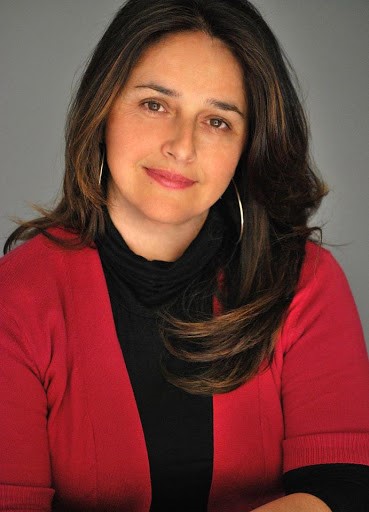
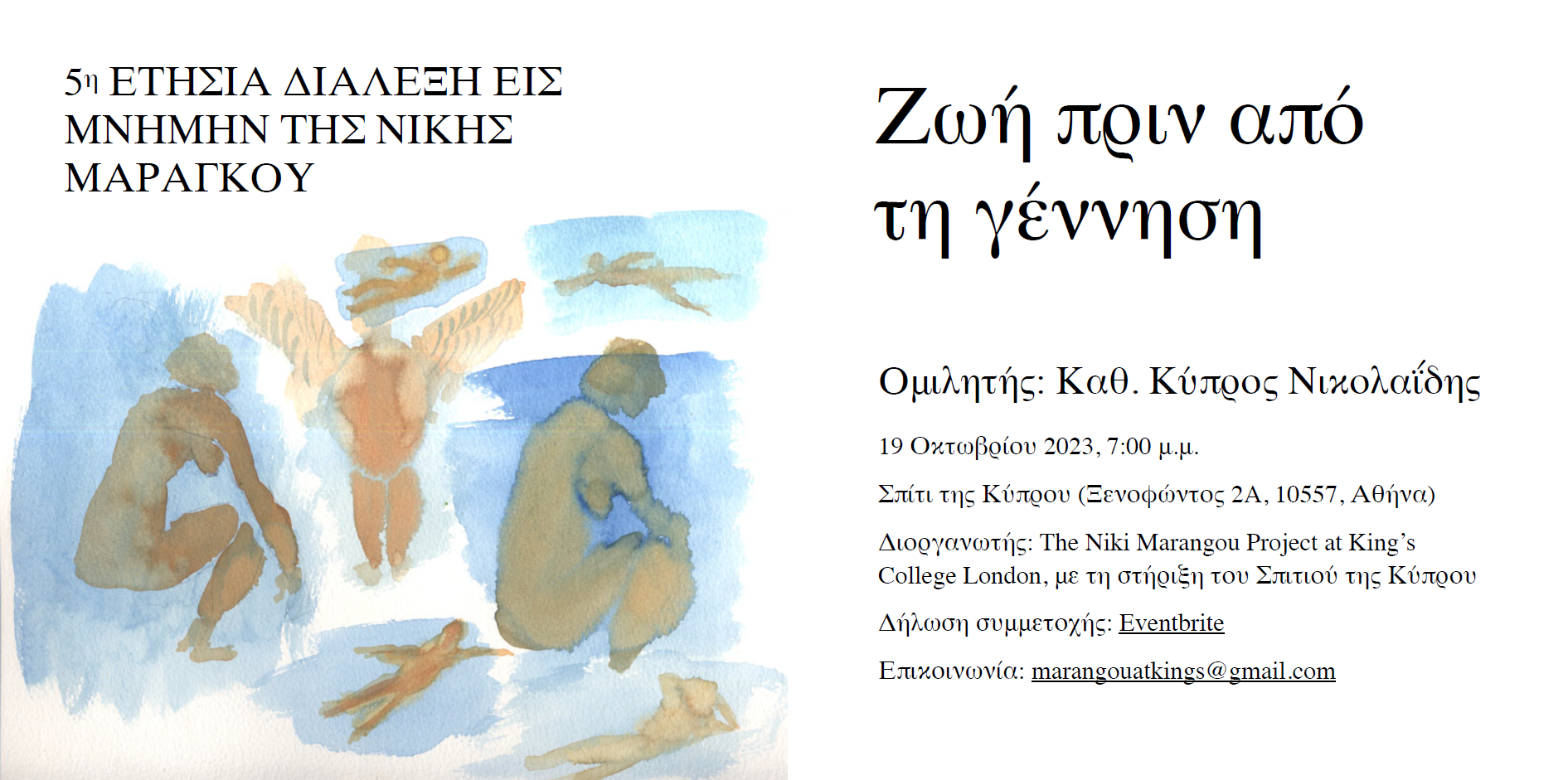
Fifth Annual Niki Marangou Memorial Lecture: ‘Life before Birth’
Speaker: Professor Kypros Nicolaides, Doctor of Medicine and Professor at King’s College London,
Co-organised with King’s Centre for Hellenic Studies and held at the Spiti tis Kyprou, Athens (Xenophontos St. 2A & Amalias Ave.).
The award of the Niki Marangou Translation Prize will also be announced on this occasion.
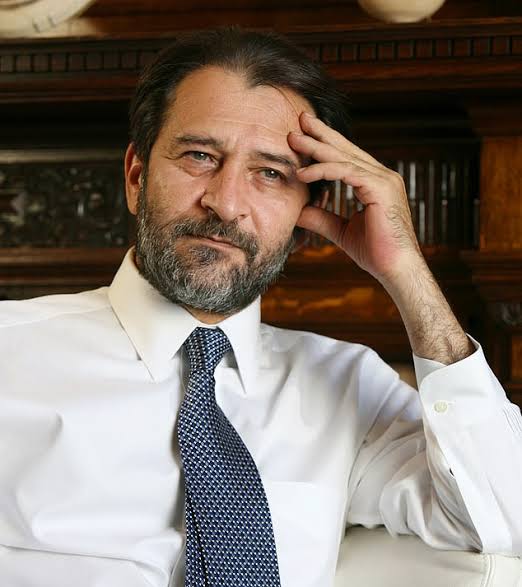
Child Adoption in and from Greece
This event will focus on the topic of international adoption, its effects on adoptees and their descendants, and the search for roots.
The film screening of The Greek Connection (2018) will be preceded by introductions from scholars and experts on international adoption, including Cold War era adoptions from Greece to USA, and forced adoptions in Australia. An open forum discussion will follow the documentary screening.
The aim of the event is to foster connections and conversations between adoptees, academics, activists, charities and others interested in the topic.
More about this event
The Greek Connection, directed by Ronit Kertsner, tells the story of the Greek postwar adoption movement. Kertsner follows a group of Greek adoptees as they travel across Greece in search of their roots, with all the ups and downs they encounter. Meanwhile, viewers learn what exactly happened in Greek history with these overseas adoptions of the 1950s and 1960s and what impact they left behind. The documentary has not yet been released commercially, and this will be its first screening in London.
Professor Gonda Van Steen, King’s College London
Professor Van Steen’s latest book, titled Adoption, Memory, and Cold War Greece: Kid pro quo? (2019), takes a deep dive into the uncharted history of over 3,000 adoptions of Greek children in the United States during the Cold War era. Van Steen’s research considers the impact on adoptees and their descendants, as well as on the processes of large-scale international adoptions today.
Gonda Van Steen is the Koraes Chair of Modern Greek and Byzantine History, Language and Literature at King’s College London.
Julia Gillard, former Australian Prime Minister
Julia Gillard is the only woman to have served as Prime Minister of Australia, a position she held from 2010 to 2013. During her tenure, she delivered a historic national apology for Australia’s forced adoption policies. Over several decades, thousands of unwed mothers were forced to give up their children to married couples for adoption.
Julia established, and is the chair of, the Global Institute for Women’s Leadership at King’s College London in 2018.
This event is organised by the Centre for Hellenic Studies with the assistance of the AHRC Impact Acceleration Account, the Impact and Knowledge Exchange team, Faculty of Arts and Humanities and the King’s Policy Institute.
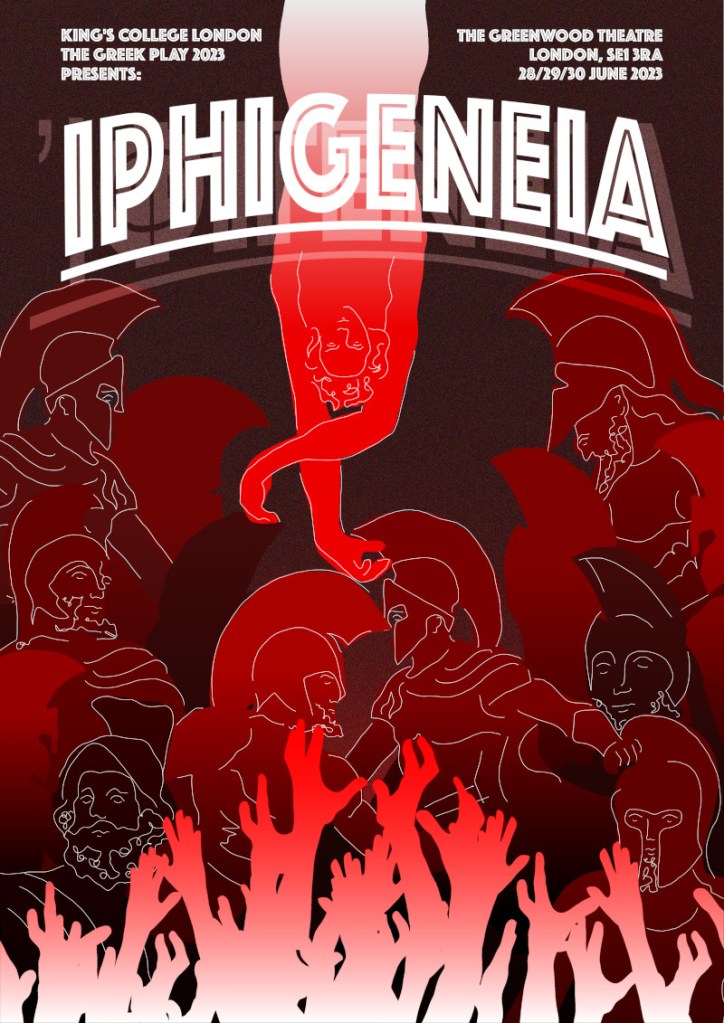
King’s Greek Play 2023: Iphigeneia
The 70th annual King’s College London Greek Play, Iphigeneia, will run from Wednesday 28 June to Friday 30 June. There will be performances on each day at 7pm and matinees at 2.30 on 28 and 29 June.
Iphigeneia is a modern take on Euripides’ Iphigeneia and the play is, as usual, a student production, assisted this year by The Actors of Dionysus (celebrating their 30th year). There will be lectures by distinguished classicists before the evening performances at 6pm.
Runciman Award Ceremony [Hybrid Event]
Keynote Speaker: Prof. Dame Mary Beard, on How do we best argue for Classics?
Co-sponsored by the Athanasios C. Laskaridis Charitable Foundation and the A. G. Leventis Foundation.
Since 1986, the Award has rewarded annually the best book or books published the previous year in English about some aspect of Greece. The Award this year goes to the best book(s) published in 2022.
You are warmly invited to join us at our award ceremony, at which our chair of judges, Prof. Peter Frankopan, will announce the winner. The winner will attend the event and speak about the winning book. The keynote speech will be given by Prof. Dame Mary Beard. The event will be introduced and chaired by Dr John Kittmer, chair of the Council of the League. A reception will follow.
You can find out more details about this year’s competition, including the long list and short list, on our website: www.runcimanaward.org.
Mary Beard is Professor of Classics at the University of Cambridge, Fellow Emerita of Newnham College, Professor of Ancient Literature at the Royal Academy, Classics editor of the Times Literary Supplement and a Fellow of the British Academy and International Member of the American Academy of Arts and Sciences. She has written numerous books and articles on ancient history and archaeology including Pompeii: Life in a Roman Town (2008), SPQR: A History of Ancient Rome (2015) and Women and Power: A Manifesto (2017).
A recording of the event will be posted live on AHL’s YouTube channel in the days after the ceremony.

Katie Lentakis Memorial Fund Award Ceremony and Lecture
Professor Kevin Featherstone (Hellenic Observatory, LSE) in Conversation
Speaker Bio
Kevin Featherstone is Eleftherios Venizelos Professor in Contemporary Greek Studies and Professor in European Politics in the European Institute at LSE, where he is also Director of the Hellenic Observatory. He has held visiting positions at the University of Minnesota; New York University; Harvard University; and, the European University Institute (Firenze). Before LSE, he held academic posts at the Universities of Stirling and Bradford. He was the first foreign member of the National Council for Research and Technology (ESET) in Greece, serving from 2010-2013. In 2013 he was made ‘Commander, Order of the Phoenix’ by the President of the Hellenic Republic and in 2021 has was bestowed the award of ‘Grand Commander, Order of the Phoenix’ of the Hellenic Republic. In 2014, the European Parliament selected one of his books (co-authored with Kenneth Dyson) as one of its ‘100 Books on Europe to Remember’. He has contributed regularly to international media on European and Greek politics.

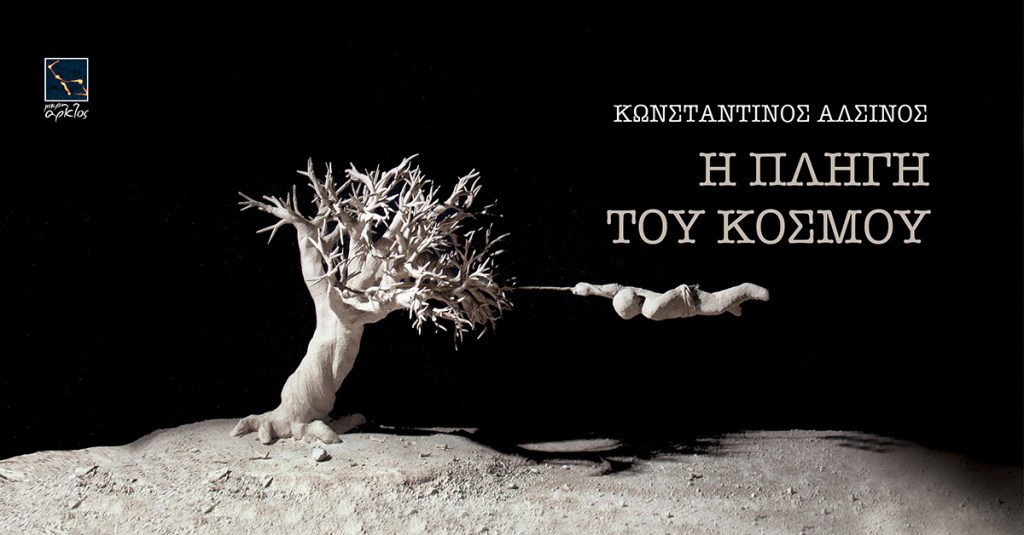
Book Launch: Konstantinos Alsinos, The Wound of the World
The author in conversation with Dr John Kittmer.
Co-hosted by CHS and the Anglo-Hellenic League, and co-sponsored with the Hellenic Foundation for Culture.
Colloquium: Philhellenism and Greek Identity Formation in Literature, the Arts, and Scholarship
In honour of Roderick Beaton, Emeritus Koraes Professor of Modern Greek and Byzantine History, Language and Literature, King’s College London

Contact: Prof. Gonda Van Steen
Book Presentation and Discussion: TAKTIKON: A Digital Introduction tο the Byzantine State Officials of the Thematic Administration
Speaker: Dr Olga Karagiorgou, Research Centre for Byzantine and Postbyzantine Art, Academy of Athens
In discussion with: Tassos Papacostas, Centre for Hellenic Studies, King’s College London
Abstract
Olga Karagiorgou will present and discuss her TAKTIKON project and the recent publication that came out if it. The project itself is in the process of compiling reliable chronological catalogues of all the Byzantine officials of the themes (the administrative divisions of the early medieval Byzantine state) arranged according to theme, administrative sector (military, civil, ecclesiastical) and office, with data culled from both the varied textual and abundant sigillographic record. Brought together, this information, presented through an online database, provides unparalleled insights into the prosopography and administrative structure of each theme, revealing at the same time important facets of the history of Byzantine institutions, of the political and social history of the empire, and of its artistic traditions.
The volume itself contains several original studies by specialists who focus on the principal themes located in the Greek mainland and the western half of Asia Minor. The material analysed includes hundreds of hitherto unpublished seals from territories within and without the empire, not least from findspots and collections in what is now Bulgaria, Turkey, Ukraine, and Russia. The volume’s editor will discuss the conception of the project, the logistics of bringing together disparate material from different countries and institutions, as well as scholars from around the world, to shed light on a much discussed yet still perplexing chapter of Byzantine history.
Speaker Bio
Olga Karagiorgou is Senior Researcher at the Research Centre for Byzantine and Postbyzantine Art of the Academy of Athens. She obtained her PhD at the University of Oxford and held postdoctoral fellowships by the National Hellenic Scholarship- and the Alexander von Humboldt Foundations. She was involved in two research projects supported by EU and Greek National funds, which addressed the institutional history of Byzantine Asia Minor (principal investigator) and the wine-making installations at Amorium (academic advisor). Her research on the prosopography and administrative structure of the Byzantine themes produced the recent volume TAKTIKON (Athens 2021). Her research interests focus on Late Antique studies (urban development, economy, amphora studies, marble trade) and Byzantine sigillography, prosopography and iconography. She has participated in excavations in Greece, Syria, and Turkey.

© MAH Musée d’art et d’histoire, Ville de Genève. Don de la Fondation Migore, legs Janet Zakos, 2004 (Inv. CdN 2004-507), photographer: Flora Bevilacqua
Seminar: The Archbishops of Cyprus ‘Betwixt Greeks and Saracens’
Speaker: Dr Olga Karagiorgou, Research Centre for Byzantine and Postbyzantine Art, Academy of Athens
Abstract
This seminar presentation will discuss and reassess the textual evidence concerning the fate of the archbishops of Cyprus in the later 7th century, shortly after the beginning of Arab expansion into the eastern Mediterranean. According to later Byzantine sources, in 691 Archbishop Ioannes and his flock were transferred from their island to the region of Cyzicus on the Sea of Marmara, not far from Constantinople, to allegedly escape the Arab threat. The Cypriots remained there for seven years and were then repatriated together with other Cypriots who had been transferred to Arab-controlled Syria earlier on.
The 34 surviving lead seals attributed to Archbishop Ioannes offer valuable supplementary evidence for the interpretation of these events. What will be presented is a reassessment, at variance with those hitherto proposed by scholarship, about the vexed issue of the itinerant Cypriots and their spiritual leader. Based on a meticulous analysis of the style, inscriptions, iconography and findspots of the seals, it will be argued that the emigration of the prelate with his flock was rather the result of a different set of considerations. Placed within the wider context, it nuances our assessment of relations between Empire and Caliphate during a key period in the history of the Mediterranean.
Speaker Bio
Olga Karagiorgou is Senior Researcher at the Research Centre for Byzantine and Postbyzantine Art of the Academy of Athens. She obtained her PhD at the University of Oxford and held postdoctoral fellowships by the National Hellenic Scholarship- and the Alexander von Humboldt Foundations. She was involved in two research projects supported by EU and Greek National funds, which addressed the institutional history of Byzantine Asia Minor (principal investigator) and the wine-making installations at Amorium (academic advisor). Her research on the prosopography and administrative structure of the Byzantine themes produced the recent volume TAKTIKON (Athens 2021). Her research interests focus on Late Antique studies (urban development, economy, amphora studies, marble trade) and Byzantine sigillography, prosopography and iconography. She has participated in excavations in Greece, Syria, and Turkey.

(G. Zacos & A. Veglery, Byzantine Lead Seals, Basel 1972, no. 1302a)
9th Annual Rumble Fund Lecture: Prof Rubina Raja, ‘Palmyra Undone: Reconstructing Knowledge through Archaeology and Legacy Data’
Through the civil war in Syria – on-going since 2011 – the country has been devastated, people have suffered and so has the rich cultural heritage of the country. It has been labelled one of the most destructive humanitarian catastrophes the world has experienced since WW2. Shortly before the war broke out, the Palmyra Portrait Project was initiated. It was supposed to collect all known funerary portraits from the city and study them within their cultural and historical context. The impact of the war in some ways changed the scope of the project and resulted into several spin-off projects, which revolved around cultural heritage, legacy data and making such data widely available both to the public and scholars – moving beyond the art historical and classical archaeological aims of the core project. The Rumble Lecture 2023 presents the results of the Palmyra projects based at Aarhus University in Denmark. It ties together the various strands of information and data into a larger narrative about the value of classical archaeology, cultural heritage and deep knowledge about the past to our modern society. It underlines that without knowledge of the past, we cannot situate ourselves in our present.
Rubina Raja, Professor of Classical Art and Archaeology at Aarhus University, Denmark, and Director of the Danish National Research Foundation’s Centre of Excellence for Urban Network Evolutions
Rubina Raja is professor of classical art and archaeology at Aarhus University, Denmark and director of the Danish National Research Foundation’s Centre of Excellence for Urban Network Evolutions. She heads a number of collective research projects focusing on the archaeology and history of Palmyra, including the Palmyra Portrait Project. Her research focusses on societal, cultural and urban developments from the Hellenistic to the Medieval periods. She has published widely on the art, architecture and religious life during these periods with a focus on the eastern Mediterranean. One of her most recent monographs is Pearl of the Desert. A history of Palmyra (OUP, 2022).
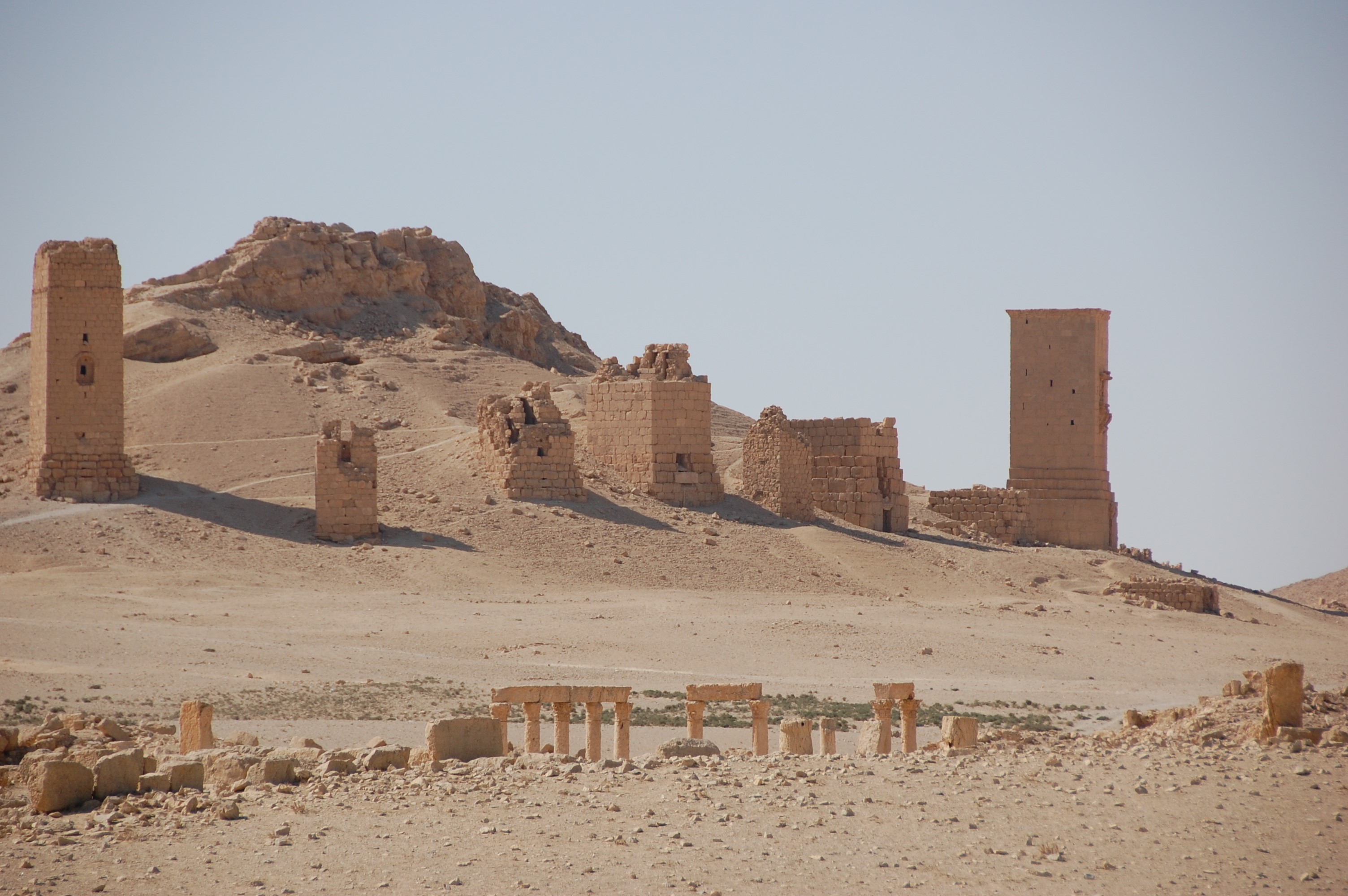
32nd Annual Runciman Lecture: Prof Ioannis D. Stefanidis, ‘Prelude to the Ionian Venture: the Greek Campaign in Southern Ukraine, 1919’
Preceded by Orthodox Vespers at the King’s Chapel starting at 17:15.
After an introduction to the diplomatic and military background to this unlikely operation, which arguably paved the way to the dispatch of Greek troops to Smyrna, in May 1919, the aim of the lecture is to focus on the experience of the Greek army in the rather inhospitable and alien terrain of southern Ukraine in the late winter and early spring of 1919.
Professor Sir Michael Llewellyn-Smith (former HM Ambassador to Greece) will introduce the speaker.
Professor Georgios Varouxakis (Professor of the History of Political Thought, Queen Mary University of London) will give the vote of thanks.
Ioannis D. Stefanidis, Professor in Diplomatic History, Department of International Studies, School of Law, Aristotle University of Thessaloniki
Foreign and Commonwealth Office scholar (1988-9), Fulbright scholar (1995), visiting Lecturer, Institute for European Studies, Hebrew University (2003-4), ‘Stanley J. Seeger’ visiting fellow, Program in Hellenic Studies, Princeton University (2004), visiting Associate Professor, University of Cyprus (2006-7); Senior Visiting Scholar, University Seminars Program, Onassis Foundation, USA (2015). His publications include: Isle of Discord: Nationalism, Imperialism and the Making of the Cyprus Question (London and New York, 1999); Stirring the Greek Nation: Political Culture, Irredentism and Anti-Americanism in Post-War Greece, 1945-67 (Aldershot, 2007); Substitute for Power: British Propaganda to the Balkans, 1939-1944 (Aldershot, 2012), ‘America’s Projection and Democracy Promotion: The ‘Voice of America’, Greece under the Colonels and Ceauşescu’s Romania’, Modern Greek Studies Yearbook 32/33 (2016/17), University of Minnesota, 167-237. His last monograph, on a non-communist resistance organisation, EKKA, and its doomed attempt to wage non-partisan armed resistance in Axis-occupied Greece, is due to appear in autumn 2022.
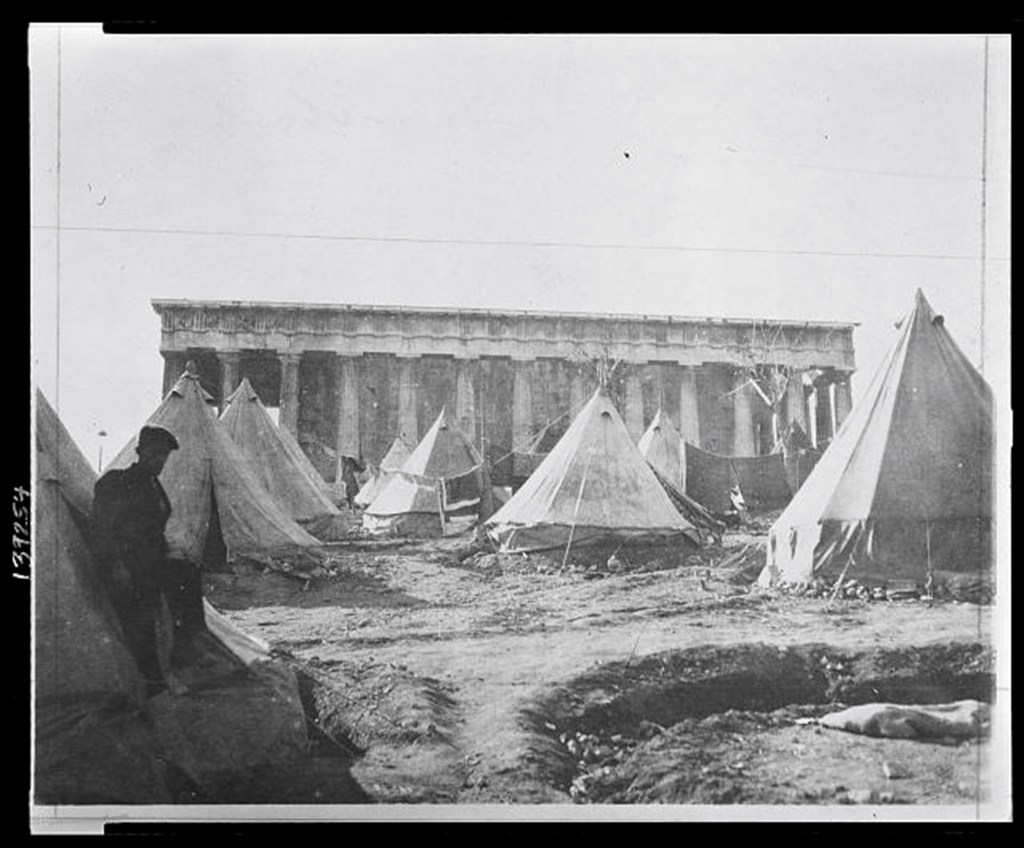
20 January 2023, 19.00
Lecture: Institutions, Reforms and Leadership
Great Hall, KCL Strand Campus
Lecture: Institutions, Reforms and Leadership throughout the Greek 20th and 21st Century
Speaker: Mr Kyriakos Pierrakakis, Greek Minister of State and Digital Governance.
Welcome by Prof. Gonda Van Steen and Mahi Georgakopoulou, President, Hellenic Female Leaders.
Kyriakos Pierrakakis
Kyriakos Pierrakakis is the Greek Minister of State and Digital Governance in the Cabinet of Kyriakos Mitsotakis. In 2007 he earned an MA degree in Public Policy from the John F. Kennedy School of Government at Harvard University, and in 2009 he earned an MSc in Technology and Policy from MIT. He also holds a BA degree in Computer Science from the Athens University of Economics and Business.
29 November 2022, 19.00
First Annual Matti Egon Memorial Lecture
Great Hall, KCL Strand Campus
First Annual Matti Egon Memorial Lecture
Lyktos, “the Most Ancient City in Crete, and the Source of the Bravest Men” (Polyb. 4.54): From Foundation to Destruction
By Dr Antonis Kotsonas, Associate Professor of Mediterranean History and Archaeology, Institute for the Study of the Ancient World, New York University.
Organised by the Greek Archaeological Committee UK and co-hosted with King’s Centre for Hellenic Studies.
Read the Abstract
Celebrated by Homer, considered as the birthplace of Zeus by Hesiod, and identified as the cradle of the Spartan constitution by Aristotle, the Cretan city Lyktos boasts an unusually rich literary and epigraphic record. Notwithstanding this record, and the interest of Arthur Evans and other renowned archaeologists in excavating the site, Lyktos attracted only small-scale fieldwork until the establishment of the Lyktos Archaeological Project (LAP) in 2021. The lecture will provide an overview of the history and the archaeology of Lyktos from its alleged foundation in the 12th century BCE to its dramatic destruction by its arch rival, Knossos, in 220 BCE, drawing from the first results of the LAP.
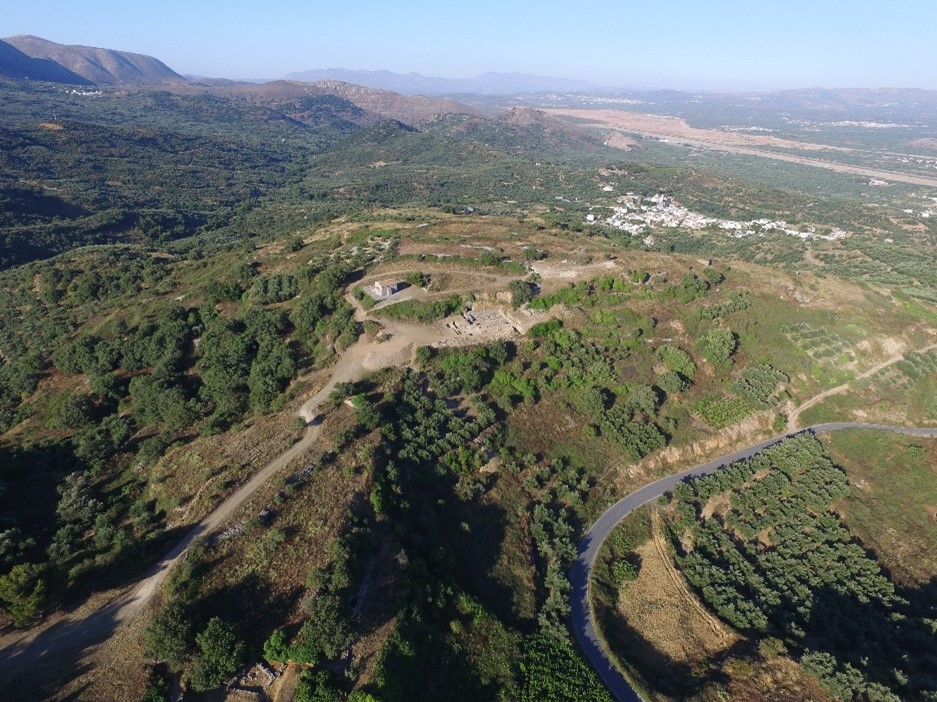
30 October 2022, 19.00
In Kambanellis’ Neighbourhoods
Golden Goose Theatre

28 October 2022, 19.00
Fourth Niki Marangou Annual Memorial Lecture
Council Room (King’s Building 2.29, Strand Campus)
Fourth Niki Marangou Annual Memorial Lecture
From Dragomans to Members of Parliament: The Greeks in Ottoman Politics on the Eve of the Great War.
Co-organised with King’s Centre for Hellenic Studies. This fourth Niki Marangou Lecture will be held in London, and the featured speaker will be the former diplomat and King’s alumna, Dr Catherine Boura. And the presentation of the Niki Marangou Translation Prize 2022 to Dafni Nousi (KCL).
Read the Abstract
The first Greeks to participate in the affairs of the Ottoman state were Dragomans, interpreters of the Sublime Porte, who were members of the Phanariot patrician class of the Ottoman capital. They rose to the topmost ranks of the administration and served the Sublime Porte efficiently and loyally for many generations. After Greek Independence, Greeks continued the long tradition of serving the Ottoman state albeit in different modes, as ambassadors, bankers, doctors, administration officials. Their influence and rise to positions of distinction was owed to a large extent to their education and personal ability, as much as to the prosperity of their families due to success in trade.
The second constitutional period (1908-1912) opened the way to representation in Parliament and participation of Ottoman citizens in party politics. The election of the Ottoman Greeks as members of the Ottoman Parliament was the first organized Greek participation in the political affairs of the Ottoman Empire. Party politics marked the dramatic changes in the political environment, the gradual dominance of secular state power and the adoption of the values of nationalism, which overturned the old Ottoman ‘order’. The Balkan Wars had a decisive effect on intercommunal relations. The Balkan conflicts intensified the divisions between Muslims and Christians, radicalised the Turkish leadership and prepared the way for the conflagration of the Great War.
Dr Catherine Boura, Ambassador ad h.
Dr Boura has served in diplomatic posts in Nicosia, London, and the Council of the European Union in Brussels, as Ambassador of Greece to Lebanon, to the UAE, and as Permanent Representative of Greece to the United Nations.
She holds a B.A. in Literature from the University of Athens, an M.A. in Area Studies from the School of Slavonic and East European Studies, as well as a Ph.D. in History from King’s College London. She is President of the Friends of the Gennadius Library.
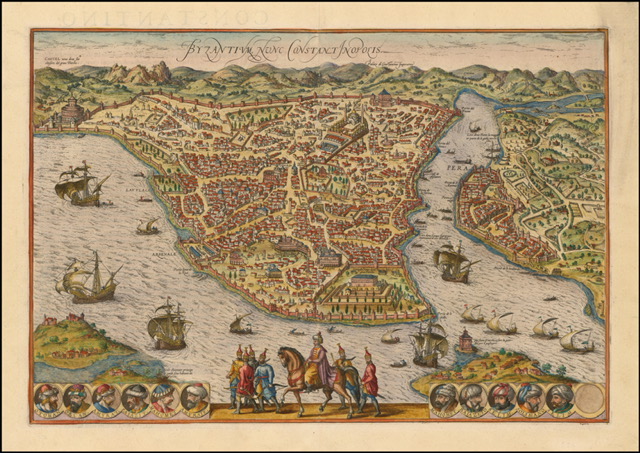
27 October 2022, 19.00
Film Screening: Bouboulina
Friends Room, Hellenic Centre
Screening of Bouboulina (Kostas Andritsos, 1959, b/w, 80 mins) with an introduction by Dr Lydia Papadimitriou.
Premiere with English subtitles
Following from the online panel discussion on ‘The Greek War of Independence in Greek Cinema’ (28 May 2021), the Hellenic Centre has the pleasure to present the film Bouboulina to the public for the first time with English subtitles. Starring Irene Papas in one of her early, but highly influential roles, Bouboulina is the only biopic of the notorious heroine and one of the relatively few historical films on the Greek Revolution. A low-budget production and a labour of love for its unassuming director-editor Kostas Andritsos, the film presents a chronological account of Laskarina Bouboulina’s life focusing on her free spirit, her mental and physical strength, and her dedication to the cause of national liberation. Bouboulina projects a strong nationalist agenda, prioritising the nation’s independence or ‘freedom’ over any other value, but its focus on a strong female character embodied by Irene Papas introduces feminist messages that make the film ripe for a critical revaluation.
Since its original theatrical release and until the mid-1990s, when it was withdrawn from public screenings, the film was regularly shown on Greek national television in the context of 1821 commemorations. It was only in 2021, on the occasion of the bicentenary of the Greek Revolution, that a digitally restored version was shown again on Greek television. Until then, and for over a quarter of a century, the film was almost forgotten; the only available copy was a very poor-quality VHS recording that was later uploaded to YouTube. We are grateful to the Leventis Foundation for financially supporting the English subtitling of the film. This event is co-organised by the Centre for Hellenic Studies at King’s College London and the Society for Modern Greek Studies, and supported by the Hellenic Centre.
Dr Lydia Papadimitriou
Dr Lydia Papadimitriou is Reader (Associate Professor) in Film Studies at Liverpool John Moores University. Her research has focused on both historical and contemporary aspects of Greek cinema. She is the author of The Greek Film Musical (2006), co-editor of Greek Cinema: Texts, Forms and Identities (2011), and Contemporary Balkan Cinema: Transnational Exchanges and Global Circuits (2020), and principal editor of the Journal of Greek Media and Culture. Her publications include articles in Screen, Studies of European Cinema, and New Review of Film and Television Studies, among others. She has explored the film Bouboulina in three publications (2015, 2021 and 2022), the latest of which is a chapter in the forthcoming Bouboulina: Interdisciplinary Perspectives on the Heroine of the Greek Revolution, edited by April Kalogeropoulos Householder.

Still from Bouboulina reproduced with permission from Alexis Andritsos and Panagiotis Kakavias.
6 October 2022, 17.15
Gilbert Murray Lecture
Kelvin Hall Lecture Theatre, University of Glasgow
Fifth Gilbert Murray Lecture on Internationalism and Classics
A.E. Stallings
‘But in Sad Truth their Own’
The triennial Gilbert Murray Lectures on Internationalism and Classics are established in honour of Prof. Gilbert Murray, one of the founding spirits of the League of Nations and Professor of Ancient Greek at Glasgow, London and Oxford universities. The lecture rotates between the three university cities where Murray had a chair. From 1914 onwards, Murray was active in propagating the ideals of internationalism and promoting the concept of the League of Nations. He also had close contacts with the Greek communities of the UK and their representatives in London. The 2022 lecturer will be the poet and classicist, A. E. Stallings. The 2022 lecture will take place within the framework of the UK bicentennial celebrations. Further information will be available in due course. See also https://gilbertmurraytrust.org.uk.
2-3 August 2022
Workshop: Local Sites, Global Contexts
Karlovasi, Samos
The Global 1922: Local Sites, Global Contexts
An In-Person Workshop
For more information, see the workshop programme or visit the project website.
Monday 27 June, 18.00
Annual Katie Lentakis Memorial Fund Award Ceremony and Book Launch
Council Room, King’s Building
Annual Katie Lentakis Memorial Fund Award Ceremony and Book Launch of The Greeks: A Global History
Join us to mark the Annual Katie Lentakis Memorial Fund Award Ceremony, awarded by the Anglo-Hellenic League and co-hosted by CHS.
We will also be celebrating Roderick Beaton’s latest book, The Greeks: A Global History (published in November 2021 by Basic Books, New York, and Faber, London).
Dr John Kittmer will engage Professor Beaton in a discussion about this panoramic study of the Greeks, ranging from prehistoric times to the present.
We will serve a glass of wine to celebrate this exciting new addition to the field of Greek historiography.
Prof. Roderick Beaton, Emeritus Koraes Professor of Modern Greek and Byzantine History, Language and Literature
Roderick Beaton grew up in Edinburgh and studied English Literature at Peterhouse, Cambridge, before turning to Modern Greek as the subject of his doctorate, also at Cambridge – and at the British School at Athens. After a three-year postdoctoral fellowship at the University of Birmingham he embarked on a long career at King’s College London, first as Lecturer in Modern Greek Language and Literature (1981-88), later as Koraes Professor of Modern Greek and Byzantine History, Language and Literature (1988-2018), and since then as Emeritus Koraes Professor. From 2012 to 2018 he also served as Director of the Centre for Hellenic Studies at King’s.
Roderick is the author of many books and articles about aspects of the Greek-speaking world from the twelfth century to the present day, including An Introduction to Modern Greek Literature (1994); George Seferis: Waiting for the Angel. A Biography (2003); Byron’s War: Romantic Rebellion, Greek Revolution (2013); and Greece: Biography of a Modern Nation (2019, now a Penguin paperback). All four of these books won the prestigious Runciman Award (through the Anglo-Hellenic League) for best book on the Hellenic world. His latest book, The Greeks: A Global History, offers an overview of Greek history from the Bronze Age to the 200th anniversary of the Greek Revolution in 2021. This book will be presented at the conference.
Roderick is a Fellow of the British Academy (FBA, 2013), a Fellow of King’s College (FKC, 2018), Commander of the Order of Honour of the Hellenic Republic (2019) and, from September to December 2021, has been appointed A.G. Leventis Visiting Professor in Greek at the University of Edinburgh.
Wednesday 24 – Friday 26 June
KCL Greek Play
Greenwood Theatre, London Bridge
KCL Greek Play 2022: The Plague at Thebes
A dynamic reworking of Sophocles’ Antigone and Oedipus The King.
Wracked by plague and wounded by civil war, the citizens of Thebes watch as its ruling family grapples with the past.
Antigone is on trial. She has defied King Creon’s edict and secretly offered funeral rites to her dead brother Polynices. As she awaits her fate she relives her family’s recent history, slowly unravelling the violent and incestuous cycle of the House of Cadmus. Telling the mythical story of Oedipus from the perspective of his courageous daughter Antigone, the King’s Greek Play 2022 will examine how our history can shape our actions and beliefs, as well as reflecting upon the unexpected ways in which the present moment might shape the lives of future generations.
Created by current King’s College London students, The Plague at Thebes offers a contemporary response to Sophocles’ plays. This continues King’s College London’s recent history of pushing the boundaries and conventions of the Greek Play to explore how contemporary performance of Greek drama can help us engage with the fraught times in which we find ourselves living. The performance will incorporate original ancient Greek text and new writing in order to present a work that speaks to the social and political consequences of an unprecedented pandemic, civil disobedience, and the place and responsibility of an individual within society.
This year’s play will again be ideal for those studying Classical Civilisation – Oedipus Tyrannus is a prescribed text for the OCR A level syllabus – as well as students taking Classics, Drama, and English.
The play will be performed at the Greenwood Theatre (55 Weston Street, SE1 3RA) from 22-24 June 2022 (19.00 nightly with 14.30 matinées on the 22 and 24). Evening performances will be preceded by pre-show events at 18.00 featuring leading scholars; these are free to ticket holders for the subsequent performance.

Monday 13 June, 19.00
Runciman Award Ceremony
Great Hall, KCL Strand Campus and Online
Runciman Award Ceremony 2022
sponsored by the A. C. Laskaridis Charitable Foundation & the A. G. Leventis Foundation
Keynote speech by Prof. Richard Hunter FBA
‘Those who do not know the sea’: Homer and the margins of the Greek world
Organised by The Anglo-Hellenic League and co-hosted with King’s Centre for Hellenic Studies
Friday 27 May, 18.30 (AGM) / 19.30 (Prize-Giving and Lecture)
Society for Modern Greek Studies AGM
Friends’ Room, Hellenic Centre, 16-18 Paddington Street, London
Society for Modern Greek Studies AGM, Prize-Giving and Lecture
Schedule:
6:30pm: AGM: the agenda, the AGM 2021 minutes, and the accounts will be circulated in advance
7:30pm: Prize-Giving: the 2022 Niki Marangou PhD Dissertation Prize for the best dissertation completed in Modern Greek Studies in the UK
7:45pm: Lecture: Dr David Wills: ‘Refugee Crises in Greece, 1922-2022: Ancient Histories in Modern Contexts’
An illustrated talk in which Dr David Wills will explore British representations of the refugee crises which took place in 1922 and from 2015 onwards. Contemporaneous accounts by British travellers, journalists and aid workers reveal the persistence of ancient history within the descriptions of modern ‘odysseys’.
8:45pm: Wine Reception
Thursday 26 May, 18.00 – 20.30
War in Ukraine: A Roundtable Discussion
Bush House SE 1.02 and 1.06, KCL
War in Ukraine: A Roundtable Discussion
Speakers and Topics:
Welcome by Prof. Gonda Van Steen, Koraes Chair (King’s Centre for Hellenic Studies)
Dr Alexandra Vukovich (KCL, History): Byzantino-Rus cultural monuments in Ukraine: History and perspectives
Dr Alexandra Vukovich (KCL, History) is lecturer in late medieval history at King’s, focussing on the history and literature of the Byzantine world, specifically early Rus. A second research interest focusses on the political role of medieval cultural heritage (medievalism) in modern nationalisms and approaches to modern heritage management.
Dr Irene Polinskaya (KCL, Classics): “The chronically sick man of Europe” – A personal perspective on Russia as a totalitarian state, and the last/lost 30 years since the dissolution of the Soviet Union (1991-2022)
Dr Irene Polinskaya (KCL, Classics) is Reader in Ancient History in King’s Department of Classics. She grew up in St. Petersburg, Russia, and emigrated to the USA in 1992. She studied (at Stanford University) and taught (at Bowdoin College) in the United States (1992-2007), and has been teaching at King’s since 2007. Over the last five years, her research on ancient Greek inscriptions has taken her to Ukraine where she worked at several archaeological museums and sites such as the Institute of Archaeology in Kyiv, the Regional Studies Museum in Mykolaiv/Nikolayev, the Archaeological Museum of Odesa, and the Archaeological Preserve Olbia.
Dr Dina Gusejnova (LSE): Russia’s special path? The shadows of Weimar and Nazi Germany in current discourse on the Russian war in Ukraine
Dr Dina Gusejnova (LSE, International History) is Associate Professor in Modern European History. Her research centres on the transfer of ideas and ideologies across the borders of empires and nation-states in the twentieth century. After her book, European Elites and Ideas of Empire, 1917-57 (Cambridge, 2016), her research has centred on the longer-term impact of the internment of scholars from continental Europe in Britain during the Second World War. Her most recent commentary on the Russian war in Ukraine was for the blog History Matters. She is a founding member of the initiative for the University of New Europe, and a member of Ukraine Hub UK Academic Taskforce.
Thursday 28 – Friday 29 April
Conference: The Global 1922
Online
The Global 1922: Local Sites, Global Context
2022 marks the centenary of the end of Greek-Turkish War of 1919-1922. This war was one of the final conflicts of a decade-long series of wars to which historians have referred to as the ‘Greater War’ decade. The Greek-Turkish War coincided with the end of the many conflicts and diplomatic or political processes that transformed eastern Europe and Russia as well as the near and middle East. It also marked an acute humanitarian crisis following the dislocation of minority populations across the Aegean Sea – one of the largest single population transfers of the Greater War decade.
Using the Greek-Turkish conflict as a starting point this international conference brings together scholars working in various historical subfields to reflect on the wider context of nationalist agitations, state-building processes, imperial transformations and socio-economic upheavals across lands and seas in flux from Western Europe, Central and Eastern Europe, European and Asian Russia to the Eastern Mediterranean and beyond.
The event will take place at King’s College London on 28/29 April and will be streamed online.
Friday 29 April, 18.00
First Schilizzi Social History Workshop
Council Room (K2.29), KCL Strand Campus
First Schilizzi Social History Workshop: ‘Children in the Crossfire: A Family and Social History Workshop’
Convenor: Koraes Professor Gonda Van Steen, gonda.van_steen@kcl.ac.uk or chs@kcl.ac.uk
Helena Schilizzi was the founder of the first public maternity hospital in Athens in the late 1920s: she wanted poor women to be able to give birth in a hygienic and professional environment. Through this and other impactful initiatives, Helena Schilizzi brought a unique sense of urban and societal priorities to her life in the public eye (as the spouse of Eleftherios Venizelos).
King’s Centre for Hellenic Studies dedicates its first Schilizzi Social History Workshop to the memory of Helena Schilizzi, who helped to change Greece’s medical and family history. Our first workshop assesses child survival and orphanhood, child placement and adoption, welfare policies, and social progress, both in Greece and across borders, with the benefit of several decades of hindsight. As such, our social history workshop also builds on ‘The Global 1922’, the conference that King’s will be holding 28-29 April 2022, which will focus on political, diplomatic, and military historical developments of the 1920s.
At 18.00 in the afternoon of Friday, 29 April 2022, we gather in the Council Room (K2.29 on the Strand) to hear the following three speakers:
Mariela Neagu, author of Voices from the Silent Cradles: Life Histories of Romania’s Looked-After Children (2021): ‘Orphans of the Cold War: Reframing the International Adoption Narrative’
Dr Mariela Neagu is a researcher in human rights and children’s rights specialised in children’s social care. She holds an MSt in International Human Rights Law and a PhD in Social Sciences from New College, Oxford. She has over 20 years of experience in children’s rights from a policy and research perspective, having conducted research in both welfare states and emerging economies. She is a former Children’s Minister in Romania (Head of the National Authority for Children’s Rights between 2007-2009) and former coordinator of the EU multi-annual funds to reform the child protection system in Romania (1999-2006). In the latter capacity she was instrumental in the drafting of the Children’s Rights legislation in Romania (adopted in 2004).
Dr Neagu is the author of Voices from the Silent Cradles (Policy Press, 2021), a book which sheds light on children’s homes, foster care, domestic and international adoption from the perspective of the young people who experienced these types of care. Her article ‘Children by Request: Romania’s Children between Rights and International Politics’ (International Journal of Law, Policy and the Family, vol. 29 (2), August 2015) which points out the legal loopholes in intercountry adoption, has been cited in the Commentary on the UN Convention on the Rights of the Child (OUP, 2019) and by the UN Rapporteur on the Sale of Children, Maud de Boer-Buquicchio (2016).
Abstract: Historian Dennis Deletant holds that World War II ended for Romania in 1989, at the end of the Cold War when the communist regime which isolated the nation came to an end. This moment coincided with the exposure of the precarious conditions in which many children had been institutionalised. As the subject made international headlines, Romania became one of the global suppliers of children for Western families or individuals willing to adopt. The country was regarded as ‘the last reservoir of Caucasian babies’. Early concerns of child trafficking and attempts to protect children inside the country resulted in political pressure on Romania from the receiving countries to resume international adoption. Between 1990 and 2004 (when Romania incorporated the UN Convention on the Rights of the Child into law), children were treated as commodities by adoption chains and as ideological weapons by elites and interest groups who shamed the country in order to influence a specific policy. Furthermore, the topic became a battleground between the contrasting approaches of Europe and the USA in relation to children in care, at a time when the country aspired to both NATO membership and accession to the EU.
Drawing on Bronfenbrenner’s ecological systems theory, this presentation explores the interplay between different circles of vulnerability at the macro (global), meso (national) and micro (personal) level, and also the interferences of non-state actors with state policies in a fragile political context.
Joanna Michlic, Honorary Senior Research Associate, UCL Institute for Advanced Studies (IAS), Centre for Collective Violence, Holocaust and Genocide Studies, editor of Jewish Families in Europe, 1939-Present: History, Representation, and Memory (2017): ‘Un-taught Lessons from the Holocaust: Memories of Jewish Childhood in Poland during and in the Aftermath of the Holocaust’
Dr Joanna Beata Michlic is a social and cultural historian, and founder and first Director of the HBI (Hadassah-Brandeis Institute) Project on Families, Children, and the Holocaust at Brandeis University. She is an Honorary Senior Research Associate at the UCL Centre for the Study of Collective Violence, the Holocaust and Genocide, UCL Institute for Advances Studies, and Research Fellow at Weiss-Livnat International Centre for Holocaust Research and Education, University of Haifa, June 2019-May 2022. She is a co-Editor in Chief of Genealogy Journal. Among her major publications are Poland’s Threatening Other: The Image of the Jew from 1880 to the Present (translated into Polish in 2015 and nominated for the Best History Book of the Kazimierz Moczarski Award 2016 in Poland; Hebrew translation, with new epilogue, Jerusalem, Yad Vashem Institute, 2021); Bringing the Dark Past to Light: The Reception of the Holocaust in Postcommunist Europe, co-edited with John-Paul Himka (Lincoln: NUP, 2012); and the co-edited volume Jewish Family 1939–Present: History, Representation, and Memory (Brandeis University Press/NEUP, 2017). Her latest single-authored monograph is Piętno Zagłady Wojenna i powojenna historia oraz pamięć żydowskich dzieci ocalałych w Polsce (Warsaw: ZIH, 2020).
Dr Michlic is currently working on a book project on the history and memory of rescue of Jewish children in Poland, More than the Milk of Human Kindness: Jewish Survivors and Their Polish Rescuers Recount Their Tales, 1944-1949. She is also co-convenor of an international conference on children, war and genocide, which will take place at Munich University in October 2022.
Abstract: Between 2012 and 2021 the ongoing refugee crises in Europe and beyond have triggered evocation of young Jewish survivors from the Holocaust in the commentaries about the plight of young victims and survivor-refugees of wars and genocides in the first two decades of the twenty-first century. In my own essay, ‘Mapping the History of Child Holocaust Survivors’, I also argue that the history of child Holocaust survivors ‘can offer a valuable template for historical and contemporary comparisons that, in turn, could advance our understanding of the impact of displacement and the loss of family upon young survivor-refugees of post-1945 wars and genocides’. However, I do not think that such a holistic, educational and memory project is easily viable, despite the frequent evocations of the plight of young Jewish refugees in the current discussions about the situation of young refugees from the Middle East and North Africa. It seems to me that in these discussions, evocations of young Jewish refugees usually have a rather purely emotive character and are vague, if not shallow. Furthermore, there is a glaring lack of historical and contemporary comparisons of young survivors of wars and genocides in the post-1945 period till the present, comparisons that would not only seek differences and similarities, but would use one set of phenomena to understand another.
In this paper, I discuss some public representations of young Jewish victims of the Holocaust that tend to gloss over the more complex and difficult memories of the children’s wartime and early post-war experiences. I explore agents and the broader historical, cultural, and social contexts of the more aesthetically pleasing and sanitized ‘happy representations’ of survival using cultural examples from the United Kingdom. I contrast these with painful self-representations of child survivors pertaining to survival and the reconstruction of post-war family from contemporary Poland. I argue that listening and interrogating the voices of specific communities of child survivors, which are not shaped and mediated by certain hegemonic national narratives of the Holocaust, might enable us to uncover and contextualize difficult and taboo aspects of lives of orphan child survivors. They could provide us with valuable lessons for understanding the short-term and long-term impact of wars and genocides of the twentieth and twenty-first century on child survivors.
Gonda Van Steen, Koraes Chair at King’s College London, most recently author of Adoption, Memory, and Cold War Greece (2019): ‘Five Years of Feeding: An Unpublished Source on the Living Conditions of the Children of Late 1940s Greece’
Gonda Van Steen holds the Koraes Chair in the Centre for Hellenic Studies and the Department of Classics at King’s College London. She is the author of five books: Venom in Verse: Aristophanes in Modern Greece (2000); Liberating Hellenism from the Ottoman Empire (2010); Theatre of the Condemned: Classical Tragedy on Greek Prison Islands (2011); and Stage of Emergency: Theater and Public Performance under the Greek Military Dictatorship of 1967-1974 (2015). Her latest book, Adoption, Memory, and Cold War Greece: Kid pro quo? (University of Michigan Press, 2019), takes the reader into the new, uncharted terrain of Greek adoption stories that become paradigmatic of Cold War politics and history. This book appeared also in Greek translation as Ζητούνται παιδιά από την Ελλάδα: Υιοθεσίες στην Αμερική του Ψυχρού Πολέμου (Athens: Potamos, 2021).
Abstract: On 17 May 1946, the American social worker Charles Schermerhorn arrived in Greece. He arrived at a critical time: Greece had just come out of a brutal Nazi German Occupation and was about to engage in a three-year-long and devastating civil war (1946-1949). Charles was appointed by UNNRA (United Nations Relief and Rehabilitation Administration.), subsequently by the Near East Foundation, and eventually by UNICEF. That means that, in the course of a mere five years, Charles saw a tremendous amount of American-influenced administrative and logistical planning for Greece, which was a focus of intense early Cold War friction and scrutiny. Charles’ own appointment as an UNRRA child welfare specialist attests to a Western-imported and hegemonic humanitarian model, which had to serve as an antidote to the rise of Soviet-style communism in Southern Europe and the Balkans. The global focus of the time was on children: they held the future of their respective societies and, as adults, would determine whether a nation would align itself with the West or with the East.
Charles’ mandate was to organize food distribution channels to feed especially the children of Northern Greece, the region most affected by the civil war conflict. This was a role he embraced, and he meticulously recorded the details in a hitherto unpublished manuscript. Charles faced tremendous challenges: many of the villages of Northern Greece are located in the most remote mountain areas; many had been either destroyed by the communists or semi-evacuated by the royalist troops. Corruption was rampant, also among the representatives of local and foreign organizations. Charles decries the foreign experts’ lack of experience on the ground and their focus on scoring political points. But his writing becomes a most powerful source on the fate of the children of the rural and afflicted populations, and these are not necessarily Greek-speaking children. Charles tells of pockets of Muslim, Albanian- and Turkish-speaking children, of Armenian children from refugee families, and also of a handful of Jewish Holocaust survivors. His unique account paints a sympathetic but poignant picture of the living conditions of hundreds of Greek children whose basic needs can hardly be met. My paper focuses on these needs, on the local and imported welfare services, on the ambivalent role of the Greek Orthodox Church, and on one idealist’s commitment to five years of feeding.
Sponsored by the Schilizzi Foundation.
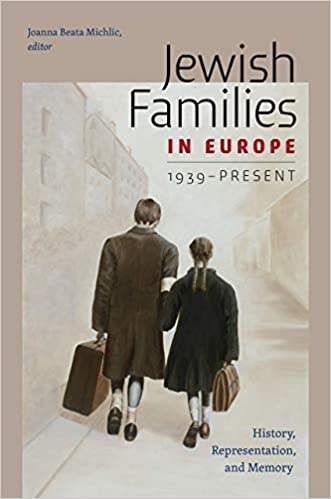

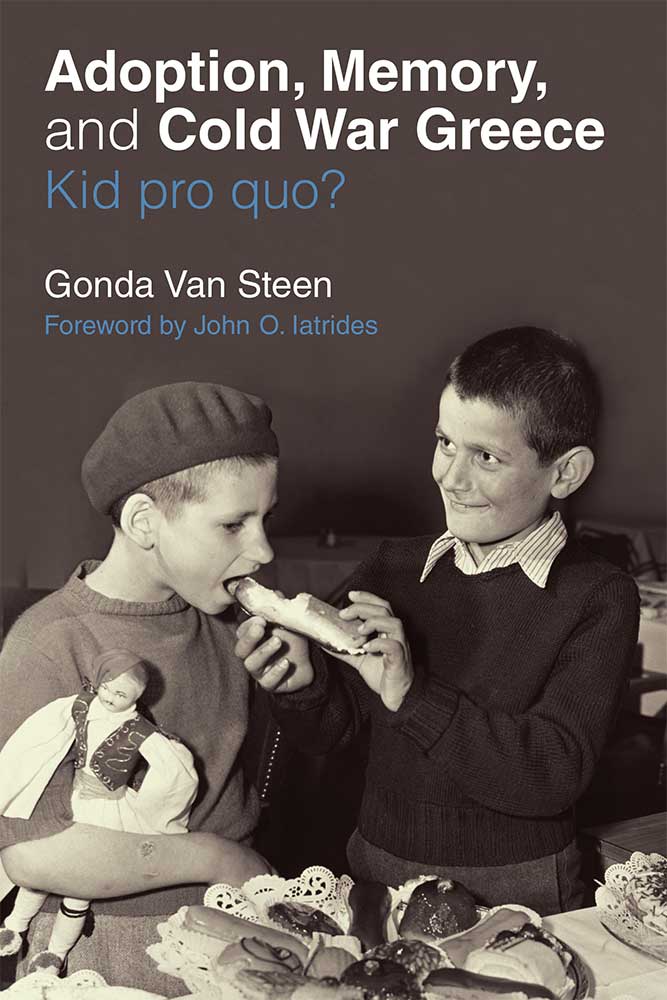
Thursday 28 April, 19.00
Book Launch: John Muir’s Greek Eyes on Europe
The Hellenic Centre, 16-18 Paddington Street
Book Launch: John Muir’s Greek Eyes on Europe
CHS and the Hellenic Centre present the launch of John Muir’s Greek Eyes on Europe: The Travels of Nikandros Noukios of Corfu (published March 2022). Gonda Van Steen will introduce the speakers. Michael Trapp will introduce the Routledge series Publications of the Centre for Hellenic Studies, King’s College London. Peter Jones will lead the discussion and invite questions from the audience.
Nikandros (Andronikos) Noukios was a native of Corfu. Exiled to Venice with his family after the Turkish siege of 1537, he made a living as an editorial assistant to a publisher, and then as a copyist employed by Don Diego Hurtado de Mendoza, the Spanish ambassador to Venice. He then had the opportunity to accompany two diplomatic missions sent by Charles V, the Holy Roman Emperor, to the court of Suleiman the Magnificent in Constantinople, and to the court of Henry VIII in London. His Journal is an inquisitive traveller’s account of his journeys (including a short spell with a mercenary contingent) through a Europe in the grip of the Reformation.
John Muir
John Muir taught at King’s College London of which he is a Fellow. He was editor of Greece & Rome for six years, and he has published Greek Religion and Society ed. and contrib. with P. E. Easterling (CUP); Alcidamas: The Works and Fragments (BCP); and Life and Letters in the Ancient Greek World (Routledge). In addition, he has produced student editions of Aeneid IV (Cambridge Latin Texts – CUP) and Odyssey IX (BCP). He was one of the founder members of the JACT Greek Summer School and taught there for many years, serving also on its Management Committee. He has contributed articles and reviews to various journals and has been President of JACT and the London Branch of the Classical Association. For seven years he was also the British representative on the international committee of the Colloquium Didacticum Classicum.
Peter Jones
Peter Jones, PhD, taught at George Watson’s College in Edinburgh for many years. He retired early from Newcastle University in 1997 and helped found the charity Classics for All.
Until Wednesday 30 March
Exhibition: 1821 Visions of Freedom
The Hellenic Centre, 16-18 Paddington Street, London
1821 Visions of Freedom: The Hand of Zographos, The Mind of Makriyannis, The Zeal of Gennadius
An exhibition of famous and much praised images of scenes from the Greek War of Independence, giving visitors a rare opportunity to enjoy these remarkable works close up.
On show are 12 of the 24 hand coloured collotypes issued in a limited edition album in 1926 by the well known Swiss photographer, Frédéric Boissonnas at the instigation of the collector Joannes Gennadius, who had rediscovered the long lost watercolours which the collotypes reproduce.
The watercolours had been painted between 1836 and 1839 by the naif artist, Dimitrios Zographos, to the order and according to the directions of General Makriyannis, a veteran of the war, whose own memoirs are a classic of Modern Greek literature. The Gennadius-Boissonas album brought these forgotten images to the attention of the wider world and generated a delighted reaction in the artistic avant-garde.
Each picture is accompanied by a caption in Makriyannis’ own words, which make the depicted scenes even more vivid. The exhibition sets the pictures in their historical context by displaying a timeline of the War of Independence and the visitor’s appreciation is enhanced by the reproduction of relevant material from Gennadius’ personal archive and other collections. The visitor can also enjoy Makriyannis’ personal dedication of the pictures to Queen Victoria as well as the curious letter from the British Minister at Athens which accompanied their despatch to Lord Palmerston.
Curators: Natasha Lemos, Olympia Pappa
Designers: Αlexis Veroucas, Vassiliki Carmiri
Organised by the Hellenic Centre under the aegis of the Greece 2021 Committee. Sponsored by the A.G. Leventis Foundation.
Times:
Tuesdays: 6:30pm – 9pm
Saturdays: 10am – 5pm
Sundays: 11am – 4pm
Entry free
Contact: The Hellenic Centre
Monday 28 March, 18.00
The Greek Trilogy of Luis Alfaro
Anatomy Museum (K6.29), 6th floor King’s Building, Strand Campus, KCL
The London Hellenic Prize committee and the Centre for Hellenic Studies at King’s College London invite you to join us as we celebrate the long history of the LHP and the prize-winning volume of 2021:
The Greek Trilogy of Luis Alfaro: Electricidad; Oedipus El Rey; Mojada
Luis Alfaro (Author), Rosa Andújar (Editor)
Anatomy Museum, 6th floor of the King’s Building on the Strand
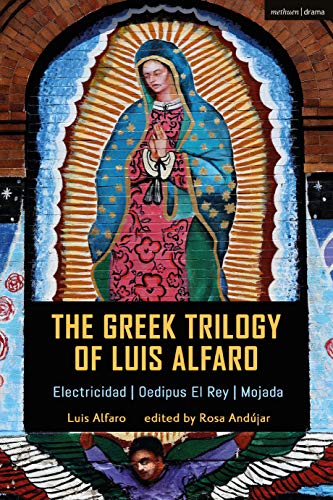
Evening schedule:
Welcome and introduction to the LHP speakers: Professor Gonda Van Steen
Welcome on behalf of the Department of Classics and the Centre for Hellenic Studies: Dr Will Wootton
Introduction to the prize competition of 2021: Professor Paul Cartledge
Introduction of prize winner Rosa Andujar: Professor Miriam Leonard
Short acceptance speech by Dr Rosa Andújar
Introduction to prize winner Luis Alfaro: Professor Catherine Boyle
Short acceptance speech by Luis Alfaro (online)
Questions from the audience

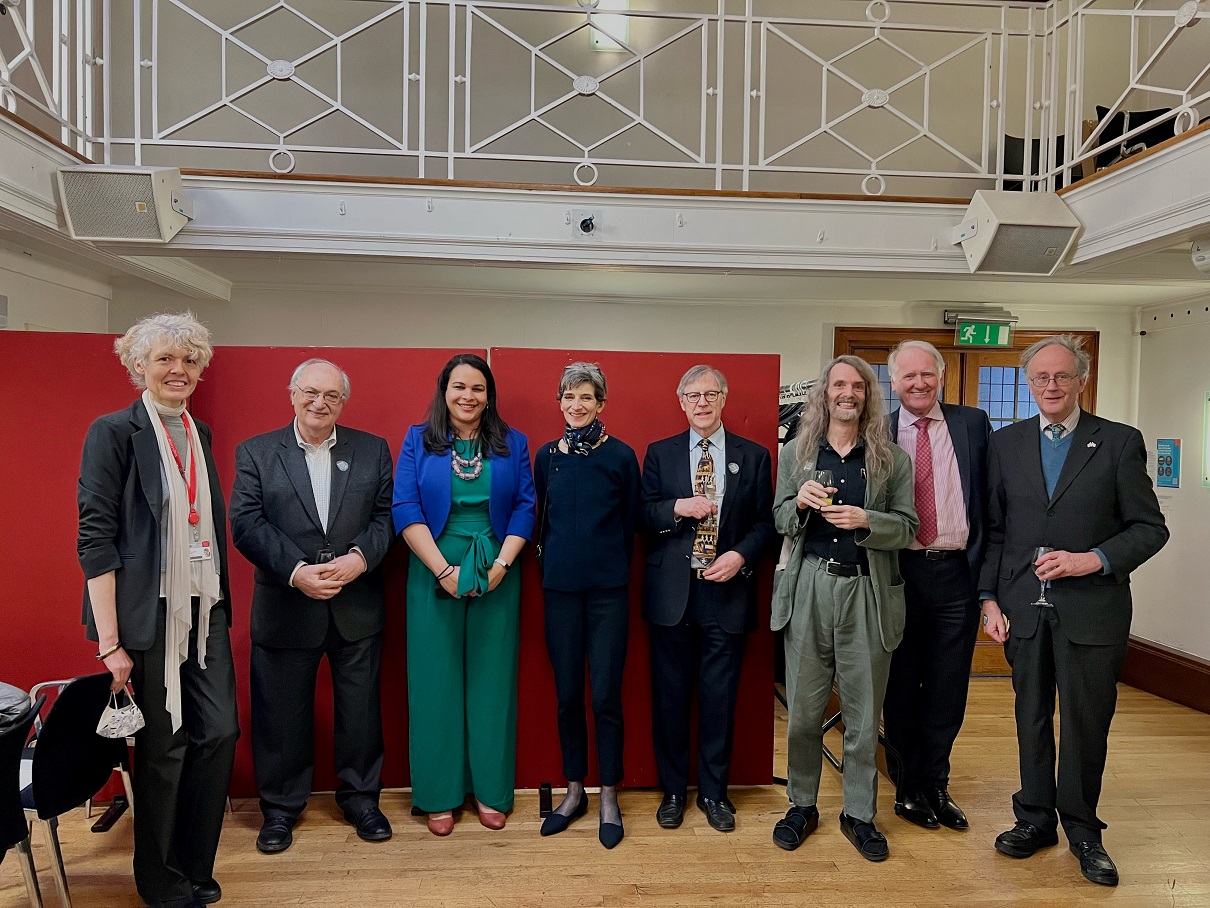
Wednesday 16 March, 18.30
Rumble Fund Lecture
Great Hall, Strand Campus, KCL
Rumble Fund Lecture 2022: Prof. Dimitris Plantzos (National and Kapodistrian University of Athens)
Acropolis adieu: Popular images of Greece in the 1950s and ’60s
Read more and watch the recorded lecture here
In this lecture, we revisit a selection of international pop-culture products from the 1950s and the 1960s (especially songs, movies and novels), in order to examine ways in which Greece and ‘Greekness’ were imagined and portrayed. Broadcasting images of an exoticized – and quite often Orientalized – Greece, the international pop-culture industry was able to create a convenient narrative of ‘merry backwardness’ for the country and its people. Greece is constructed in these products as a world apart – somewhat eccentric though regrettably underdeveloped; a place to visit yet certainly also a place to leave behind; a landscape of ancient glories and modern distractions from modernity itself; a land defined by its own separateness. Yet these imageries were often adopted with marked enthusiasm by the Greek composers, lyricists and film directors themselves, who ended up creating the thoroughly imagined Greece we still inhabit today.
This lecture is open to everyone – and all are warmly invited. It will be followed by a complimentary drinks reception, hosted by the Department of Classics at King’s College London.
Presented by the Centre for Hellenic Studies and the Department of Classics in collaboration with The Courtauld Institute of Art and The Institute of Classical Studies.
Prof. Dimitris Plantzos
Dimitris Plantzos is Professor of Classical Archaeology at the National and Kapodistrian University of Athens. He studied history and archaeology at Athens, and holds an MPhil and a DPhil in classical archaeology from Oxford, where he also spent three years as a British Academy Postdoctoral Fellow. He is the author of various papers and books on Greek art and archaeology, archaeological theory and classical reception. His Greek-language textbook on Greek Art and Archaeology, first published in 2011 by Kapon Editions, was published in 2016 in English and is now available by American publishers Lockwood Press in Atlanta, Georgia. His most recent book is The Art of Painting in Ancient Greece, published by Kapon Editions and Lockwood Press in 2018.
Thursday 3 February, 18.00
31st Annual Runciman Lecture
Great Hall, Strand Campus, KCL
31st Annual Runciman Lecture: Prof Margaret Mullett, ‘Hybrid by Nature: Experiment and Innovation in Twelfth-century Literature’
Preceded by Orthodox Vespers at the King’s Chapel starting at 17:00.
Read the Abstract
Sir Steven Runciman had some difficulty with Byzantine literature. In Byzantine Civilisation (1933) he described it as standing ‘a little removed from the main stream of the literature of the world’, as lacking ‘a certain creative spontaneity’. He did however rate Digenes Akritas as ‘the one really fine large-scale poem produced in Byzantium’, a text which is a fusion of frontier epic and romance novel. Ninety years later, our views of Byzantine literature are unsurprisingly very different: less evaluative, more analytic. The twelfth century in particular now appears to us a period of remarkable experiment and innovation, revival and renewal. And we have a very large number of texts: the best known like the poems of poor Prodromos, the Lucianic satire Timarion and the four novels are vastly outnumbered by a body of rhetorical material: encomia, funeral orations, inaugural lectures, epigrams and ceremonial poems. These are largely occasional, written for performance and often commissioned. A further group of texts does not conform to either type; they are hybrids, like the centaurs and sirens that weave their way through the manuscript headpieces, the court poetry and ivory boxes of the period. I shall look at five texts: a saint’s life with integrated ascetic anthology, an epistolary narrative of monastic scandal and embassy-tales, a tragedy-cum-Virgin’s lament expressed in Euripidean cento and biblical quotation, a mock epic animal fable with included tragic features, and a legal semeioma combining judge’s lament and a woman’s confession of infanticide and cannibalism. All are extraordinary texts; all raise questions of the generation of text, and of audience, reception, display and performance in the twelfth century, not least the issue of hybridity.
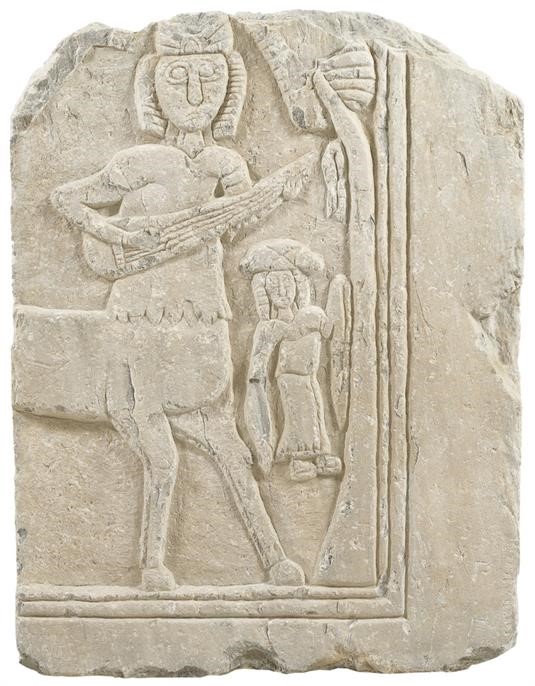
Margaret Mullett began research, on epistolography in Birmingham, in 1970, and in 1974 took up a lectureship at Queen’s University Belfast where she taught for thirty-five years, building an institute of Byzantine Studies and an AHRB centre for cultural history with Newcastle and Sussex. After teaching in Paris and holding a chair of Gender Studies in Vienna, she became Director of Byzantine Studies at Dumbarton Oaks. On her return to Europe, she held visiting professorships at Vienna and then Uppsala. She is working on performance, narrative, emotion, and space in texts mostly of the twelfth century, currently completing studies of tents and of the Christos Paschon. With Susan Ashbrook Harvey, she is preparing a collection of essays on managing emotions in Byzantium. She is professor emerita at Queen’s and an honorary professor at the University of Edinburgh.
Programme
18:00: Welcome: Professor Gonda Van Steen
Introduction of the speaker: Dr Tassos Papacostas
Word of thanks: Emeritus Professor Roderick Beaton
Monday 24 January and Monday 31 January 2022, 17.00 (UK)
Translation and Inclusion versus Exclusion
Online
Translation and Inclusion versus Exclusion
A diptych of panel discussions in collaboration with the British School at Athens and Aiora Press.
The panels will explore translation’s intersection with the dynamics of inclusion versus exclusion, the existence or creation of minorities, the advocacy for a more pluralistic society via fiction, children’s literature, poetry, and graphic novels, which, in their own way, perform acts of ‘translation’ between cultures, languages or historical periods.
Among the speakers will be: Haris Psarras, Mika Provata-Carlone, Claire Heywood, Therese Sellers, Ruth Padel, and Antonis Nikolopoulos (Soloup). The first session will be chaired by David Holton and the second by Gonda Van Steen.
Watch Part 1:
Watch Part 2:
Friday 26 November, 18.00
Lecture and Panel: Imagining a Free Greece
Hellenic Institute, Royal Holloway, University of London
Online
Imagining a Free Greece: British, Cypriot and Russian Engagements
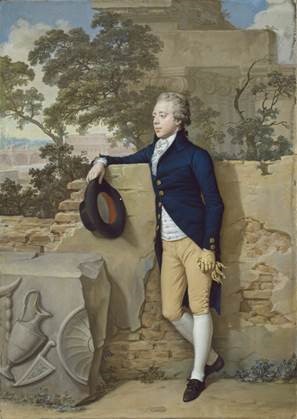
Taking as a point of departure the famous Ionian Academy established by the great philhellene Frederick North, 5th Earl of Guilford (1766-1827), being the first university established on Greek soil (1824-1827), this event explores the history of cultural and intellectual movements related to the Greek War of Independence, including the contribution of the Greek Orthodox Cypriots. Dr Sakis Gekas (York University, Toronto) delivers the main lecture on Lord Guilford and British cultural politics in the Ionian Islands, followed by a panel discussion with Professor Lucien Frary (Rider University, New Jersey) on Russophilia in the Ionian Islands, and Dr Chrysovalantis Kyriacou (Bank of Cyprus Cultural Foundation/Royal Holloway) on Cyprus and Greek Christian Cypriots and the Greek War of Independence.
The event is moderated by Dr Paris Papamichos Chronakis and hosted by the Hellenic Institute and Centre for Greek Diaspora Studies, Royal Holloway University of London.
Lecture: Professor Sakis Gekas, ‘Lord Guilford, British cultural politics and colonialism in the Ionian Islands’
The opening of the Ionian Academy in Corfu is often presented as the personal project of Lord Guilford. Within the local and the imperial context of British colonialism, however, the institution represents a shift in the colonial practices and mode of rule, from the military-commercial to the cultural-civilizational, still at an early stage in the empire’s history of cultural politics and education. The talk will place the Ionian Academy within the constellation of Guilford’s ambitions and the context of colonial rule of the Ionian Islands as a protectorate. The contrast with the years of the revolutionary war in Greece could not be starker. Previous educational-cultural activities and institutions in the Ionian Islands allow us to understand the local context and the landscape in which the Ionian Academy emerged and functioned within the British protectorate. Guilford’s personal project and ambition for a centre of higher education predates the period of British rule in the Ionian Islands and reflects the impact of classical education on cultural projects and politics of the time.
Interventions:
Professor Lucien Frary (Rider University, New Jersey), “Russophilia in the Ionian Islands and the Coming of the Greek Revolution”
Dr Chrysovalantis Kyriacou (Bank of Cyprus Cultural Foundation / Royal Holloway), “The Cypriots and the Greek Revolution of 1821”
Watch the event here:
Wednesday 24 November
Book Launch: Music, Language and Identity
Athens Conservatoire, Greece
Book Launch: Music, Language and Identity in Greece
Book launch of the volume Music, Language and Identity in Greece: Defining an Art Music in the 19th and 20th centuries (Routledge, Publications of the Centre for Hellenic Studies, King’s College London), and its accompanying CD ‘HARMONIA’, as part of the symposium ‘Art Music in Modern Greece’, celebrating 150 years of the Athens Conservatoire.
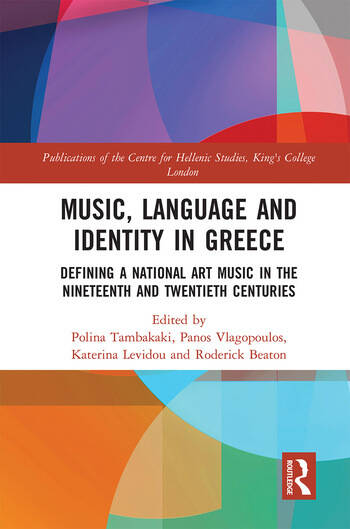
The event will also include talks about the opera Andronica by Alexandros Greck, which will be produced at the Olympia Theatre on 28 November 2021, for the first time after its last known presentation in Alexandria 110 years ago, as part of Protovoulia 1821-2021 and with the generous support of the J. F. Costopoulos Foundation.
Speakers: Nikos Tsouchlos (the Athens Conservatoire), Gonda Van Steen (King’s College London), John Bennet (British School at Athens), Dimitrios P. Mantzounis (the J. F. Costopoulos Foundation), Polina Tambakaki (King’s College London), John Kittmer (the Anglo-Hellenic League), Evanthis Hatzivassiliou (the University of Athens and the Hellenic Parliament Foundation), Haris Xanthoudakis (the Athens Conservatoire), Stella Kourmpana (the Athens Conservatoire) and Nikos Athineos (the Athens Conservatoire).
The symposium will close with a 20-minute presentation of excerpts from the opera Andronica performed by Vassia Alati (soprano) and Nikos Athineos (piano).
Admission is free with admission tickets. For details, please contact the Athens Conservatoire: tntoufexiadou@athensconservatoire.gr
Thursday 18 – Sunday 21 November
Conference: A.G. Leventis Conference in Hellenic Studies
University of Edinburgh and Online
Conference: Twelfth A.G. Leventis Conference in Hellenic Studies at the University of Edinburgh
The Greek Revolution of 1821: Contexts, Scottish Connections, the Classical Tradition.
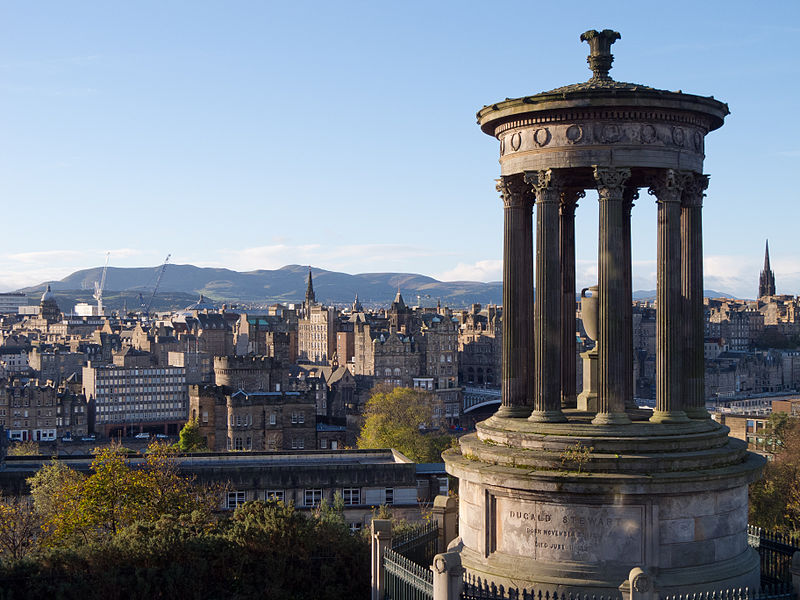
View the programme
Accompanied by an exhibition in the University Library: ‘Edina/Athena: The Greek Revolution and the Athens of the North, 1821–2021’.
The revolution of the Greek-speaking, Orthodox Christian subjects of the Ottoman empire in 1821 was accompanied by declarations of national independence inspired by the recent revolutions in the Americas and France. The Greek Revolution was the first of its kind to be successful on European soil, and led to international recognition for Greece as an independent, sovereign state in 1830. In this way, the story of Greece as a modern nation-state begins, and also a new chapter in the history of our continent, as the era of multi-national empires slowly gave way, over the next two centuries, to an era dominated by the self-determination of nation-states.
This conference, held under the auspices of the A. G. Leventis Visiting Professorship in Greek, and forming part of Edinburgh’s biennial series of international conferences on Hellenic studies, will bring together scholars from many countries and a range of academic disciplines to re-assess the nature and significance of the Greek Revolution from the perspective of the twenty-first century and of a city and a nation that geographically lie at the opposite end of Europe from Greece, and have often been compared; namely Edinburgh (the ‘Athens of the North’) and Scotland.
In keeping with the broad remit of the Leventis series of conferences at Edinburgh, speakers will assess the role of the ancient and Byzantine Greek past in the causes, ideology, and reception of the 1821 revolution. The conference will also highlight Scottish connections to Greece, both ancient and modern, and specifically the Greek past as an inspiration for the Scottish Enlightenment and in the architectural planning of Edinburgh’s ‘New Town’.
Confirmed speakers include Thomas Ahnert (Edinburgh), Iain Gordon Brown (NLS), Richard Clogg (Oxford), Tolga Esmer (CEU Vienna), Ioannis Evrigenis (Tufts), Lucien Frary (Rider University), Alasdair Grant (Edinburgh & Hamburg), Constanze Güthenke (Oxford), Yannis Hamilakis (Brown), Paschalis Kitromilides (Athens), Vassiliki Kolocotroni (Glasgow), Sanja Perović (KCL), Alexia Petsalis-Diomidis (St Andrews), Christine Philliou (Berkeley), Gonda Van Steen (KCL), Matteo Zaccarini (Bologna/Edinburgh) and Simon Zenios (UCLA).
The conference will be held in a hybrid format, with a small live audience in Edinburgh and a larger audience online. To ask about in-person attendance, please email the Research Centres and Knowledge Exchange Events Administrator, Ms Elaine Philip.
Conference website here.
Contacts: Prof. Niels Gaul and Prof. Roderick Beaton
Prof. Roderick Beaton, A.G. Leventis Visiting Professor in Greek
Roderick Beaton grew up in Edinburgh and studied English Literature at Peterhouse, Cambridge, before turning to Modern Greek as the subject of his doctorate, also at Cambridge – and at the British School at Athens. After a three-year postdoctoral fellowship at the University of Birmingham he embarked on a long career at King’s College London, first as Lecturer in Modern Greek Language and Literature (1981-88), later as Koraes Professor of Modern Greek and Byzantine History, Language and Literature (1988-2018), and since then as Emeritus. From 2012 to 2018 he also served as Director of the Centre for Hellenic Studies at King’s.
Roderick is the author of many books and articles about aspects of the Greek-speaking world from the twelfth century to the present day, including An Introduction to Modern Greek Literature (1994); George Seferis: Waiting for the Angel. A Biography (2003); Byron’s War: Romantic Rebellion, Greek Revolution (2013); and Greece: Biography of a Modern Nation (2019, now a Penguin paperback). All four of these books won the prestigious Runciman Award for best book on the Hellenic world. His latest book, an overview of Greek history from the Bronze Age to the 200th anniversary of the Greek Revolution in 2021, is expected to be published in autumn 2021 with the title The Greeks: A Global History.
He is a Fellow of the British Academy (FBA, 2013), a Fellow of King’s College (FKC, 2018), Commander of the Order of Honour of the Hellenic Republic (2019) and, from September to December 2021, has been appointed A.G. Leventis Visiting Professor in Greek at the University of Edinburgh.
Saturday 6 November, 11.00
Cavafy Walking Tour
Meeting Point: Queensborough Terrace, Bayswater
Historic Walking Tour of Cavafy’s London
Follow in the footsteps of Cavafy on this London walking tour led by Dr Victoria Solomonidis-Hunter FKC (UCL).
Tour highlights include the Cavafy’s childhood home, the George Cavafy family home, the Aghia Sofia, the former site of the Hellenic College, and the studio of Cavafy’s cousin, Maria Zambaco Cassavetti.
More information available here.
Thursday 4 November, 17.30-18.30
Panel: Classical/Contemporary
Online
Classical/Contemporary: In Conversation with Francesco Vezzoli
How might classical art speak to contemporary concerns? In what ways can present-day perspectives illuminate the Greek and Roman past? And how can new dialogues between artists, art historians and classical archaeologists engage new – more diverse and inclusive – audiences in the twenty-first century?
This online event, organised in partnership with the Fondazione Brescia Musei, addresses these and other themes, in conversation with renowned Italian artist, Francesco Vezzoli.
Speakers: Francesco Vezzoli, Dr Patch Crowley (Cantor Center, Stanford University), Prof Verity Platt (Cornell University), Dr Letizia Ragaglia (Kunstmuseum Liechtenstein), Prof Salvatore Settis (Scuola Normale Superiore), Prof Michael Squire (King’s College London)
Our discussion takes its cue from Vezzoli’s current exhibition, Paloscenici archeologici (‘Archaeological Stages’) at the UNESCO archaeological park at Brescia (June 2021 – January 2022). By bringing together an international panel of art historians, archaeologists and curators, the event will also explore the show’s larger artistic, conceptual and curatorial context: our aim is not only to initiate new dialogues between archaeology and contemporary art, but also to explore the past, present and future of classical traditions. Participants will be invited to put their questions directly to both Francesco Vezzoli and the panel. This online international event forms part of the ‘Modern Classicisms’ project at King’s, and is generously supported by the Jamie Rumble Memorial Fund.

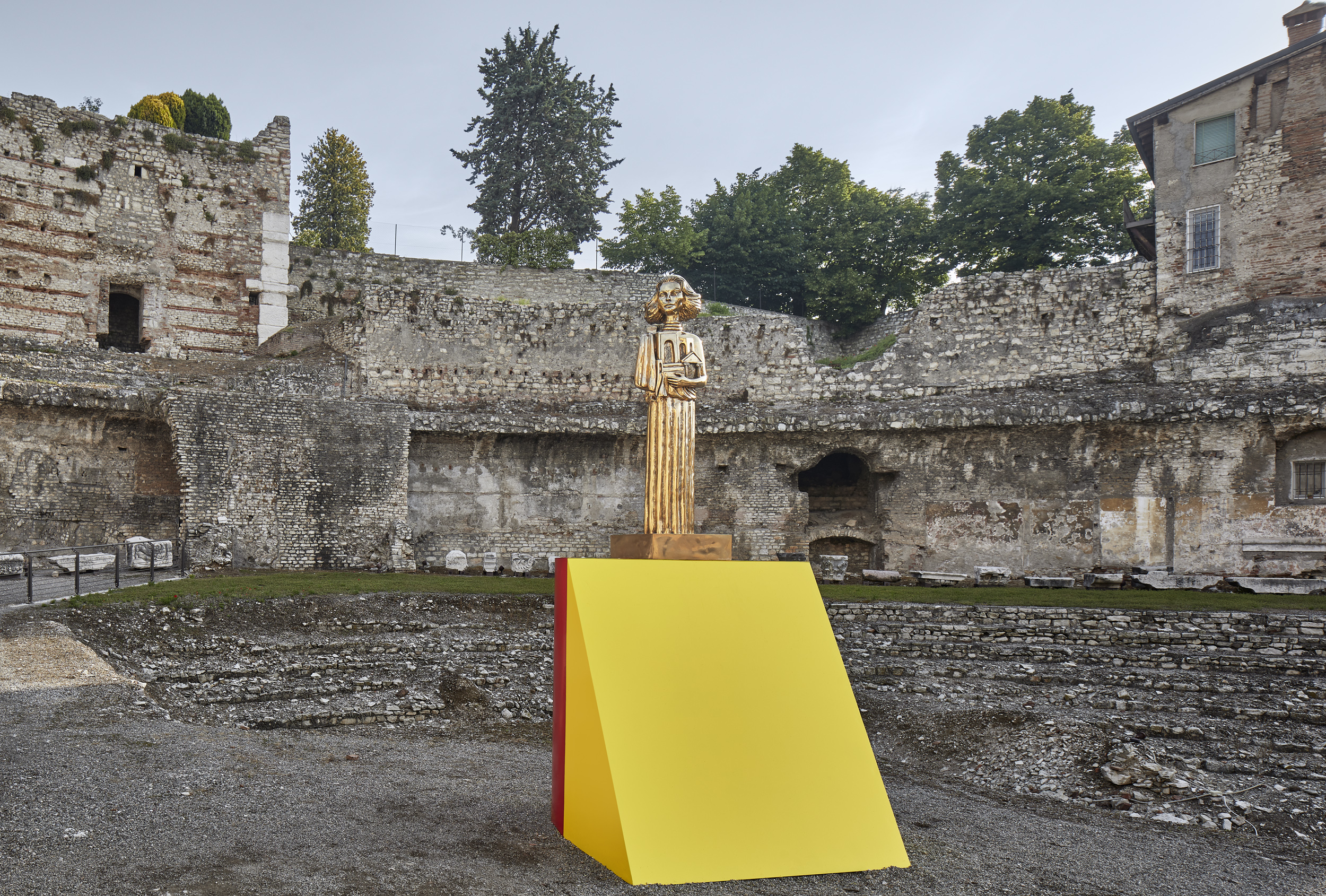

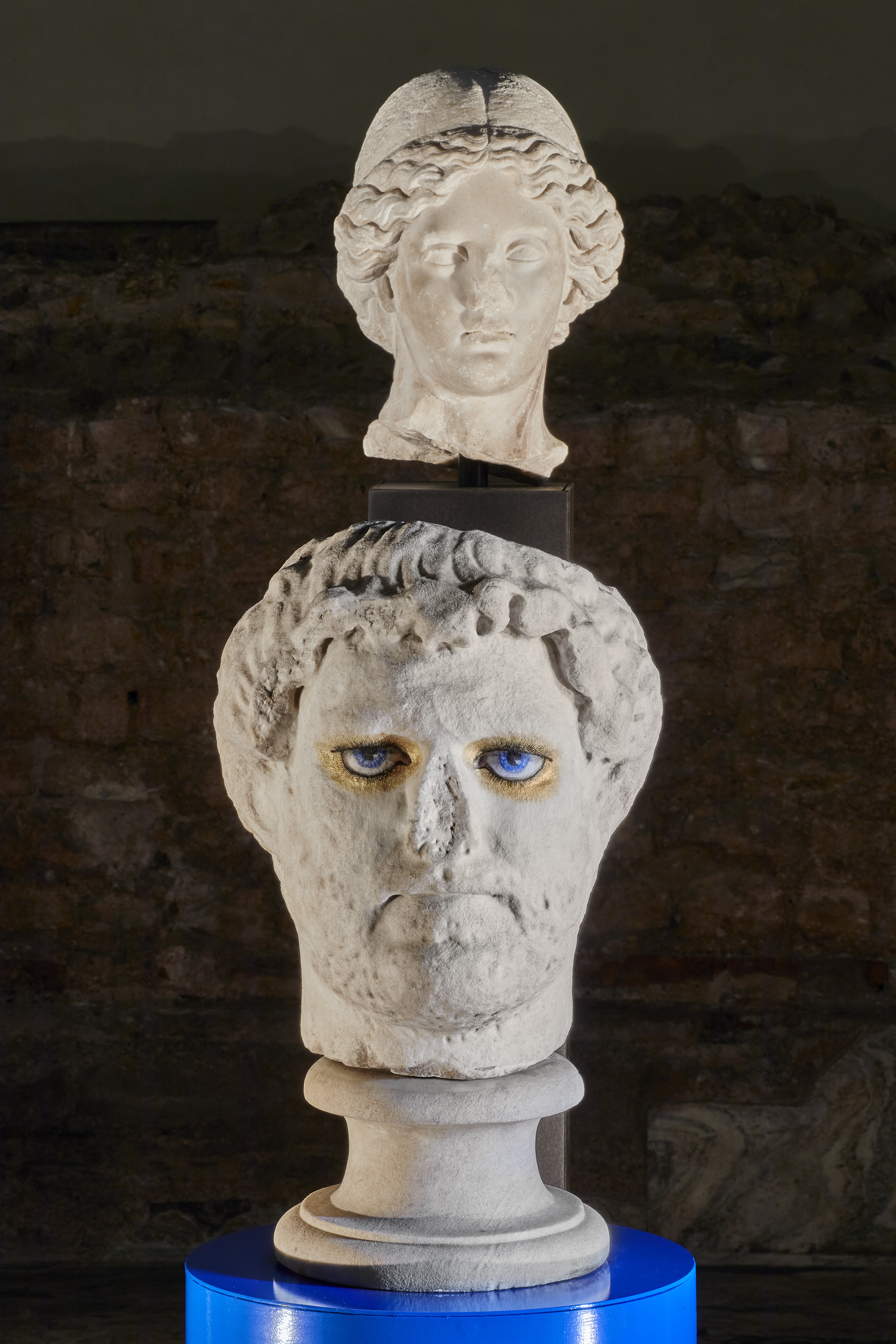

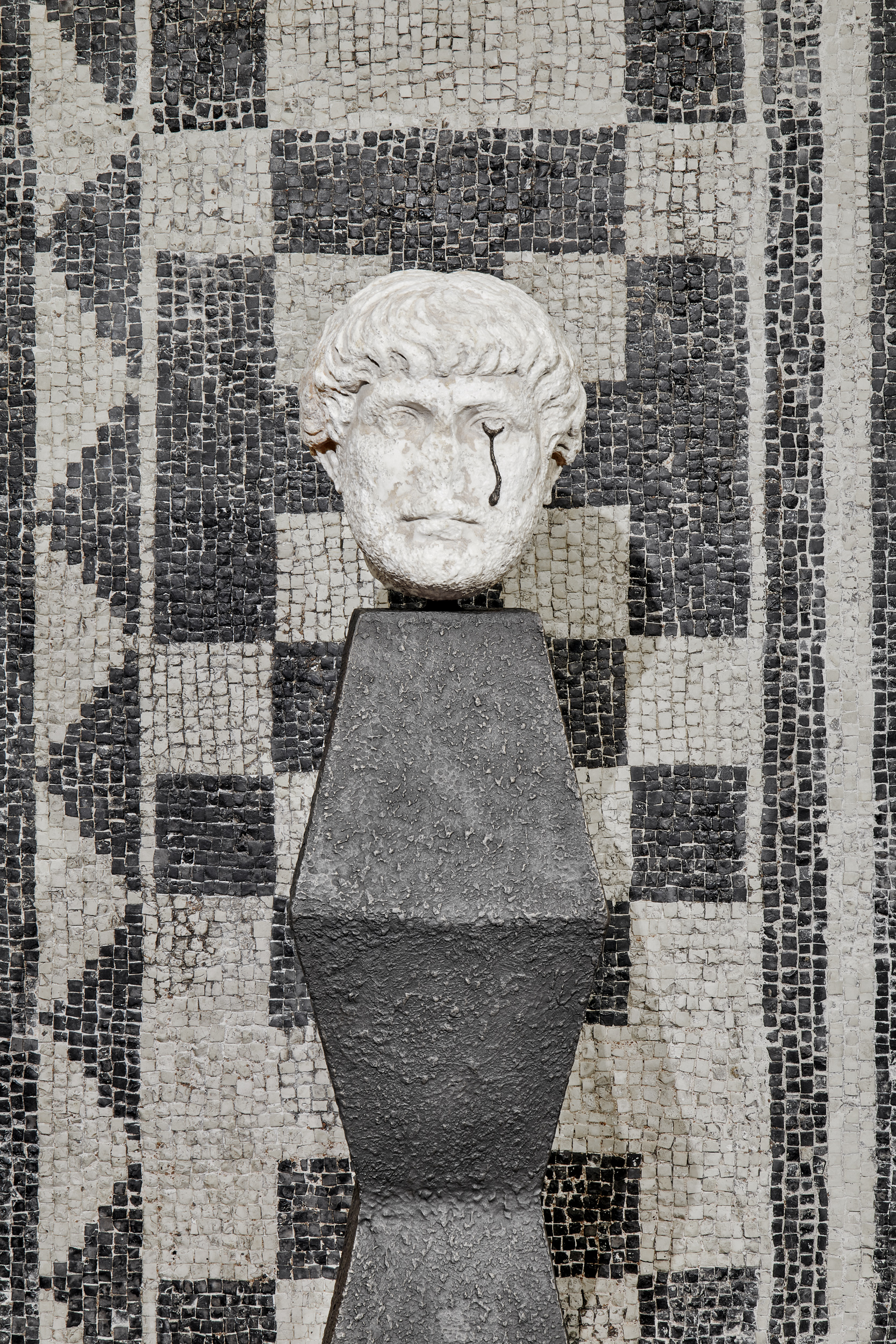
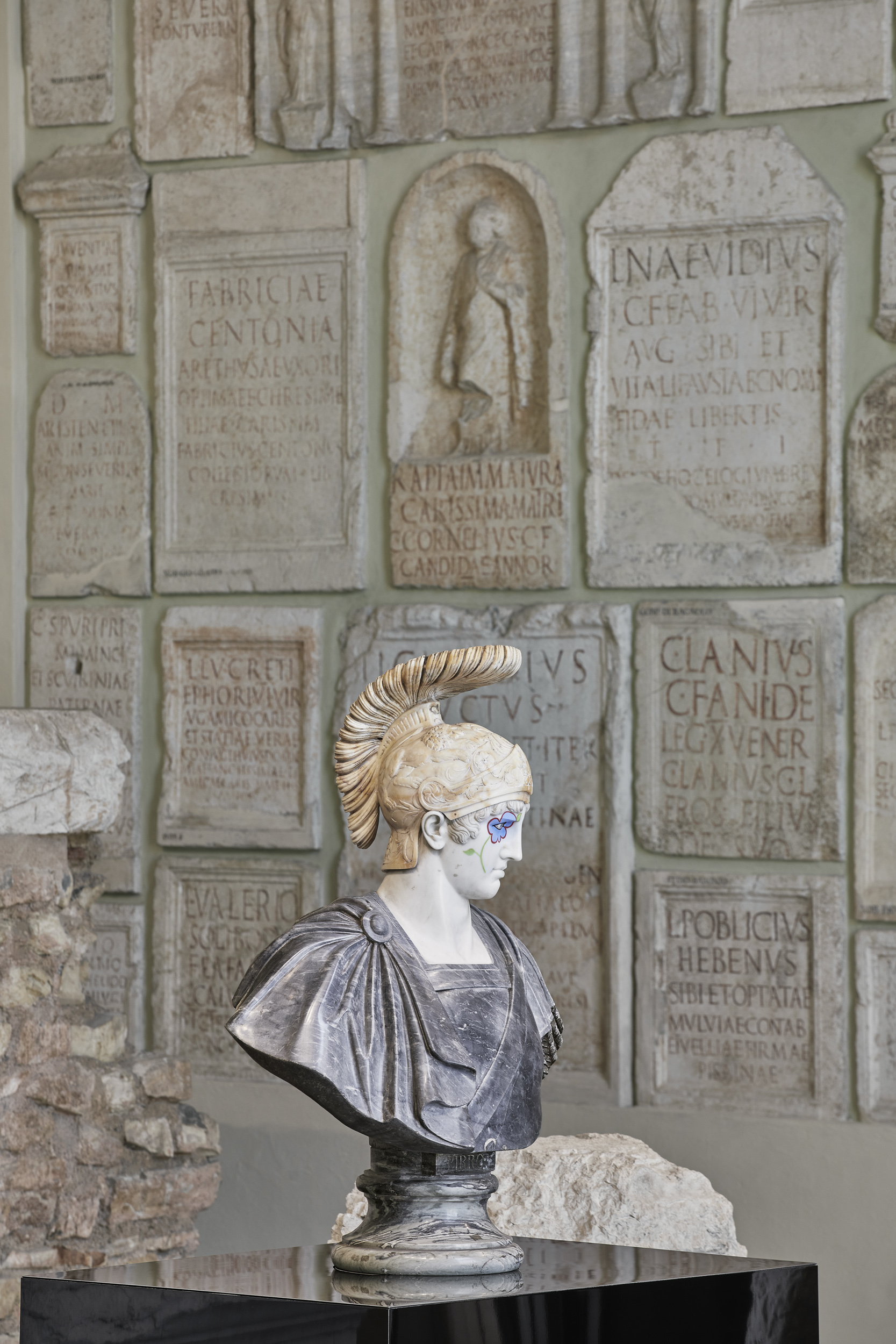

Friday 29 October
2021 Leventis Exhibition
University of Edinburgh Library, George Square, Edinburgh
ONGOING: 2021 Leventis Exhibition: ‘Edina/Athena: The Greek Revolution and the Athens of the North, 1821–2021’
This major exhibition accompanies the tenure of the 12th Leventis Professor and will be on display from 29 October 2021 until 29 January 2022.
The display explores Scottish–Greek connections in the early nineteenth century and plays on the synchronicity of the Greek Revolution and the emergence of the discourse of Edinburgh as the ‘Modern Athens’ and ‘Athens of the North’.
The Geopolitics of Greece: Continuities and Discontinuities
Geopolitics has always been invoked as an explanation for Greek foreign policy and its position in the European and broader international order. This event will examine to what extent the intersection of geography and politics accounts for Greece’s external relations and to what extent it provides a useful link in understanding Greece’s international position in 1821 and the 21st Century.
Speakers: Konstantina Botsiou (Associate Professor and Director of KEDIS, University of the Peloponnese), Erik Goldstein (Professor of International Relations and History, Boston University), George Prevelakis (Professor Emeritus, Sorbonne University; Permanent Representative of Greece at the OECD)
Chair: Spyros Economides (Associate Professor in International Relations and European Politics, LSE)
Register for the Zoom link here.
For more information, see the event website.
Registrations will open on 7 October.
Friday 22 October, 18.00-19.30
The Greek War of Independence in the Visual Arts and Literature
The Greek War of Independence in the Visual Arts and Literature
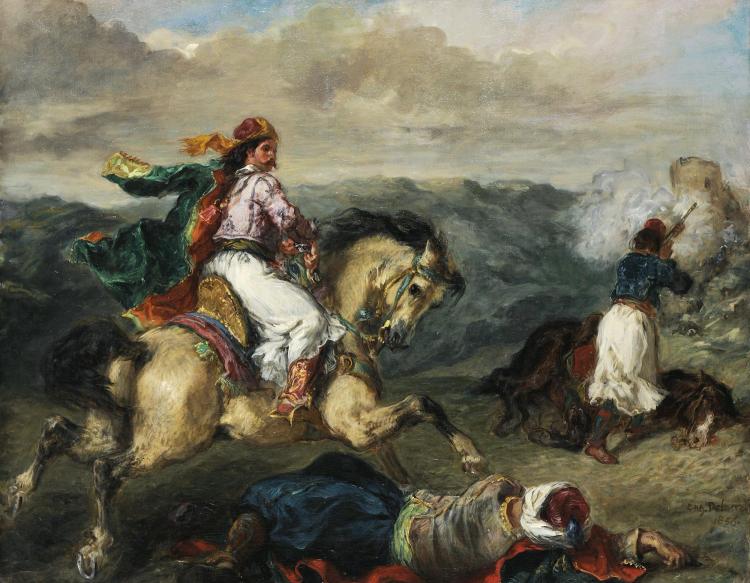
This seminar will be a discussion of the representation of independence through art and literature.
More details and Zoom link available here.
Moderator and Chair: Liana Giannakopoulou (Cambridge)
Speaker abstracts and bios:
Aris Sarafianos (University of Ioannina) on ‘Cultural Diplomacy, Local Nationalism and the Birth of a Philhellenic Picture: Thomas Phillips’s “Albanian Portrait of Byron”’
Lord Byron’s first emblematic portraits – Portrait of a Nobleman in the Dress of an Albanian (1814) and Portrait of a Nobleman (1814) and their many copies – remain largely under-researched. These portraits have been painted by the Royal Academy painter Thomas Phillips, whose important yet unusual work in the Romantic portraiture of men of science, medical men, and celebrity writers and poets is largely overlooked, too. The proposed talk aims to place Byron’s portraits in their immediate historical context, highlighting and enriching the disparate set of competing motives, expectations and practices that defined the history of European Philhellenism and, in particular, the Byronic case. It studies the specific conditions of the portraits’ production, public exhibition and critical reception, their visual choices and perpetual reinterpretation by engaged viewers. The following themes encapsulate some of the significant forces present in these portraits that proved decisive for the spread of the attraction of Greece among the contemporary elite: the quest of celebrity status in the cultural market of the time; sensationalism, disguise, notoriety, and the pursuit of perpetual sensory stimulation in the construction of new models of dynamic virility and artistic identity; exotic fantasies and orientalist hybridizations.
In a happy coincidence, ten years after the appearance of Byron’s portraits, there also appeared an extraordinary yet largely unknown literary portrait of the poet written by the most brilliant essayist and critic of the first half of the nineteenth century, William Hazlitt. In addition to being Byron’s associate, this well-known member of the Cockney School of literature had already been one of the first critics to review Phillips’ portraits of Byron exhibited at the Royal Academy exhibition of 1814. Hazlitt’s bottom-up literary portrait unpicks in a most biting way all the social, political and aesthetic forces that marked Byron’s ‘preposterous liberalism’ and related version of philhellenism. Ultimately, Hazlitt’s essay spots all the conflicting oscillations characteristic of Byron’s philhellenic model: passages across aristocratic forms of distinction and the love of people, class privilege and social equality, politeness and wildness, haughtiness and self-contempt, ennui and freedom that throw a new critical-historical light upon Phillips’ portraits and the history of philhellenism, more broadly.
Dimitris Plantzos (National and Kapodistrian University of Athens) on ‘Public Statues, National Anniversaries, and the Winters of Our Discontent’
As a typical modern nation-state, Greece has to a great extent based its public imagery on the usual repertoire of bronze and marble effigies representing its founding fathers: late nineteenth- and twentieth-century politicians, some ancient Greeks, and a great number of ‘heroes’ associated with the War of Independence. Inspired by an ongoing effort by the municipality of Tripoli in the Peloponnese to revamp the town’s central square where a bronze statue of Theodoros Kolokotronis was erected in the 1930s, as well as several graffiti attacks against the twin effigies of the same historical figure in Athens and Nafplio in the years of the economic recession and the covid19 pandemic, this paper revisits questions of public space, cultural memory, national heterotopias, and Greek Archaeopolitics.
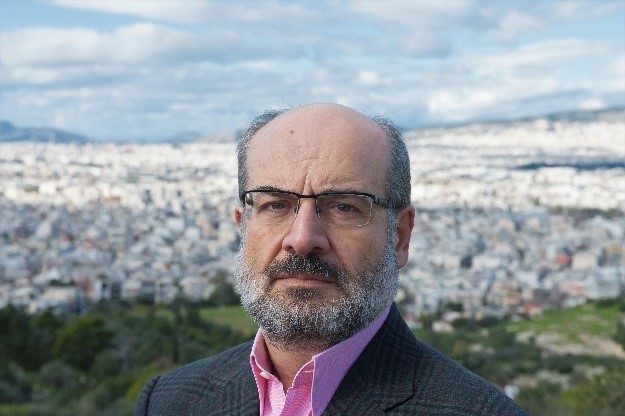
Dimitris Plantzos is Professor of Classical Archaeology at the National and Kapodistrian University of Athens. His academic interests include Greek art and archaeology, archaeological theory, and modern receptions of classical antiquity. His most recent books are The Art of Painting in Ancient Greece (Athens and Atlanta, GA 2018) and The Recent Future: Classical Antiquity as Biopolitical Apparatus (Athens 2016; in Greek). He is currently working on a book on Archaeopolitics, to be published by Sorbonne Université Presses (in French).
Contact: Liana Giannakopoulou (Senior Research Fellow, Faculty of MMLL and Centre for Greek Studies, University of Cambridge)
Wednesday 20 October
Panel: Rethinking 1821
UCL School of Slavonic and East European Studies
Rethinking 1821: Greek Independence and its Transnational Contexts
A panel of new research on the events of 1821, with a particular emphasis on their transnational and Balkan dimensions. There will be three short papers of around 15-20 minutes, followed by a Q&A session.
Opening Remarks: Wendy Bracewell (Professor of Southeast European History, UCL-SSEES)
Panelists: Viron Karidis (London), Alex Drace-Francis (University of Amsterdam), Elisavet Papalexopoulou (European University Institute)
For more information and to read abstracts, please see the event website.
Register here.
Contact: Dr. Alex Drace-Francis.
Wednesday 13 October
Niki Marangou Memorial Lecture
Temporary Exhibition Room, Leventis Gallery
Nicosia, Cyprus
Third Annual Niki Marangou Memorial Lecture
Prof Roderick Beaton: ‘Το ’21 και ο ευρωπαϊκός φιλελληνισμός’

Please note this lecture is in Greek.
Read the Abstract
Από τις πρώτες κιόλας μέρες της Επανάστασης, η έκκληση προς τα «πολιτισμένα έθνη της Ευρώπης» εμφανίζεται στις πρώτες προκηρύξεις των επαναστατών. Τόσο ο Αλέξανδρος Υψηλάντης στις παραδουνάβιες ηγεμονίες, όσο και ο Πετρόμπεης Μαυρομιχάλης στην Καλαμάτα, καλούν τους φιλελεύθερους και τους φιλάνθρωπους της Ευρώπης να υποστηρίξουν τον Αγώνα. Οι «φιλέλληνες», όπως αποκαλούνται αμέσως, κατεβαίνουν από όλα τα μέρη της ηπείρου, καθώς και από την μακρινή Αμερική. Πάνω από 1000 άτομα πήραν ενεργό μέρος ως εθελοντές στο πεδίο της μάχης. Άλλοι απογοητεύτηκαν και έφυγαν, άλλοι σκοτώθηκαν ή πέθαναν από αρρώστιες. Οι απώλειες ήταν τρομερές, και τραγικές – όπως γίνεται στην πασίγνωστη περίπτωση του Λόρδου Βύρωνα, ο οποίος πέθανε στο Μεσολόγγι τον Απρίλη του 1824. Είναι ζήτημα τι κατάφεραν οι άνθρωποι αυτοί, αν υπολογίσουμε μόνο το στρατιωτικό αποτέλεσμα της επέμβασής τους. Αλλά, μαζί με πολύ περισσότερους ομοϊδεάτες τους που έμειναν σπίτι αλλά που ενεργούσαν με πλάγιους τρόπους, όπως με χρηματοδοτήσεις, πληροφόρηση μέσα από τις εφημερίδες κλπ., οι φιλέλληνες ως σύνολο εξασφάλισαν την κινητοποίηση των κυβερνήσεων των Μεγάλων Δυνάμεων προς όφελος της Ελλάδας. Αν δεν ήταν οι εθελοντές που πήραν τα άρματα, και αν δεν ήταν οι προπαγανδιστικές ενέργειες των φιλελλήνων σε όλες, σχεδόν, τις χώρες της Ευρώπης, δεν θα γινόταν η ναυμαχία του Ναυαρίνου, ή το Πρωτόκολλο του Λονδίνου, που τελικά εξασφάλισε την πλήρη ανεξαρτησία του νεοσύστατου ελληνικού κράτους στις 3 Φεβρουαρίου 1830.
The year 2021 marks the bicentenary of the outbreak of the Greek Revolution, or War of Independence. As that anniversary year evolves, this talk takes a long view, beginning with the European settlement reached at the Congress of Vienna in 1814-15, known as the ‘Concert of Europe’, and continuing with the disappearance of multi-national empires and their replacement throughout the continent by the nation states that we are familiar with today. International recognition for Greece as a sovereign nation-state, sealed by the Protocol of London in February 1830, according to Professor Beaton’s analysis, represents a pivotal point in this continent-wide transition, and one that has been unjustly overlooked by historians. The talk will focus on those aspects of the Greek Revolution that explain how events in Greece in the 1820s contributed to this far-reaching change, whose consequences are still being played out today as the UK has left the European Union and its constituent nations contemplate separate futures for themselves.
Prof. Roderick Beaton, A.G. Leventis Visiting Professor in Greek
Ο Roderick Beaton γεννήθηκε και μεγάλωσε στο Εδιμβούργο της Σκωτίας. Σπούδασε Αγγλική Φιλολογία στο Peterhouse (Πανεπιστήμιο του Cambridge) και στη συνέχεια εκπόνησε διδακτορική διατριβή στο ίδιο πανεπιστήμιο με θέμα το ελληνικό δημοτικό τραγούδι. Από το 1988 ώς το 2018 ήταν καθηγητής στην Έδρα Κοραή Νεοελληνικής και Βυζαντινής Ιστορίας, Γλώσσας και Φιλολογίας στο King’s College London, και από το 2012 ώς το 2018 διευθυντής του Κέντρου Ελληνικού Σπουδών στο ίδιο πανεπίστημιο, όπου από το 2018 παραμένει ως ομότιμος καθηγητής. Ανάμεσα στα βιβλία του είναι: Εισαγωγή στη νεότερη ελληνική λογοτεχνία (1996)· Γιώργος Σεφέρης: περιμένοντας τον άγγελο (2003)· Ο πόλεμος του Μπάιρον: ρομαντική εξέγερση, Ελληνική Επανάσταση (2016) και Ελλάδα: Βιογραφία ενός σύγχρονου έθνους (2020). Το 2019 του επέδωσε ο Πρόεδρος της Ελληνικής Δημοκρατίας το παράσημο του Ταξιάρχη του Τάγματος της Τιμής, «για την εμβληματική συμβολή [του] στην έρευνα της Νεοελληνικής και Βυζαντινής Ιστορίας, Γλώσσας και Λογοτεχνίας». Εκλέχτηκε στη θέση A.G. Leventis Visiting Professor in Greek στο Πανεπιστήμιο του Εδιμβούργου για την περίοδο Σεπτέμβρη-Δεκέμβρη 2021. Το επόμενο βιβλίο του, The Greeks: A Global History προβλέπεται να κυκλοφορήσει το φθινόπωρο του 2021.
Roderick Beaton grew up in Edinburgh and studied English Literature at Peterhouse, Cambridge, before turning to Modern Greek as the subject of his doctorate, also at Cambridge – and at the British School at Athens. After a three-year postdoctoral fellowship at the University of Birmingham he embarked on a long career at King’s College London, first as Lecturer in Modern Greek Language and Literature (1981-88), later as Koraes Professor of Modern Greek and Byzantine History, Language and Literature (1988-2018), and since then as Emeritus. From 2012 to 2018 he also served as Director of the Centre for Hellenic Studies at King’s.
Roderick is the author of many books and articles about aspects of the Greek-speaking world from the twelfth century to the present day, including An Introduction to Modern Greek Literature (1994); George Seferis: Waiting for the Angel. A Biography (2003); Byron’s War: Romantic Rebellion, Greek Revolution (2013); and Greece: Biography of a Modern Nation (2019, now a Penguin paperback). All four of these books won the prestigious Runciman Award for best book on the Hellenic world. His latest book, an overview of Greek history from the Bronze Age to the 200th anniversary of the Greek Revolution in 2021, is expected to be published in autumn 2021 with the title The Greeks: A Global History.
He is a Fellow of the British Academy (FBA, 2013), a Fellow of King’s College (FKC, 2018), Commander of the Order of Honour of the Hellenic Republic (2019) and, from September to December 2021, has been appointed A.G. Leventis Visiting Professor in Greek at the University of Edinburgh.
Contact: marangouatkings@gmail.com or chs@kcl.ac.uk
Saturday 9 October, 19.00
Film Screening
Bush House (N) Auditorium, -1.01, KCL
Film Screening: Queens of Amathus
An award-winning documentary about the women of Cyprus and their journey to Birmingham in the aftermath of the 1974 Turkish invasion of the island. To be followed by a discussion with the producer and director, Panikos Panayiotou, led by Dr Marios Psaras, Cultural Counsellor, Cyprus High Commission.
Watch the trailer:
Venue: Bush House, 30 Aldwych, London, WC2B 4BG (Bush House (N) Auditorium -1.01 and Arcade Café and exhibition area). Please adhere to all necessary health precautions, as required on the King’s Strand campus.
Organised by the Cultural Section of the Cyprus High Commission, London, and the Centre for Hellenic Studies at King’s.
Thursday 24 June, 16.00-17.30
Panel: Re-Appraising Economic Legacies
Hellenic Observatory, LSE
The Greek War of Independence: Re-Appraising its Economic Legacies
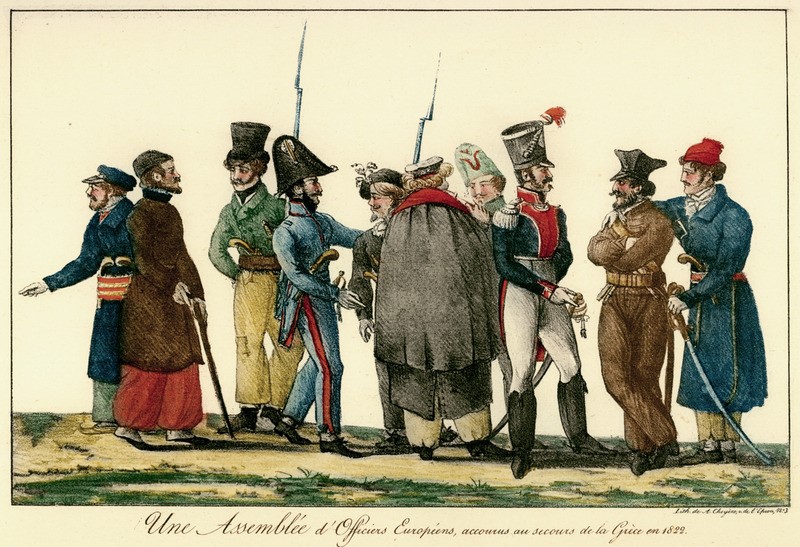
How far may the economic problems of the modern Greek state be attributed to the nature of its origins? Its small, albeit enlarging, size; the lack of popular trust in public institutions and authority; the recourse to patrons and to ‘rent-seeking’; and, its own vulnerability to external powers: are these path-dependent features that overwhelm the scope for change?
This panel will discuss the inheritance of 1821 for the course of development taken by modern Greece and how it has structured options and choices. When, and how, has or might such historical determinism be overcome?
Speakers:
Maria Christina Chatziioannou, Director of the Institute of Historical Research of the National Hellenic Research Foundation
Andreas Kakridis, AssistantProfessor of Economic History, Ionian University
Stathis Kalyvas, Gladstone Professor of Government, All Souls College, University of Oxford
Chair: Joan Roses, Professor in Economic History, LSE
Anglo-Hellenic League Runciman Award Ceremony
Keynote speaker: Prof. Stathis Kalyvas, on the abiding relevance of the Greek Revolution of 1821.
Organised by the Anglo-Hellenic League, which administers the Runciman Award.
For more details, please see the event flyer. More information about the cultural events programme of The Anglo-Hellenic League is available here.
Contact: Dr John Kittmer, Chair of the Anglo-Hellenic League.
A recording of the event is available now on the AHL YouTube channel:
‘The Land of the Great, the Home of the Brave’: Echoes of the Greek War of Independence on Stage
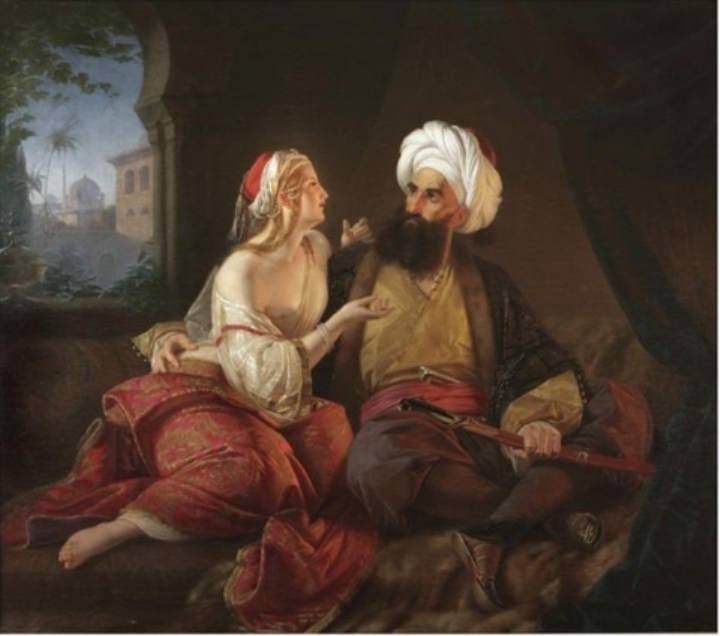
An online presentation by Dr Maria Georgopoulou, Director of the Gennadius Library at the American School of Classical Studies in Athens. The talk focuses on two theatrical plays written by American playwrights Mordecai Noah and John Howard Payne, which were performed in New York and in London in 1822.
The webinar is part of the 1821 Commemorative Lecture Series: The Greek War of Independence Revisited, organised by the Hellenic Centre.
Full details
Dr Maria Georgopoulou’s presentation focuses on two theatrical plays written by American playwrights (Mordecai Noah and John Howard Payne) that were performed in New York and in London in 1822. The protagonist of both plays is Ali Pasha (c. 1740 – 1822), who contributed decisively, if unwittingly, to the struggle of the Greeks for their independence primarily because of the effect he had on Lord Byron. Written immediately after Ali Pasha’s demise in 1822, the plays were performed while the Greek Revolution was still in its early stages. The villain Ali Pasha and the beautiful Greek prisoner who tries to avoid his wrath and harassment in order to mingle with her beloved, offer the necessary elements of savagery, sensuality, exoticism and action for a successful melodrama. Both works transform Ali Pasha’s story to highlight themes to resonate with the intended audiences. Noah transposes Ali Pasha’s action from the city of Ioannina to Athens while the finale of the show is a fantastic allegorical scene of triumph where famous ancient Greeks and modern revolutionaries, including several from the Americas, join the chorus. In the end of Payne’s play, Ali Pasha sets himself on fire in the citadel of Ioannina so that he and his riches do not fall into the hands of the Sultan. The analysis of the characters as well as of the geographical and historical references in the two works, explores the resonance of the events of ’21 in distant America, the perception of exotic stereotypes, and the impact of the struggle for independence on American and English audiences.
Please register in advance of this event here.
Saturday 29 May, 11.00
Historic Walking Tour
Meeting Point: Outside Bayswater Tube Station
Duration: Approx. 1.5 hours
Historic Walking Tour of Greece-Related Sites and Sights in London
Tour of the Bayswater area and St Sophia Church, London residence of Seferis, etc. Contacts: Konstantinos Trimmis and Gonda Van Steen.
Limited to the first 30 people who pre-register (email chs@kcl.ac.uk) and who agree to wear their mask unless medically exempt.
Friday 28 May, 10.00 (London), 11.00 (Vienna), 12.00 (Athens), 19.00 (Sydney)
The Greek War of Independence in Greek Cinema
Online
Zoom Link
Join the Zoom here (Passcode: 173573)
The Greek War of Independence in Greek Cinema: Themes, forms, representations
This event will be preceded by the announcement of the 2021 Niki Marangou Dissertation Prize.
A roundtable chaired by Dr Lydia Papadimitriou, in conversation with Professors Vrasidas Karalis (Sydney) and Maria Stassinopoulou (Vienna).
Greek cinema has dealt only sporadically with the Revolution of 1821. While emblematic events and leading figures from the period made their first screen appearance in the late 1920s, Revolution-inspired fiction films were made intermittently, mainly in the late 1950s/60s and early 1970s. The roundtable will explore key themes and recurrent forms in the fictionalised representation of the Greek War of Independence in Greek cinema, such as depictions of heroism, the role of women, the regional geographies of Greece, stardom and public memory.
Dr Lydia Papadimitriou
Lydia Papadimitriou is Reader in Film Studies at Liverpool John Moores University. She has published extensively on both historical and contemporary aspects of Greek cinema, including genre, gender, documentary and film industry-related topics (distribution, co-productions, film festivals). She is the author of The Greek Film Musical (2006), co-editor of Greek Cinema: Texts, Forms and Identities (2011), and the principal editor of the Journal of Greek Media and Culture. She has recently co-edited Contemporary Balkan Cinema: Transnational Exchanges and Global Circuits and a special issue of the JGMC on Greek Screen Industries (2020).
Prof Vrasidas Karalis
Vrasidas Karalis holds the Chair of Sir Nicholas Laurantos in Modern Greek and Byzantine Studies at the University of Sydney. He has translated Patrick White’s Voss and The Vivisector. He is the editor of Modern Greek Studies (Australian and New Zealand). His main publications in English include: A History of Greek Cinema (Continuum 2012), Realism in Greek Cinema (I.B. Tauris, 2017), Recollections of Mr Manoly Lascaris (Brandl & Sclesinger, 2007), The Demons of Athens (Brandl & Schlesinger, 2013), Reflections on Presence (re.Press, 2016). He has also edited the collections Cornelios Castoriadis and the Project of Radical Democracy (2013), Martin Heidegger and the Aesthetics of Being (2008), and Power, Justice and Judgement in Hannah Arendt (2012).
Prof Maria Stassinopoulou
Maria A. Stassinopoulou is Professor of Modern Greek Studies at the University of Vienna and President of the Austrian Society of Modern Greek Studies. She has published widely on Greek social and cultural history from the 18th to the 20th century. She is the author of Weltgeschichte im Denken eines griechischen Aufklärers (1992) and co-editor of, among others, Across the Danube: Southeastern Europeans and Their Traveling Identities (2017). Her habilitation thesis Reality Bites (2001) discusses Greek film in the context of Cold War Greece. In her articles on cinema she focusses on the historical context of Greek film production and the narratives of historicity in Greek cinema in the second half of the 20th century.
Organised by the Society for Modern Greek Studies. Contacts: Liana Giannakopoulou (Senior Research Fellow, Faculty of MMLL and Centre for Greek Studies, University of Cambridge) and Lydia Papadimitriou (Reader in Film Studies, Liverpool John Moores University).
Zoom Link
Join the Zoom here (Passcode: 173573)
The Greek Revolution through the Eyes of its ‘Others’
The Greek War of Independence (1821-1830) was a national revolution that fractured existing patterns of multi-ethnic coexistence and generated instead strong and enduring images as much of the national self as of the new nation’s ‘Others’. This panel takes a closer look at the understudied ways in which some of Greece’s most prominent ‘Others’ have responded to the war and its legacy over the course of the past two centuries. Moving away from Euro- and Graeco-centric perspectives, the panel’s focus will be on early nineteenth-century Albanian warlords, interwar Sephardi Jews, and mid-twentieth-century Turkish historians and their engagement with the Greek Revolution in the context of their own repositioning in the changing Ottoman and post-Ottoman worlds of Southeastern Europe and the Eastern Mediterranean.
Speakers:
Dr Antonis Hadjikiriakou (Panteion University, Athens), ‘Winning at Land, Losing at Sea: The First Turkish History of the Greek Revolution’
The Turkish perception of the Greek Revolution is an understudied subject. Admittedly, there are good reasons for this. The broader pictures reveal a general lack of interest in the subject roughly until the 1990s, when historiographical production gradually developed both quantitatively as well as qualitatively. Secondly, and despite these changes, there is little divergence between the approaches and explanatory schemes proposed during this first century of the Turkish Republic. These perceptions largely revolved around the uncritical reproduction of the official discourse found in Ottoman documents and historical narratives which, analytically, remained engulfed in an ethnocentric epistemological framework. Not necessarily escaping these limitations, one contribution stands out as a notable exception. This was Fevzi Kurtoğlu’s The Greek War of Independence and the Battle of Navarino, published in 1944. The book was the first monograph based on Ottoman sources to be published since 1858. More interestingly, it puts the maritime dimension of the Greek Revolution at centre stage. While this may not be surprising, given that Kurtoğlu was a navy officer who taught at the Naval Academy, a deeper investigation of the political and intellectual climate reveals a much richer context within which this history was produced. This paper situates this book within its broader historiographical framework, presents its key arguments, and discusses the significance of the author’s thalassocentric approach at a time when this was a faux pas in the Kemalist intellectual and military establishment.
Antonis Hadjikyriacou is Teaching Fellow in Ottoman and Turkish History at Panteion University, Athens and Affiliated Scholar at the Center for Spatial and Textual Analysis at Stanford University. He has held teaching and research positions at Princeton University, Boğaziçi University, SOAS, the Institute for Mediterranean Studies/Foundation for Research and Technology-Hellas, and the University of Cyprus. He is editor of Islands of the Ottoman Empire (Princeton, 2018) and co-editor of Chasing the Ottoman Early Modern, a special issue of the Journal of the Ottoman and Turkish Studies Association 7:1 (2020, with Virginia Aksan and Boğaç Ergene). He has published widely in English, Turkish, and Greek on the social, economic, environmental, and spatial history of Ottoman Cyprus and the Mediterranean world. He has two books forthcoming in Greek: Terrestrial Island: Space, Environment, and Economy in Cyprus during the Age of Revolutions (Thessaloniki: Psifides, 2021) and Winning at Land, Losing at Sea: The First Turkish History of the Greek Revolution (Iraklion, Crete University Press, 2022).
Dr Sukru Ilicak (Research Centre for the Humanities, Athens), ‘The Greek War of Independence as an Albanian Experience’
The Sublime Porte’s crumbling prospects for recruitment during the Greek War of Independence obliged the Ottoman state to resort to the ‘violence market’, whose most important suppliers were first and foremost Albanian magnates-cum-warlords. However, the Sublime Porte made a serious miscalculation by contracting out the quelling of the Greek uprising to an ethnic group which was not external to the issue. Albanian warlords and mercenaries were at the very heart of the matter and were eager to pursue their survival instincts. They followed their own agendas to the utmost of their capabilities and remained quite unresponsive to the Sublime Porte’s demands. In my talk, I will explore what had happened to the Ottoman military and the central role played by Albanians in the Greek War of Independence.
H. Şükrü Ilıcak was born and raised in Ankara. On the trail of rebetiko music, he developed a serious interest in Greece when he was in college. He decided to pursue an academic career and specialize in the so-called Ottoman ‘Three Nations’, namely the Greeks, Armenians and Jews. He continued his studies in Turkey, Greece, and the US. He received his PhD degree from Harvard University in 2011, with a dissertation entitled ‘A Radical Rethinking of Empire: Ottoman State and Society during the Greek War of Independence (1821-1826)’. His dissertation investigates the Greek War of Independence as an Ottoman experience, exploring in particular how Sultan Mahmud II (1808-1839) and the central state elite tried to make sense of and reacted to the rapidly changing world around them. Currently he is a postdoctoral researcher at the Institute for Mediterranean Studies, Crete.
Dr Paris Papamichos Chronakis (Lecturer in Modern Greek History, Royal Holloway, University of London), ‘From ‘Other’ to ‘Brother’: Greek Jews and the Greek Revolution in the Interwar Period’
The Greek War of Independence marked the near-end of the Jewish presence in the revolutionary lands rendering independent Greece a state without Jews. The memory of widespread massacres would nevertheless persist as surviving Jews from Roumeli and the Peloponnese fled to Ottoman lands settling among their co-religionists in all major port-cities of the Eastern Mediterranean including Thessaloniki. Decades later, the Balkan Wars of 1912-1913 brought many of these communities within an expanded Greek state and presented their members with the pressing task of recrafting their identity both as Jews and as Greeks. Thus, during the interwar period, Jews—Zionists and assimilationists alike—imaginatively engaged with the legacy and language of the Greek Revolution in a multitude of often contradictory ways by participating in its public celebrations, drawing inspiration from its slogans, and deriving optimism from its success. Such engagements, however, posed questions to Greek Christians themselves regarding the boundaries of the ‘Greek’ nation and the place of Jews within it. Rather than a means of asserting Greek nationalism and homogenizing minorities, the ‘Jewish Greek Revolution’ proved how complex the transition from Jewish ‘other’ to Jewish ‘brother’ could be for Greek Christians and Jews alike.
Paris Papamichos Chronakis is Lecturer in Modern Greek History at Royal Holloway University of London, where he teaches and researches on the history and memory of the modern Mediterranean. His work explores questions of transition from empire to nation-state, bringing together the interrelated histories of Jews, Muslims and Christians from the late Ottoman Empire to the Holocaust. In recent years, his research and publications have expanded to post-imperial urban identities, Balkan War refugees, Salonica in World War I, Greek interwar Zionism and anti-Zionism, the Holocaust of Sephardi Jewry, and digital Holocaust Studies. He was a member of the scientific committee developing the ‘Database of Greek Jewish Holocaust Survivors’ Testimonies’, and he currently serves on the editorial board of the Bulletin de Correspondance Hellénique Moderne et Contemporain.
Respondent:
Dr Konstantina Zanou (Columbia University)
Konstantina Zanou (PhD, Università di Pisa and ‘European Doctorate’ from the École Normale Supérieure, Paris) is Assistant Professor of Italian at Columbia University, NYC, specializing in Mediterranean Studies. She is a historian of the long nineteenth century in the Mediterranean. Her research focuses on issues of intellectual and literary history, the history of archaeology, nationalism, and biography, with a special emphasis on Italy and Greece. She is also a student of modern diasporas and of the trajectories and ideas of people on the move. Her book Transnational Patriotism in the Mediterranean, 1800-1850: Stammering the Nation (Oxford University Press, 2018) won the 2019 Edmund Keeley Book Prize of the Modern Greek Studies Association, the 2019 Marraro Prize in Italian History, and the 2020 Mediterranean Seminar Best Book Prize. With Maurizio Isabella, Konstantina has co-edited the volume Mediterranean Diasporas: Politics and Ideas in the Long Nineteenth Century (Bloomsbury, 2016) and has published extensively on expatriate intellectuals and national consciousness in the post-Venetian Adriatic. Her new book-project, tentatively titled Fragmented Lives, Reassembled Statues: The Cesnola Brothers and the Birth of Archaeology explores the lives of Piedmontese brothers Luigi and Alessandro Palma di Cesnola (1832-1904 and 1840-1914), to tell a story about the emergence of archaeology at the intersection of nationalism, imperialism, war, adventurism, and financial speculation, and to explore the elusive frontier between the fictive and the authentic in its foundation as a scientific discipline.
Contact: Dr Paris Papamichos Chronakis
Register here
Thursday 11 March, 18.00
Annual Hellenic Lecture
Royal Holloway, University of London
Online
Nineteenth Annual Hellenic Lecture
Prof Gonda Van Steen: ‘The Greek Revolution of 1821 and Its Multiple Legacies’
Read the lecture here: [PDF] [Word]
Since the outbreak of the Greek War of Independence in 1821, the Greek people have celebrated three major anniversaries: the 50th, 100th, and 150th anniversary date of the inception of this revolutionary war that led to sovereign statehood after nearly four centuries of Ottoman rule. These three jubilees, each with their own legacies, have come to represent three different ways of celebrating Greek statehood that have, nonetheless, much in common. They posited a linear progression from Greek antiquity through postclassical, Byzantine, and post-Byzantine (Ottoman) times. This lecture will explore in what ways the celebrations and re-enactments, with their commemorative events and symbolic images, acquired a prescriptive character, which advanced their aim to educate youth in state-promoted nationalism, and to what extent the present 200th anniversary celebrations differ from the three aforementioned ones.
The Lecture will take place online via Zoom and will be hosted by Professor Ken Badcock, Senior Vice-Principal (Academic Strategy, Partnerships and Resources) and Chairman of the Hellenic Institute Steering Group at Royal Holloway, University of London
For further information please contact Dr Achilleas Hadjikyriacou at the Hellenic Institute, Royal Holloway, University of London
Monday 22 February, 18.00-20.00
Panel: 1821: The Migration of Revolutionary Ideas (Pt 2)
Online Event
1821: The Migration of Revolutionary Ideas (Pt 2)
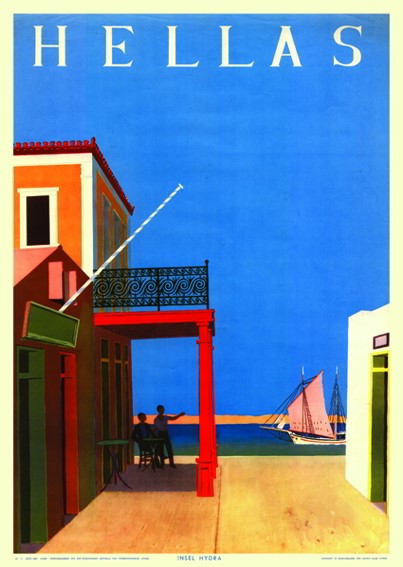
The second in a two-part series (see above). Co-hosted with the Hellenic Society.
London Speakers
– Georgios Varouxakis (Queen Mary)
– Athena Leoussi (University of Reading)
– Sanja Perovic (King’s College London)
Prof. Roderick Beaton, A.G. Leventis Visiting Professor in Greek
Roderick Beaton grew up in Edinburgh and studied English Literature at Peterhouse, Cambridge, before turning to Modern Greek as the subject of his doctorate, also at Cambridge – and at the British School at Athens. After a three-year postdoctoral fellowship at the University of Birmingham he embarked on a long career at King’s College London, first as Lecturer in Modern Greek Language and Literature (1981-88), later as Koraes Professor of Modern Greek and Byzantine History, Language and Literature (1988-2018), and since then as Emeritus. From 2012 to 2018 he also served as Director of the Centre for Hellenic Studies at King’s.
Roderick is the author of many books and articles about aspects of the Greek-speaking world from the twelfth century to the present day, including An Introduction to Modern Greek Literature (1994); George Seferis: Waiting for the Angel. A Biography (2003); Byron’s War: Romantic Rebellion, Greek Revolution (2013); and Greece: Biography of a Modern Nation (2019, now a Penguin paperback). All four of these books won the prestigious Runciman Award for best book on the Hellenic world. His latest book, an overview of Greek history from the Bronze Age to the 200th anniversary of the Greek Revolution in 2021, is expected to be published in autumn 2021 with the title The Greeks: A Global History.
He is a Fellow of the British Academy (FBA, 2013), a Fellow of King’s College (FKC, 2018), Commander of the Order of Honour of the Hellenic Republic (2019) and, from September to December 2021, has been appointed A.G. Leventis Visiting Professor in Greek at the University of Edinburgh.
Contacts: Centre for Hellenic Studies, KCL, the Hellenic Society and the British School at Athens
Event Listings: CHS and BSA. Register through the CHS or Hellenic Society.
Monday 15 February, 17.00-19.00 (UK)/19.00-21.00 (Greece)
Panel: 1821: The Migration of Revolutionary Ideas (Pt 1)
British School at Athens
1821: The Migration of Revolutionary Ideas (Pt 1)
Two Panel Discussions chaired by Roderick Beaton, Emeritus Koraes Professor of Modern Greek and Byzantine History, Language and Literature, King’s College London, co-organised with the British School at Athens.
Ideas about making a revolution – ideas that are in themselves revolutionary: these two back-to-back panel discussions, one in Athens, the other in London, will revolve around both concepts, as ways of understanding the outbreak of revolution by Orthodox Christian, Greek-speaking subjects of the Ottoman empire in the spring of 1821, that would lead to the creation of Greece as a modern nation-state in 1830. Speakers will focus on the transmission, or ‘migration’, of such ideas across the European continent in the wake of 1789 Revolution in France and their impact in creating the climate in which a Greek revolution became possible in 1821.
Athens Speakers
– Antonia (Ada) Dialla (Athens School of Fine Arts)
– Efi Gazi (University of the Peloponnese)
– Kostas Tampakis (National Hellenic Research Foundation)
Prof. Roderick Beaton, A.G. Leventis Visiting Professor in Greek
Roderick Beaton grew up in Edinburgh and studied English Literature at Peterhouse, Cambridge, before turning to Modern Greek as the subject of his doctorate, also at Cambridge – and at the British School at Athens. After a three-year postdoctoral fellowship at the University of Birmingham he embarked on a long career at King’s College London, first as Lecturer in Modern Greek Language and Literature (1981-88), later as Koraes Professor of Modern Greek and Byzantine History, Language and Literature (1988-2018), and since then as Emeritus. From 2012 to 2018 he also served as Director of the Centre for Hellenic Studies at King’s.
Roderick is the author of many books and articles about aspects of the Greek-speaking world from the twelfth century to the present day, including An Introduction to Modern Greek Literature (1994); George Seferis: Waiting for the Angel. A Biography (2003); Byron’s War: Romantic Rebellion, Greek Revolution (2013); and Greece: Biography of a Modern Nation (2019, now a Penguin paperback). All four of these books won the prestigious Runciman Award for best book on the Hellenic world. His latest book, an overview of Greek history from the Bronze Age to the 200th anniversary of the Greek Revolution in 2021, is expected to be published in autumn 2021 with the title The Greeks: A Global History.
He is a Fellow of the British Academy (FBA, 2013), a Fellow of King’s College (FKC, 2018), Commander of the Order of Honour of the Hellenic Republic (2019) and, from September to December 2021, has been appointed A.G. Leventis Visiting Professor in Greek at the University of Edinburgh.
Contacts: Centre for Hellenic Studies, KCL and the British School at Athens
Thirtieth Annual Runciman Lecture
Prof David Ricks: ‘The Shot Heard round the World: The Greek Revolution in Poetry’
Introduction: Prof Gonda Van Steen
Vote of Thanks: Dr Dionysis Kapsalis
Like the shot fired at Concord, Massachusetts, in 1775, the Greek Revolution was heard around the world, and many poets, Byron and Hugo among them, fired off their own poetry in response. This lecture will turn to Greek poetic responses to ’21 – and not just at the time, but as the noise of old battles has echoed through subsequent decades of Greek experience up to the present day. The focus will be on tensions between the pen and the sword, or rather the pen and the gun, over the years since 1821: the best Greek poets have faced such tensions memorably, and in doing so have made a distinctive contribution to the world’s poetry.
David Ricks is Professor Emeritus of Modern Greek and Comparative Literature, King’s College London, and a Fellow of the College. He studied classics and philosophy at Oxford before coming to King’s to write a doctoral thesis, on what would today be called classical reception, under the supervision of then Koraes Professor Roderick Beaton. The two worked in harness at King’s from 1989 to 2018, supervising 39 doctoral students between them in the fields of modern Greek literature and culture, no few of them now established in the republic of letters. David Ricks co-founded the CHS journal Dialogos (1994-2001) and served for many years on the board of the journal Byzantine and Modern Greek Studies, first edited from King’s by Donald Nicol; since 2020, he has been its editor, with Ingela Nilsson (Uppsala). He has published on many facets of poetry in Greek, from Digenes Akrites and Erotokritos in earlier periods to a wide range of poets from the last two centuries. These include such major figures as Solomos and Kalvos from the Revolutionary period, Cavafy and Sikelianos in the twentieth century, and Nasos Vayenas and Michalis Ganas today.
The vote of thanks will be given by Dr Dionysis Kapsalis. Born in Athens in 1952, Dr Kapsalis studied Classics and English Literature at Georgetown University, Washington D.C. (1970-1974). He pursued postgraduate work at King’s College London, in the Department of Byzantine and Modern Greek Studies (1981-1984). Since 1999, he has been Director of the Cultural Foundation of the National Bank of Greece. He has published poems, essays, and various translations of poetry. He has translated Shakespeare, Samuel Beckett and others for the Greek stage. He holds an honorary Doctorate from the University of Thessaloniki (2015), and he has been awarded the Greek State Prize for best literary translation for Hamlet (2015) and the Grand Prize for Letters (2017).
The Runciman Lectures are generously sponsored by the late Nicholas and Matti Egon and the Egon family.
Please register in advance via Eventbrite.
Thursday 28 January, 16.00-17.30 (UK)/18.00-19.30 (Greece)
Panel: Power and Impunity
Online Event
Power and Impunity: What Donald Trump and Boris Didn’t Learn from the Ancient Greeks
A podcast of this event has been made available online here.
Are we living in a world marked by a new impunity of power? Political leaders discard established norms and taboos that have guided the behaviour of their predecessors and, in doing so, they win popular support from new areas of society, including the disengaged and excluded. Across the world, in domestic politics, rhetoric is seemingly preferred over truth; ‘fake news’ over traditional media; and emotion over expertise. How did we get here? Our notions of the good society, of the responsibility that comes with power, and, of course, democracy and its discourse, stem from ancient and classical Greece. Our deepest sense of Western values, embedded in education curricula across our societies, emanates from classical Athens. Is it no longer of use or value? Are we now judging utility and cost differently? If so, how and why are our leaders safe in doing so?
Speakers:
Paul Cartledge (brief statement), A.G. Leventis Senior Research Fellow, Clare College, Emeritus A.G. Leventis Professor of Greek Culture, University of Cambridge
Mike Cox, Emeritus Professor of International Relations, LSE; Director of LSE IDEAS
Simon Goldhill, Professor of Greek at the University of Cambridge and Foreign Secretary of the British Academy
Johanna Hanink, Associate Professor of Classics at Brown University
Chair:
Paul Kelly, Professor of Political Philosophy, Department of Government, LSE
Contact the Hellenic Observatory.
Registration available on the event website.
Concert dedicated to Greece: Sir Simon Rattle (London Symphony Orchestra) conducting Leonidas Kavakos, violin:
Berg Violin Concerto
Schubert Symphony No 9, ‘The Great’
In collaboration with the National Bank of Greece and Initiative 1821-2021. For more information see www.protovoulia21.gr
Still available for free on demand here, but login required. ‘ERT’, the Greek National Radio-Television, will transmit the concert in a global broadcast on Saturday, January 30 at 16.30 (UK)/18.30 (Greece).
Click here to hear Sir Simon Rattle introduce the event and direct the Greek National Anthem.
See Tim Ashley’s review in The Guardian, 22 January 2021: ‘A touch of revolutionary sweetness from Kavakos’.
 21in21.co.uk